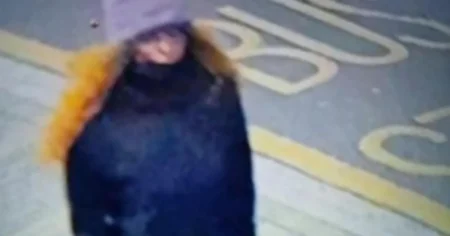



There is a particular kind of violation that leaves no bruises, no visible scars, but cuts deep into a person’s sense of safety, trust, and freedom. That is what makes this story so disturbing. Imagine discovering that a private moment you never even knew existed—a routine trip to the bank, a walk through a shopping centre, a ride on the Tube—had been secretly recorded and placed on the internet for strangers to watch, comment on, and derive sexual gratification from. That is the reality that hundreds of women and girls in London now face, after a hidden upskirting website was exposed by Metro’s investigation. The site, which was publicly accessible until recently, claimed to contain around 400 videos of victims, many of whom appeared to be underage. The footage showed women and girls being followed through some of the capital’s busiest and most familiar spaces: Westfield shopping centre, London Underground stations, streets like Wood Green’s High Road. The victims were often dressed in shorts or leggings, wearing the ordinary unremarkable clothes of daily life, but in the eyes of the site operator and its subscribers, those clothes were apparently an invitation to commit a crime. Roughly 50 videos were available as free previews—a kind of sick teaser gallery designed to entice visitors—and then users could pay $50 via PayPal to access the rest. The whole setup was brazen: not a hidden corner of the dark web, but a consumer product, complete with previews and a familiar payment interface, selling stolen dignity at a fixed price. Now, after Metro’s investigation, the site has been “privated,” with visitors either confronted by a “Page Not Found” message or asked to enter an administrator’s or subscriber’s password. That might sound like a victory, and in one narrow sense it is. But as with most online abuse, the disappearance of a web page is not the same as justice being done. The site could simply have been geo-blocked for UK visitors, or moved to a different server, keeping its collection of intimate violations alive somewhere else. The takedown is real, but so is the uncertainty.
It is important to understand what this takedown did and did not involve. Ofcom has confirmed that it did not take down the site, and Metro has contacted the Metropolitan Police for comment. The implication is that the site may have been shut down voluntarily, or at least shifted in response to exposure, rather than through formal legal action. That raises troubling questions about how such a website was allowed to operate in plain sight for so long. It was not hidden behind complex encryption; it had free previews, a straightforward price list, and a payment system that processed transactions througha major company. Any member of the public could stumble across it, and hundreds of people did. Yet no algorithm flagged it, no payment processor suspended it, no regulator ordered it offline until a journalist dug into the story. The fact that an open question remains—whether the site has been geo-blocked for UK visitors or simply moved to a different server—shows how slippery online abuse can be. A web address can be changed in minutes; hosting can cross borders; payment methods can be shifted; and the same content can resurface under a new name within days. This is not a problem that can be solved with one takedown notice. It requires ongoing vigilance, cross-border cooperation, and a willingness by tech companies to take responsibility for the material that flows through their infrastructure. The Mayor of London’s office responded with strong language, calling upskirting “appalling, illegal and predatory behaviour that has no place in our city.” In a statement, a spokesperson said: “The Mayor welcomes Metro’s investigation shining a light on this issue and is clear that all perpetrators should face the full force of the law.” The sentiment is right, but it also highlights a failure: why did it require a news investigation to shine that light? Why had hundreds of videos been allowed to accumulate before anyone acted?
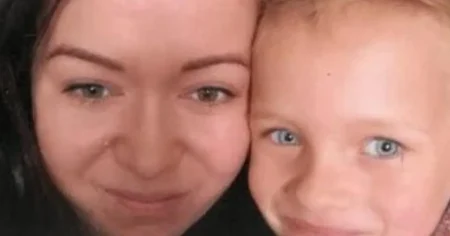
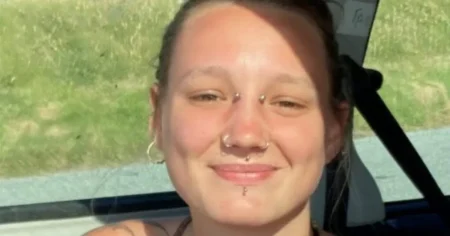
Behind every statistic and each password-protected video is a real person, whose life is altered the moment they learn what happened. Eranta Ntatsi, a 29-year-old mother of two, is one of those people. She was walking along Wood Green’s High Road, going about her business, when she was filmed without her knowledge or consent. The recording only came to light years later, when a man who follows her husband’s social media accounts recognized her in the footage. He sent it to her husband, and suddenly Eranta was confronted with a violation she had never known existed. She described the experience as “being raped in the moment”—a visceral, painful description that cuts through any attempt to minimize what happened. Speaking to Metro, she said: “It was three years ago when I walked out of Halifax after collecting some of my maternity payment. I never even noticed I was being filmed, and suddenly a few weeks ago a man contacts my husband out of the blue letting him know I was on this website.” Watching the video for the first time, she said, “I just felt disgust. I hate that I am just pushing my baby in a pram and someone is having sexual thoughts.” The image is devastating: a young mother, carrying the admin of motherhood in a bank queue, pushing her baby, believing she is unseen and safe. But she was not unseen. Someone watched her, followed her, filmed her, uploaded her to a hidden pay-per-view gallery, and invited strangers to look at her with sexual eyes. The theft of her image is compounded by the theft of her comfort. She now knows that ordinary errands can become evidence;that a pair of leggings can be reinterpreted as provocation;that her body, even while she is caring for child, can be commodified by men shehas never met. Her words should shake us all. They clarify that upskirting and secret filming are not minor offences or technical privacy breaches. They are acts of violation that can make a woman feel abused, exposed and continuously watched, long after the camera has moved on.
This case is not just about one website or one woman. It reveals the scale of a modern-day epidemic: theease with which smartphones, hidden cameras, and online platforms enable sexual predation. The victims in the videos are described as walking around London, including through Westfield shopping centre and Underground stations, in shorts or leggings. The detail matters. It shows that the crime is not about what women wear or where they go; it is about the offender’s decision to sexualize ordinary choices. A woman going shopping or taking the Tube should not have to calculate whether her clothing or route might make her a target. Yet the existence of such a site, with 400 videos, means hundreds of women were followed, likely without any of them realizing, through some of the busiest family friendly places in the capital. The phrase “upskirting” itself can feel technical, almost clinical, but the reality is a physical invasion:a camera being pushed into a person’s private space, sometimes under clothing, sometimes aimed at body parts without consent. In many jurisdictions, including England and Wales, upskirting is a criminal offence, specifically recognized as sexual assault or a Voyeurism offence, carrying serious penalties. Yet criminals adapt; they hide behind encryption, foreign servers, cryptocurrency, and legitimate payment platforms. The impact on victims can be profound and long-lasting. Survivors often describe symptoms similar to those of trauma: hypervigilance, anxiety, difficulty trusting people, feeling that every stranger with a phone might be recording them. The knowledge that their images can be stored, shared, sold, and viewed by unknown people—perhaps for years—creates a persistent sense of vulnerability that is difficult too articulate. Eranta’s phrase “completely violated and abused” captures this exactly. It is not just a breach of law; it is an attack on personhood, on the right to move through the world without being reduced to a sexual object.
If there is any hope to be drawn from this sordid story, it is that exposure can force swift action. The website was taken down after Metro’s investigation, and the Mayor’s office has made clear that the full force of the law should be applied to perpetrators. But takedown is not enough. The same infrastructure that allowed the site to operate must be scrutinized. How did a website selling non-consensual sexual imagery maintain a PayPal account? Payment processors have policies against sexual exploitation, but enforcement relies on reporting and vigilance. Hosting providers, domain registrars, search engines—all have roles to play in ensuring that such content does not become a booming online business. Law enforcement agencies must also investigate not just the site operators but the users who paid to access such material, because without demand, there would be no supply. The potential buyers are not passive consumers; they are participants in the violation. There is alsoa need for better public awareness, so that victims or their friends can recognize and report. The man who recognized Eranta did exactly what needed to be done, even if it must have been painful for her. His action shows theimportance of community vigilance. But it should not take a stranger’s message to alert someone that their most intimate moments are circulating online. Tech companies, lawmakers, and police need to create systems that proactively detect and takedown this abuse, rather than waiting for journalists to expose it. And when a victim does come forward, she must be met with belief, dignity, and support, not questions about what she was wearing or why she didn’t notice. The law has to mean something in practice, not just on paper; otherwise the predators will continue to assume, correctly, that they can get away with it.
.
The site may now be private, but the specter of it remains. It could resurface under a different name, on a different server, with a different payment link. That is the nature of online abuse—constant, adaptable, effacing. But so too can the response be constant. Every person who refuses to look away, every journalist who investigates, every police officer who takes reports seriously, every platform that terminates accounts, every bystander who speaks up—they all contribute to a world where this kind of predation cannot hide in plain sight. For Eranta, there is no undo button. The video may still exist;; the memory of that disgust may linger. But her courage in speaking publicly matters. She has turned a moment of violation into a warning and a call to action. The Mayor’s spokesperson said that upskirting has no place in our city,, and the sentiment must extend beyond London, beyond this one site, to every corner of the internet. Women should be able to walk down High Road, enter a bank, push a pram, board a Tube, without being followed by a lens that sexualizes their existence. The investigation forced one site down, but the larger fight is for a culture in which secret filming is seen for what it is:a profound abuse of power. Let that be the lasting legacy of this story—not the perpetrator, not the platform, but the refusal of survivors and communities to accept a world where being female in public means being fair game.