


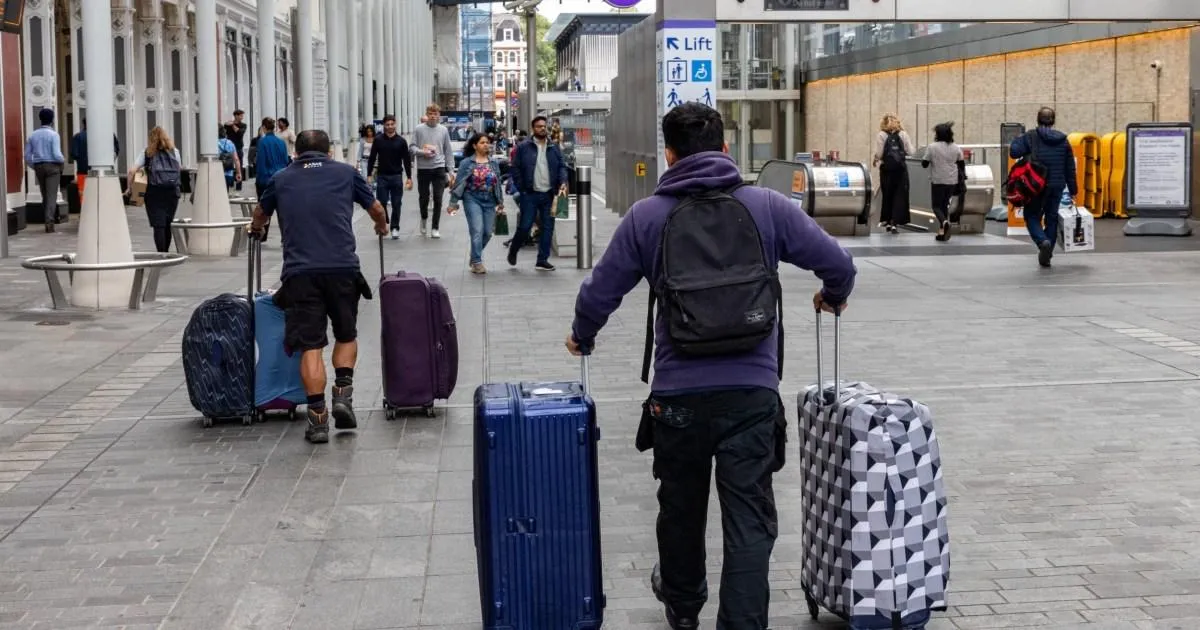
The morning commute in west London turned into a logistical headache today as a significant tunnel leak near Heathrow Airport forced an emergency closure of rail lines. Spanning the stretch between Hayes & Harlington and Heathrow Terminals 4 and 5, the closure has brought operations on the Elizabeth line and the Heathrow Express to a grinding halt. For thousands of travelers heading to the airport or attempting to reach central London, the situation has been nothing short of frustrating. Authorities have been forced to prioritize safety above all else, leaving commuters caught in the middle of a major infrastructure disruption that is expected to persist for the remainder of the day.
The core of the issue stems from an unexpected water leak discovered deep within the tunnel infrastructure. While the exact source of the water remains a point of investigation, its impact on the rail network was immediate and severe. By limiting the available capacity to just a single track, the integrity of the rail system has been severely compromised, necessitating the total suspension of standard services to ensure passenger safety. National Rail officials have been working tirelessly to manage the fallout, but given the critical nature of these transit arteries, the ripple effects are being felt across the entire transport hub connecting Paddington to the airport.
Naturally, the absurdity of a “flooding” disruption during a stretch of unseasonably dry weather was not lost on the public. Commuters took to social media with a mix of dry wit and genuine exasperation, poking fun at the irony of water-related delays on a sun-drenched day. One passenger famously quipped about the “sensational work” of the Elizabeth line, highlighting a sentiment shared by many: that even with the best technology, our infrastructure remains unexpectedly vulnerable to quirks of geography and maintenance. These online exchanges provided a momentary outlet for travelers stuck on platforms, though they did little to speed up the actual journey.
For those currently navigating the chaos, the service adjustments are significant. The Elizabeth line has ceased all operations between Hayes & Harlington and the airport, while the Heathrow Express has been forced to scale back to a skeleton service, running only two trains per hour between Paddington and Terminal 5. This reduction has created a massive bottleneck, forcing travelers to scramble for alternatives at the very last minute. The transit authorities are doing what they can to manage the influx of displaced passengers, but the strain on remaining routes is palpable as people try to find their way to their destinations before flight check-in deadlines pass.
If you find yourself stuck in this gridlock, there are alternative routes available, though they require a bit more patience than the standard express service. National Rail has advised passengers to utilize Great Western Railway trains, the London Underground’s Piccadilly line, or a selection of local bus routes—specifically the 105, 278, 350, and 482—to bridge the gap between affected stations. While these alternatives are certainly not as convenient as the high-speed airport lines, they are currently the most reliable way to complete a journey that has suddenly become far more complicated than anyone anticipated.
As the day progresses, the message to travelers remains one of caution and preparation. It is clear that this closure is not a quick fix; the disruption is expected to last until the end of the day, meaning the evening commute will likely be just as challenging as the morning’s. Passengers are strongly encouraged to check their travel apps and monitor the latest updates from National Rail before heading out. While infrastructure issues like this serve as a stark reminder of the complexities inherent in maintaining a city’s pulse, we can only hope that repairs are swift and that travelers find their way to their flights and homes with as little additional stress as possible.