


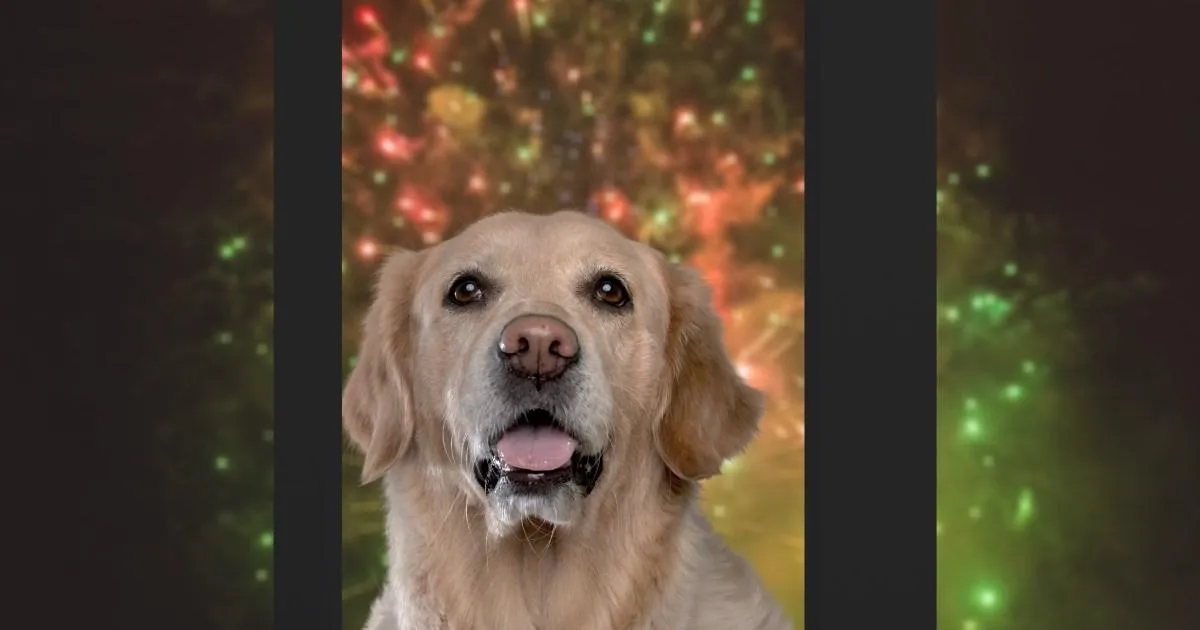
For many dog owners, the arrival of autumn brings a sense of impending dread rather than seasonal cheer. While Bonfire Night may still be months away, the reality is that the weeks surrounding it are often defined by disrupted sleep, cancelled social plans, and the heartbreaking sight of a terrified pet cowering in a corner. It is a stressful cycle that affects millions of households across the country, yet many owners operate under the false assumption that this seasonal anxiety is something they simply have to endure. In truth, waiting until the last minute to address the problem is a recipe for disaster; experts are now urging pet parents to break the cycle by starting a desensitisation journey long before the first rocket takes flight.
The team at Guide Dogs has taken a proactive step to help bridge the gap between panic and peace by launching a groundbreaking “National Fireworks Archive.” Unlike traditional training tools that often rely on clean, repetitive audio clips, this resource uses authentic, raw footage captured from real-world settings—ranging from busy streets and quiet gardens to large-scale public displays. As Haley Andrews, a specialist from Guide Dogs, points out, the real world is messy and unpredictable. Fireworks do not just produce a single, uniform boom; they feature a chaotic mix of high-pitched whistles, rapid-fire crackles, and startling bangs. By exposing dogs to the genuine “audio texture” of these displays in a controlled, safe way, owners can help their pets process these triggers without the overwhelming intensity of a real-world event.
The necessity for this kind of training is clear when you look at the statistics: nearly two-thirds of the UK’s dog population, amounting to roughly 9.9 million animals, suffers from some form of firework-related distress. Despite this, a staggering 35% of owners are unaware that desensitisation is even a possibility, and 37% have never sought out any professional training advice at all. Instead, nearly half of all owners simply cross their fingers and “hope for the best,” a reactive approach that leaves their dogs vulnerable and costs the nation billions in combined stress, lost time, and behavioral support. The emotional toll is just as significant, with the vast majority of owners admitting to sacrificing their own plans, losing sleep, or feeling chained to their homes just to comfort their anxious companions.
If you are wondering why you should start in August rather than October, the answer lies in the physiology of learning. Desensitisation is a gradual, gentle process that requires patience, not force. The goal is to play the footage at such a low volume that your dog remains completely relaxed, pairing these faint sounds with positive reinforcement like treats or praise. By keeping sessions short—just two to five minutes once or twice a day—you allow your dog to build a “tolerance” to the noise without ever hitting their threshold for fear. If they show any signs of tension, you simply dial the volume back down and go even slower. It is about building confidence through tiny, manageable wins rather than overwhelming them with a sudden onslaught of sound.
Beyond sound training, creating a physical “safe haven” is a vital piece of the puzzle. Setting up a cozy, quiet den filled with familiar blankets, favorite toys, and comforting scents can transform a dog’s environment. By hiding treats inside this space throughout the day, you help your pet build a positive mental association with the area, turning it into their personal fortress for when the night itself arrives. As your dog grows more comfortable with the audio recordings, you can begin to simulate the atmosphere of a real fireworks night by dimming the lights, closing the curtains, and increasing the volume slightly. This “dress rehearsal” approach ensures that when the actual night rolls around, your dog is already equipped with a coping mechanism and a safe place to retreat to.
Ultimately, this training isn’t just for dogs who are already displaying extreme phobias; it is a proactive measure for any dog owner. Anxiety can develop at any stage of a pet’s life, even in dogs who have previously been unfazed by loud noises. By taking the time to prepare now, you are not only giving your dog the best chance of a stress-free November, but you are also strengthening the bond you share. As you embark on this process, remember to keep the atmosphere calm, provide plenty of positive reinforcement, and let your dog take the lead on where they feel most secure. By shifting from a mindset of “hoping for the best” to one of “practicing for the best,” you can turn a season of fear into a season of calm, ensuring that you and your canine companion can get through the fireworks season together, in peace.