
###1. The Sunday That Changed Everything for TFG London
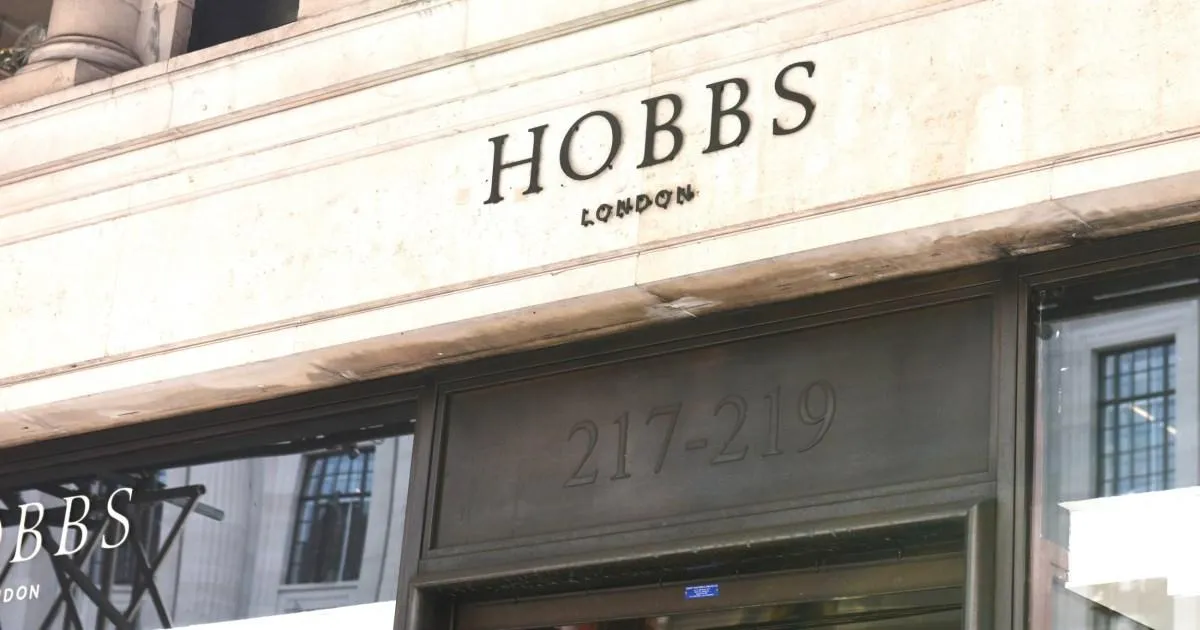
Imagine waking up on a Sunday morning with a cup of coffee, ready to treat yourself to something lovely from Hobbs or Whistles. You open the website, maybe browse a new season dress or a tailored blazer, and then notice something odd. The pages are slow. Your saved items are missing. A small warning pops up about a temporary fault. It would be easy to dismiss as a technical glitch, but behind the scenes, something far more serious was unfolding. The Foschini Group, better known as TFG, the South African retail giant that owns those much-loved British fashion brands alongside Phase Eight, had just become the latest victim of a cyber attack. It was the second such assault on the UK fashion industry within a week, and it sent shockwaves through the sector. TFG London, the UK arm of the retail group, announced that it had become aware of the incident on Sunday, and that it had affected certain IT systems, specifically those supporting Phase Eight, Hobbs, and Whistles. For anyone whose wardrobe is built around elegant occasion dresses, sharp tailoring, or weekend staples from these brands, the news felt personal. These are not anonymous online stores. They are names associated with weddings, job interviews, anniversaries, and special moments. The immediate reassurance from the company that there was “no reason to believe that payment information is at risk” was carefully worded, but it could not fully ease the anxiety of thousands of shoppers who had recently placed orders. Did my card details get stolen? Will my package still arrive? Should I cancel my order? These are not abstract questions. They are intimate worries that surface when the quiet trust between a retailer and a customer is suddenly broken.
### 2. The Practical Fallout for Shoppers
The practical impact for customers is more nuanced than a simple disaster announcement. TFG London has confirmed that orders placed before Sunday will be processed as normal, which is a relief for anyone who bought a winter coat or a party dress before the attack was discovered. However, for purchases made after Sunday, there may be delays. This kind of vague language is unsettling. What does “may face some delays” actually mean? A few days? A week? It is the uncertainty that makes a cyber attack so emotionally draining. You refresh the tracking page, hoping for a miracle, but there is nothing. At the same time, the company has insisted that its physical stores remain open as normal. You can still walk into a Hobbs branch, feel the fabric of a silk blouse, try on a Whistles jumpsuit, and pay at the till. But online, the smooth and seamless experience that modern shoppers take for granted may not be fully available. Some brand websites may have limited capabilities while the investigation continues. It is also worth noting that the disruption appears to be contained to TFG London. UK high street brands Inside Story and White Stuff, which are part of the wider TFG family, are not affected. Nor are TFG Africa and TFG Australia. That is a small comfort, but it shows how targeted the attack was. The company has alerted UK authorities and called in external cyber security specialists to investigate. Their public statement was careful, measured, and apologetic. “We are actively investigating and working with external cyber security specialists,” they said. “Stores are open as normal but some of our brand’s website capabilities may not be available as the investigation continues. We apologise for any disruption and will provide additional updates to our customers as appropriate.” For those caught in the middle, the apology is welcome, but the waiting remains difficult.
### 3. The Sinister Notification That Hit Asos Customers
The TFG attack did not happen in isolation. Exactly one week earlier, Asos, one of the biggest names in online fashion, found itself at the centre of its own cyber drama. But the Asos incident had a distinctly chilling twist. Customers’ phones suddenly pinged with a push notification from the company that seemed almost like a taunt. The message claimed to have “compromised” Snowflake, the cloud-based data storage platform used by Asos and countless other businesses, and threatened to “leak it.” Imagine sitting in a meeting or standing in a queue, glancing at your phone, and seeing that. The heart sinks. Asos later informed shoppers that some personal information, including names and contact details, had been accessed. Even more disturbingly, the data may have included details of things people had searched for on the Asos website. That feels uniquely invasive. Your purchase history is one thing, but the things you typed into a search bar, wondering whether you would ever buy them, is another vulnerability entirely. Snowflake itself confirmed that the breach was not caused by a vulnerability or a flaw in its own system, which suggests that the attackers gained access through stolen credentials or another external route. For ordinary shoppers, however, that distinction brings little comfort. The push notification itself raised an uncomfortable question: why would cyber criminals contact customers directly? The likely answer is intimidation. They wanted to create panic, to show that they controlled the narrative, and to make the breach impossible to hide. If that was the goal, it worked spectacularly. Asos customers flooded social media with questions, some terrified that their bank accounts had been emptied, others confused about whether the notification was a scam. It was a raw, public reminder of how fragile our digital lives really are.
### 4. From H&M to French Supermarkets: A Wider Wave of Chaos
The wave of attacks goes far beyond online fashion. Just yesterday, H&M, the Swedish high street giant, announced that it is investigating reports of a possible cyber incident last week, one that may have been carried out by a notorious hacking group called Shinyhunters. That name might not mean much to the average shopper, but in cyber security circles, it is associated with data breaches, stolen databases, and digital chaos. The idea that a group like this may have turned its attention to major retailers suggests a coordinated and relentless campaign against the fashion industry. But perhaps the strangest and most alarming incident in this recent surge happened in France. Hackers managed to interfere with the refrigeration systems of hundreds of supermarkets, dialling the temperature inside freezers up to as high as 50 degrees Celsius. That is not a typo. Fifty degrees is hot enough to spoil enormous quantities of frozen food, turning perfectly good produce into wasted, ruined inventory. The targets included Coopérative U, Intermarché, E.Leclerc, Monoprix, and Carrefour, all of them household names in French retail. Imagine the scene at a supermarket manager’s office when alarms start blaring, and someone realises that thousands of euros worth of frozen vegetables, fish, and ice cream have been destroyed overnight. This was not random vandalism. It was a deliberate attack on the physical infrastructure of retail. It proves that cyber criminals are no longer content with stealing credit card numbers. They are now willing to disrupt supply chains, ruin food supplies, and create real-world chaos. For retailers, this is a nightmare. For consumers, it is a sobering reminder that digital threats can reach into the most mundane corners of life, even the frozen aisle at the local supermarket.
### 5. What Should Worried Shoppers Actually Do?
In the middle of all this uncertainty, what should a worried shopper actually do? The first piece of advice is simple: do not panic. Panic leads to rash decisions, like cancelling a card that did not need cancelling, or clicking on a suspicious email from someone pretending to be customer support. Instead, take a breath. If you have an account with any of the affected brands, start by changing your password. Make it long, unique, and completely different from the passwords you use elsewhere. Using a password manager is a smart move because it means you do not have to remember dozens of variations. Next, enable two-factor authentication wherever possible. That extra step, usually a code sent to your phone, is not perfect, but it makes life much harder for attackers. Then, monitor your bank statements and credit card transactions closely. Cyber criminals often make small, testing charges first to see if a card still works before attempting something bigger. If anything looks unfamiliar, contact your bank immediately. Another crucial step is to be vigilant about phishing. Following a breach, criminals love to send fake emails and text messages pretending to be from the affected company. They might claim there is a problem with your account, ask you to verify your details, or offer a refund for the inconvenience. Do not click any links in those messages. Instead, go directly to the official website, log in, and check for notifications there. If a company reaches out unexpectedly and asks for personal or banking information, treat it with deep suspicion. Legitimate retailers do not ask for your password or card number by email. And if you receive a push notification like the one Asos customers saw, do not respond to it directly. Take a screenshot, log out, and wait for official communication from the company. Some firms also offer free credit monitoring or identity protection services after a breach, and taking advantage of that is a sensible safeguard. Finally, remember that you have rights. If your data has been compromised, the company has a duty to tell you clearly and honestly. If they are vague or unhelpful, push for answers.
### 6. A Wake-Up Call for the Retail Industry
Looking at the bigger picture, these attacks are not random or unrelated. They are part of a profound shift in the way organised crime operates. The fashion retail industry, with its vast databases of customer information, its tangled supply chains, and its heavy reliance on online sales, has become a prime target. Hackers know that retailers are vulnerable. They know that companies often spend more on beautiful websites than on robust cyber security. They also know that customers will keep returning, driven by the desire for new clothes and the convenience of next-day delivery. But there is a human cost to all of this that goes far beyond financial loss. Trust is the true currency of retail. When a customer hands over their credit card details, they are making a leap of faith. When that trust is betrayed, the relationship suffers. Yes, the company is also a victim, and it would be unfair to blame them entirely for the actions of sophisticated criminals. But customers have every right to demand better. They should ask tough questions about how their data is stored, who has access to it, and why notifications sometimes arrive so late. The good news is that the industry is not powerless. Cyber security is constantly improving, and with the right investment, companies can build systems that are resilient even against determined attackers. The attack on TFG London, along with the incidents at Asos, H&M, and the French supermarkets, should serve as a wake-up call. In a world where a single vulnerability can bring a retail giant to its knees, security cannot be an afterthought. It must be woven into every layer of the business, from the checkout page to the freezer unit. For consumers, the takeaway is to stay vigilant, protect your passwords, and keep an eye on your accounts. But do not let fear stop you from living your life. Shop online if you want to, but do so with awareness. The digital world is full of wonders, but it is also full of predators. The best defence is a healthy dose of caution, a bit of common sense, and the knowledge that as a customer, you have the power to demand accountability. After all, the brands we love are only worth loving if they respect us enough to keep our secrets safe.