

A Family’s Worst Nightmare: When a Day at the Beach Turned into a Health Crisis
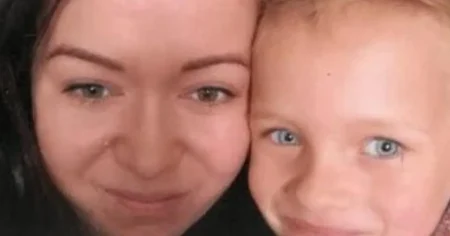
For most families, a summer trip to the beach is the quintessential picture of joy and relaxation—the feeling of warm sand between your toes, the sound of seagulls overhead, and the refreshing crash of waves against the shore. For the Hollow family, however, what should have been a carefree day by the sea in early August has instead become a harrowing memory that has shattered their sense of safety and left an eight-year-old girl terrified of the ocean she once adored. Keeva Hollow, a vibrant and sporty young girl, had always been what her mother describes as a “real water baby,” spending countless hours splashing in the waves alongside her twin sister, Cornelia. But one seemingly innocent moment—a single wave that caught her off guard—has spiraled into a medical emergency, a frightening hospital stay, and a lingering fear that may take years to overcome.
The incident occurred on August 3rd at the picturesque Avon Beach in Dorset, a location that had been a beloved family destination. Aisling Mccarthy, Keeva’s mother, was watching her twin daughters enjoy their swim from the shore when she noticed something alarming. A particularly strong wave had crashed into Keeva, causing the young girl to splutter and choke as she accidentally swallowed a significant amount of seawater. At that moment, it seemed like a minor mishap—the kind of thing that happens to countless beachgoers every day. Keeva coughed, recovered, and the family continued with their day, unaware that a dangerous and invisible threat had just entered her body. The next morning, however, the situation took a terrifying turn. Keeva, usually an energetic and hungry child, refused to eat her breakfast, appeared unusually lethargic, and began running a concerning fever. The family was supposed to travel to London that day, but Keeva slept through the entire journey, a behavior so out of character that her mother’s instincts immediately kicked in.
As the hours passed, Keeva’s condition deteriorated with alarming speed. What began as fatigue and a loss of appetite quickly escalated into a serious health crisis. Aisling, deeply worried about her daughter, knew she needed to seek medical help immediately. The family had been planning a trip to Ireland to visit Aisling’s ailing mother, but it became clear that Keeva was in no state to travel. Rushing to find an out-of-hours doctor, Aisling watched helplessly as her daughter’s condition worsened before her eyes. When the doctor requested a urine sample, Aisling was horrified to discover that Keeva was suffering from severe diarrhea that contained blood—a sign that something was deeply and seriously wrong. In that moment, a memory surfaced in Aisling’s mind: she had recently watched a documentary about sewage pollution in UK waters, and it had featured the tragic story of a young girl who had died after swimming in contaminated seawater. The symptoms were eerily similar, and Aisling knew she had to act fast.
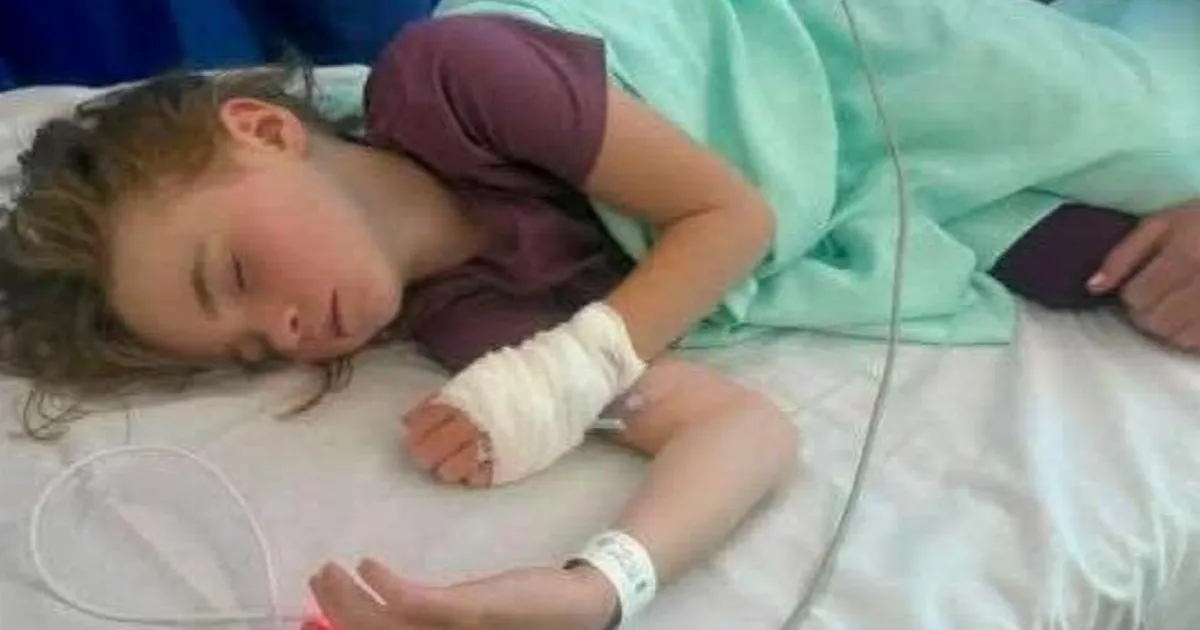
Taking matters into her own hands, Aisling made the decision to bypass the out-of-hours doctor and rush Keeva directly to the Accident & Emergency department of the hospital. Her motherly intuition proved to be lifesaving. Upon arrival, Keeva was immediately placed on a drip as doctors ran a battery of tests to determine the cause of her sudden and severe illness. The young girl’s body was fighting something fierce, and she deteriorated so rapidly that it frightened everyone around her. Keeva spent two agonizing days in the hospital, hooked up to IV fluids, as medical staff worked to stabilize her condition. Finally, the diagnosis came: Keeva was suffering from a campylobacter infection, a type of bacteria that can cause severe gastrointestinal illness, fever, and in serious cases, life-threatening complications. While campylobacter is often associated with food poisoning—particularly from undercooked meat or contaminated food—Aisling was quick to point out that Keeva is a vegetarian who does not eat meat at all, eliminating the most common source of transmission.
For Aisling, the timeline of events was impossible to ignore. Keeva’s symptoms began exactly one day after her sea-swallowing incident at Avon Beach, while her twin sister Cornelia, who had not swallowed any seawater, remained perfectly healthy throughout the ordeal. “I have a very clear memory of that moment when the wave hit Keeva, seeing her spluttering from swallowing the water. I am convinced that was what caused her to become so ill,” Aisling said, her voice heavy with the weight of that traumatic memory. The connection seemed obvious to her, but getting official acknowledgment of that link has proven to be a frustrating and disappointing battle. While Keeva was eventually released from the hospital and is physically recovering, the aftermath of the infection has left lasting scars. The once-athletic girl who could keep pace with her mother on a 5km run now struggles to complete a single kilometer without becoming breathless. She has lost a significant amount of weight, with her clothes hanging loosely off her small frame. But perhaps the most heartbreaking consequence of the entire ordeal is the psychological trauma that Keeva now carries with her.
The fear that has taken root in Keeva’s young mind is perhaps the most devastating aspect of this entire ordeal. The little girl who once couldn’t be kept away from the water now refuses to even consider going back into the sea, terrified that she will become sick again. Aisling, too, has lost her sense of security about the ocean that has been such a central part of her family’s life. “It has been a terrible time; Keeva was so ill. She used to swim all the time, a real water baby. But now I can’t see her ever going in the sea again; she is so scared of becoming sick again,” Aisling explained. “To be honest, I don’t want her going back into it anyway until I know it is totally safe.” The family had moved from London to the Dorset coast just a week after the twins were born, buying a home within walking distance of the beach. The ocean had been their sanctuary, their lifestyle, and their joy. Now, that idyllic existence has been shattered, replaced by anxiety, anger, and a desperate need for answers.
Driven by a need to protect her daughter and prevent other families from suffering the same ordeal, Aisling has been tirelessly seeking answers and accountability from the authorities responsible for water quality in the area. She reached out to Wessex Water, the company that manages wastewater and environmental protection for the River Stour, which flows into the sea at nearby Christchurch. She notified them about Keeva’s illness and requested any information about recent sewage leakages that might have contaminated the water. However, her inquiries have been met with silence—she has yet to receive any response from the water company. BCP Council, the local authority responsible for the area, did send her a letter after being notified by the hospital, but the content of that letter focused entirely on food poisoning and asked where Keeva had eaten. When Aisling replied explaining her belief that the infection came from seawater, the council claimed they had no other reports of people becoming ill from swimming in the sea. The dismissive attitude left Aisling feeling shocked and frustrated, particularly given that the area is a major tourism destination that depends heavily on its beautiful beaches.
The concern about water quality in the area is not without merit. Recent independent testing of the River Stour revealed alarmingly high levels of E. coli and other dangerous bacteria. Martin Stewart, the managing director of Stewarts Garden Centres and chair of the Christchurch Harbour & Marine Society, conducted tests on August 19th that showed E. coli levels of 300,000—a staggering figure when the safe bathing level is just 1,000. He also found several other concerning levels of bacteria in his samples, painting a worrying picture of the water quality in the region. These findings suggest that the waters off the Dorset coast may be far more contaminated than authorities are letting on, potentially posing a serious public health risk to the thousands of swimmers and families who visit the beaches every summer.
In response to the growing concerns, Councillor Andy Hadley, BCP Council Cabinet Member for Climate Response, Environment and Energy, has met with the Hollow family and expressed relief that Keeva has recovered from her illness. However, his public statements have been careful to avoid directly addressing the family’s specific case. “Very many people regularly use local rivers and coastal waters for recreation,” he said. “We encourage everyone to follow public health guidance, which is to avoid swallowing water and to practice good hygiene after water-based activities.” He urged members of the public to report any evidence of pollution to the Environment Agency and advised that anyone feeling unwell after water activities should seek medical advice. Yet, when pressed on the possibility of a connection between Keeva’s illness and seawater contamination, he maintained that it is “very difficult to trace back the cause of infection” and that the council had received no notification from the UK Health Security Agency of other cases.
For Aisling, this response feels like a brush-off rather than a genuine attempt to address a potentially serious public health issue. She is angry, and rightfully so, at what she perceives as a lack of concern from those responsible for ensuring the safety of the region’s waters. “I want Wessex Water and BCP Council to be completely upfront with people and tell us if the water is safe,” she demanded. “I am very angry; it was awful to see my child suffering, and I don’t want anyone else to become ill. I have lost my trust in the people responsible for our sea and waterways.” Her story serves as a chilling reminder that the battle for clean water is far from over, and that the consequences of pollution can be devastatingly personal. As summer days draw countless families to the beaches, Aisling’s warning is clear: what lurks beneath the waves may be more dangerous than we ever imagined, and the price of complacency could be a child’s health, a family’s peace of mind, and the loss of a way of life that was once taken for granted. The Hollow family’s nightmare is a wake-up call to us all, a demand for transparency, accountability, and action to protect our precious waterways before another innocent child pays the price.