
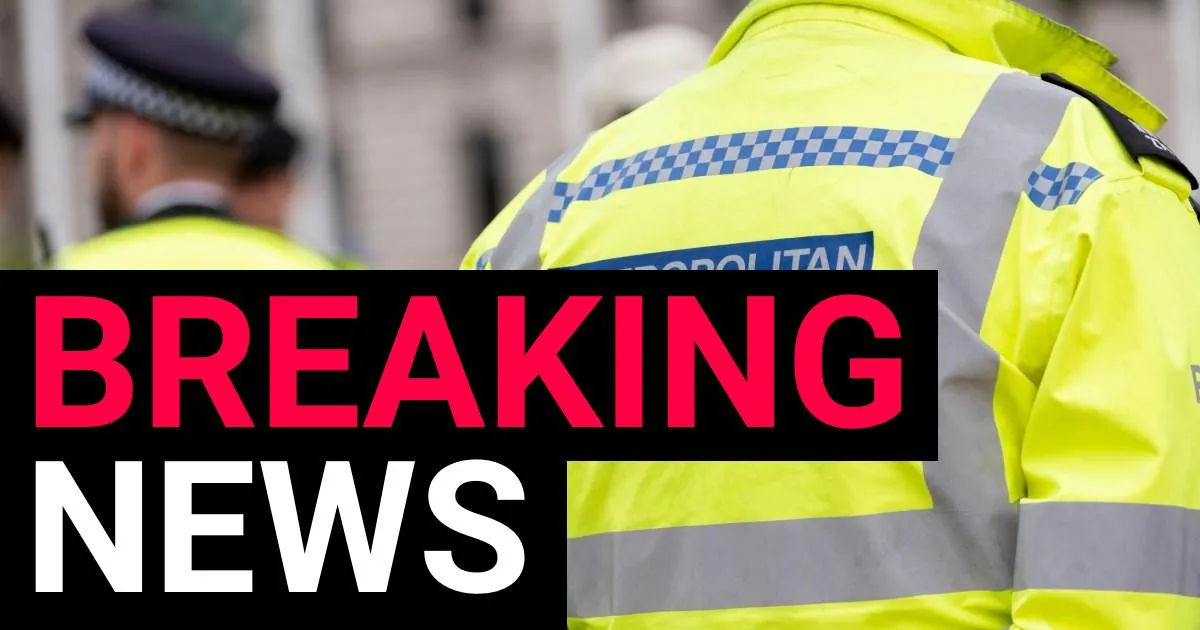
On an ordinary Thursday afternoon, the familiar rhythm of Bromley High Street was shattered in the most violent way imaginable. Shoppers, commuters, and local workers were going about their day, moving between stores like TK Maxx and making their way from Bromley South station, when the sound of sirens began to fill the air. Police and paramedics were called to reports of an altercation shortly before 2.30pm, and what they found was a scene that no high street should ever have to see. Four men had been stabbed, their lives suddenly hanging in the balance in the middle of a bustling south London shopping district. One of them was said to be in a critical condition, fighting for his life, while the other three were being treated for injuries that, though deeply serious, were not believed to be life-threatening as things stood. As news of the knife attack spread, the atmosphere on the street changed from mundane routine to something unrecognisable. Emergency vehicles poured into the area from all directions, their flashing lights reflecting off shop windows and drawing a crowd of bewildered onlookers. By the time the initial response was underway, seven men had been arrested in connection with the incident, and they were taken into custody, where they remained as detectives began the painstaking work of piecing together what had happened. The police were quick to state that there was not believed to be any wider threat to the public, but that small reassurance did little to calm the collective shock of seeing a familiar place turned into a crime scene in broad daylight.
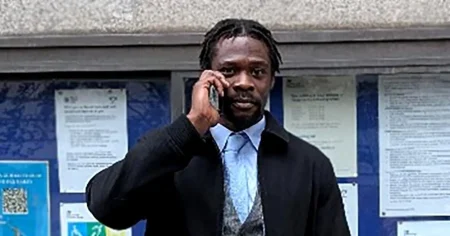
For those caught up in the confusion, the scene was overwhelming and almost impossible to process. Matt Farrington-Smith, a witness who found himself trying to get home through the chaos, described a level of emergency service presence that he had never seen before in his life. Fire engines, police cars, and officers seemed to be everywhere, he said, blocking junctions and redirecting people away from the heart of the high street. He spoke of the strange, unsettling feeling of being unable to move forward, of hitting a wall of police tape and being turned around, again and again, along roads that were normally open to anyone. “It’s chaos,” he said, and there was a raw disbelief in his voice. He had walked past two individuals being arrested, and he recalled how police were not offering answers, only instructions, telling everyone to move along, to find another route, to stay out of the way. For him, the simplest journey home had become what he described as a mission, a winding, uncertain path through a neighbourhood that no longer felt safe or familiar. The sight of so many people gathering behind the cordon, craning their necks and whispering to one another, added to the surreal quality of the afternoon. Shoppers stood with their bags in hand, unable to continue their errands, while others tried to phone friends and family to say they were okay. It was a moment of collective alarm, a reminder that violence can erupt anywhere, even on a busy street where moments earlier people had been laughing, talking, and simply living their lives.
Emergency services responded with extraordinary speed and professionalism, and their actions undoubtedly made a difference in a situation that could have been far worse. The Metropolitan Police received the first calls at around 2.15pm, and officers were on the scene quickly alongside colleagues from the London Ambulance Service. The air ambulance was also dispatched, a sign of how seriously the injuries were judged to be, and this added another layer of drama to an already tense scene. Paramedics worked to stabilise all four stabbing victims at the scene, treating them where they lay before rushing them to hospital. It was a coordinated effort involving ambulance crews, a fast-response paramedic, an incident response officer, and an advanced paramedic, all moving with the calm, focused urgency that defines such work. The victims were then taken to hospital, where, according to official statements, three were being treated for injuries that were not life-threatening, while one remained in a critical condition. That single phrase, “critical condition,” carries enormous weight. It means a life hanging in the balance, a family waiting in dread, doctors fighting to keep someone alive. It is the kind of news that no one ever wants to receive, and yet it was the reality for at least one family that evening. Meanwhile, the seven men who had been arrested remained in custody, and police began the long process of gathering evidence, speaking to witnesses, and trying to understand the sequence of events that had led four people to be stabbed with knives on a public high street.
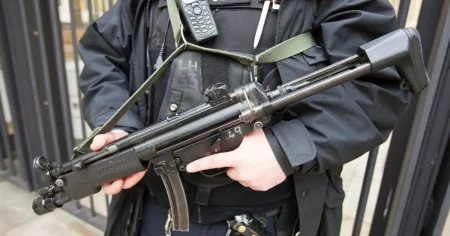
The human cost of this incident goes far beyond the immediate injuries, and it is important to remember that behind the shocking headlines and official statements are real people whose lives have been changed in an instant. Four men woke up that morning expecting a normal day, perhaps heading out to work or to shop, and by the afternoon they were lying in hospital beds, surrounded by doctors, nurses, and the quiet hum of medical equipment. One of them was fighting for his life, and the other three were beginning the long, painful road to recovery. Their families, meanwhile, were left to grapple with a flood of fear, confusion, and helplessness, waiting for any word, any update, any sign that their loved ones would be okay. There are also the witnesses, like Matt Farrington-Smith, who may have escaped physical harm but who will not easily forget the sight of armed police, the sound of sirens, and the feeling of being trapped in a nightmare that unfolded in a place they knew well. And there are the police officers, paramedics, and hospital staff who did their jobs with dedication and courage, carrying the emotional weight of what they saw. The police investigation will continue, with officers no doubt reviewing CCTV footage, searching for witnesses, and trying to establish a clear picture of the altercation that sparked such devastation. But for the community, the questions may linger much longer. How could this happen here? Why does knife violence keep claiming innocent people? And what can be done to stop it?
Beyond the immediate shock, the stabbing on Bromley High Street has raised deeper concerns that many people across London feel all too keenly. Knife crime is not a distant issue or a statistic; it is a lived reality that can intrude on the most ordinary moments. It happens in the places where people feel safe, on high streets lined with familiar shops, on busy streets where parents walk with their children and friends meet for coffee. The fact that so many people were around in the middle of the day only makes the incident more disturbing, because it happened in broad daylight, in a public space crowded with ordinary citizens. It is a reminder that the threat of violence can exist just beneath the surface, hidden until the moment it explodes. At the same time, the response from the community and the emergency services offers a glimpse of resilience. Strangers were stopped, redirected, and looked out for one another. Witnesses spoke to police, and members of the public shared information, helped each other understand what was happening, and provided comfort in small, unspoken ways. The police, too, moved quickly to reassure the public and to make clear that those responsible had been arrested. There is a sense in which the community was shaken, but not broken, and the determination to carry on, to walk the same streets again, to refuse to be cowed by violence, is itself a powerful statement.
As the dust begins to settle and the cordons are gradually lifted, the true impact of this incident will continue to be felt in the days and weeks ahead. For the man in a critical condition, every hour that passes is a battle, and every positive word from hospital staff is a small piece of hope. For the other three victims, the physical wounds will heal in time, but the emotional scars may take much longer to fade. Nightmares, anxiety, and a lingering sense of vulnerability may become their unwanted companions. For the families, there will be long vigils at the hospital, difficult conversations, and a gradual process of coming to terms with what has happened. For the community, there will be questions and calls for action, a renewed conversation about how to address the root causes of violence and how to keep our streets safe. And for the seven men arrested, there await the processes of the criminal justice system, which will seek to determine responsibility and, if warranted, secure justice for the victims. In the aftermath of such an event, it is easy to focus on the horror, the chaos, and the anger. But it is also important to remember the courage and compassion that emerged alongside it: the paramedics who ran toward the danger, the police who moved quickly and decisively, the ordinary people who stopped to help, and the community that refused to let fear define it. What happened on Bromley High Street was a tragedy, and it will not be forgotten. But it will also be met, as these things often are, with a stubborn determination to heal, to rebuild, and to hope for a future where such scenes no longer happen. For now, the thoughts of all who heard this story go out to the four men hospitalised, to their families, and to everyone whose lives were touched by the violence of that Thursday afternoon.