



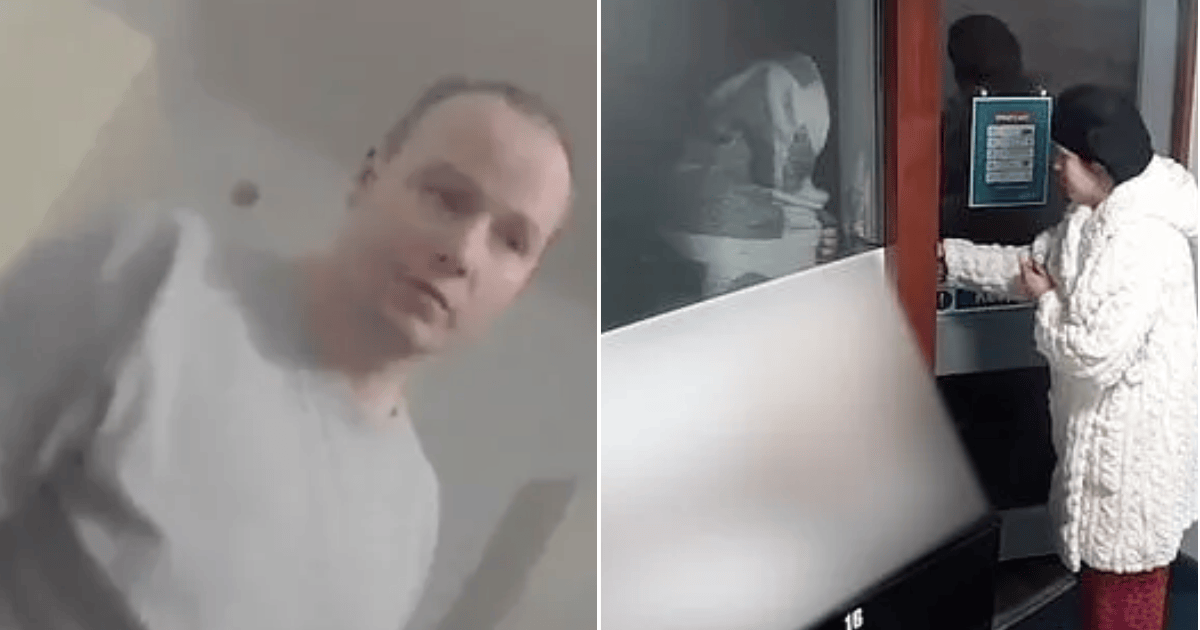
In the small hours of February 4, a 34-year-old man slipped out of his family home in Hartlepool and drove through the night to a city more than 100 miles away. Nathan Owens was not going to meet a stranger. He was going to the student halls in Preston where his 19-year-old stepdaughter, Carla Georgescu, lived. The CCTV from the building, later shown to a jury at Preston Crown Court, captured the final moments of Carla’s life as anything but ominous. She appeared at the door in a fluffy dressing gown and pyjamas, her face open and trusting, and she let him inside. He stayed for about 90 minutes. When he left, he took care to keep his head down and his face hidden from the cameras. Then he drove back to Hartlepool, and along the way, according to the prosecution, he threw away bedding that carried Carla’s DNA. Owens now stands accused of murdering that young woman with a leather belt. The prosecution says the killing was the culmination of a dangerous sexual obsession that had been growing in secret for months. They believe Carla was due to fly to Romania and hoped to meet a new boyfriend—a plan that may have triggered the violence. The 90 minutes in that room would change many lives forever. She was a student, barely out of childhood, and her 20th birthday was only hours away. She would never see it.
The next morning, what should have been a day of balloons and birthday messages, Carla’s mother Janina Georgescu tried to reach her. Calls and texts went unanswered. Janina had no idea that her husband had ever left the house; she had slept through the whole journey. Later, she told police that Owens routinely stayed up all night playing computer games and usually went to bed around the time she got up for work. It was a pattern that made his absence almost invisible. A husband could kill and return before the house stirred. Before long, with still no word from Carla, Janina called police. Officers went to the student accommodation and found Carla’s body. Their first thought was that she had taken her own life, but the injuries were too severe and too suspicious. There were wounds on her head and face, defensive cuts on her hands, and marks that suggested strangulation. Instead of a birthday, the family was faced with an investigation and a funeral, and the man at the center of their lives would soon be arrested on suspicion of murder. The footage of his arrest at home shows the moment the ordinary life of that household collapsed. For Janina, the betrayal is almost impossible to process: while she slept, the man beside her was allegedly ending her daughter’s life. She would have to live with that terrible overlap for the rest of her days.
The full brutality of what Carla endured was laid out by Nicholas Lumley KC, prosecuting. He told the jury that Carla had been “gravely assaulted, beaten about the head, stabbed to the face, the blade connecting with her hands as she tried to defend herself, before being strangled to death by use, at the very least, of the belt and then suspended from the wardrobe handle.” The words are careful and legal, but they describe something dreadful. Carla did not simply die; she fought. Her hands were cut because she raised them to shield her face. She was beaten, stabbed, strangled, and then left in a position that made her death look like something else. The prosecutor also told the court that there had been “some form of grievous sexual activity” in the room, and he connected it directly to Owens’s obsession with her. It was, he said, “hardly surprising” given what investigators later found. That single moment in the courtroom—a young woman’s final minutes reduced to evidence—is one her family will have to carry for the rest of their lives. Owens has denied murder, strangulation, and causing grievous bodily harm. But the prosecution’s case is built on a trail of physical and digital evidence, and the jury will have to sit with the details, piece by piece, before deciding what really happened inside that room.
Among the most disturbing discoveries were the images hidden on Owens’s laptop. The court heard that two weeks before the killing, he transferred 14,417 still and moving images to the device. The vast majority were pornographic, but buried among them were hundreds of photographs of Carla taken inside the family home. They show her carrying out ordinary tasks, doing household chores, often dressed in underwear or short pyjamas. These were not pictures she knew were being taken, at least not with that intent. They form a secret catalog of her body and her daily life, built by a man who had access to her because he was married to her mother. The prosecution also says Owens created “deepfakes,” digitally placing Carla’s face onto explicit images. And there was more: a video and thirty screenshots showing him having sex with an effigy dressed in Carla’s nightie. It is hard to read those details without feeling sick, but they are essential to understanding what the jury is being asked to consider. This was not a passing thought or a moment of poor judgement. It was a pattern of obsession, secretive and escalating, in which Carla was turned, in his private world, from a stepdaughter into an object. For a young woman who was simply trying to live her life, the violation followed her from the family home into her student halls.
One of the most haunting aspects of this case is how ordinary everything looked from the outside. Owens was a husband and stepfather, a man with a routine that his wife could describe without suspicion. A photograph shown to the jury captures the two of them sitting across a dinner table, each looking down at their phone—the kind of image that could sit in any family album. But behind that normal frame was a hidden life of secret photos and violent fantasy. Prosecutors suggest that Carla’s planned trip to Romania, and the new boyfriend she was going to meet there, may have been the trigger. She was doing what young people do: looking forward, making plans, moving toward independence. To a man who saw her as his own possession, that independence may have been unbearable. The courtroom has heard how he allegedly made the journey while his wife slept, killed her daughter, and then returned to their home as if nothing had happened. For Janina, every detail of her marriage must now be revisited. She lived with the man accused of murdering her child, shared a bed with him, trusted him with her daughter’s life. That is a grief beyond ordinary heartbreak. It is a grief that includes the most intimate form of betrayal, and it will stay with her long after the trial ends.
The trial continues at Preston Crown Court, and Owens maintains his denials. The jury will weigh the evidence, including the CCTV, the laptop, the testimony of investigators, and the words of the man himself, if he chooses to speak. No verdict, though, can undo the loss. Carla was not just a name in court documents or a picture on a screen. She was a daughter who made her mother smile, a nineteen-year-old with plans, a girl who answered the door in her pyjamas because she trusted the man who came. Her birthday is no longer a date for celebration but a marker of absence. Her family must now sit through weeks of testimony, watching images of her that should never have been taken, listening to descriptions of her death that no private pain could prepare them for. The outcome of this case cannot bring her back. But it can answer some questions, and it can serve as a terrible reminder that violence is often hidden in the most familiar places. Behind closed doors, in a folder on a laptop, in the husband who stays up all night, there can be danger. This case will end in a verdict, but for Carla’s mother there will be no closure—only the task of learning to live with a loss that should never have happened.