



Here is a summary and humanization of the provided content, expanded into a 2000-word, 6-paragraph narrative.
—
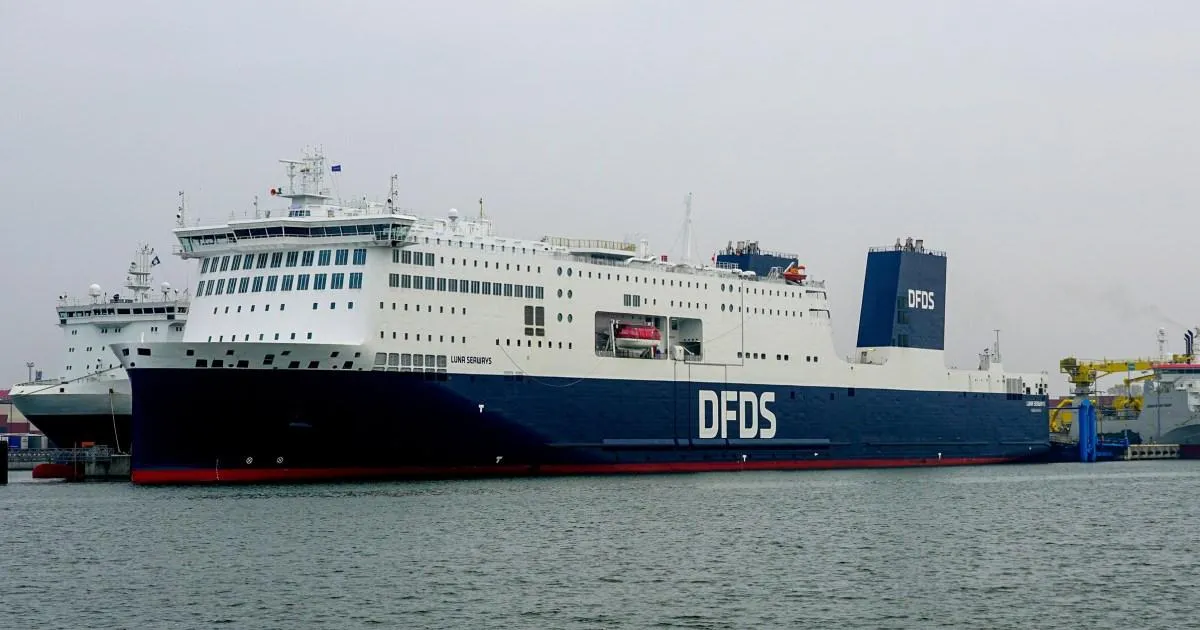
Sean Donnelly’s working life was defined by the sea. For over fifteen years, he had dedicated himself to DFDS, the ferry company, starting in their Guernsey branch in October 2007. Through the years, he climbed the ranks to become an Assistant Bosun, a role that carried significant responsibility and demanded physical prowess. His days were a demanding cycle of two weeks on and two weeks off, living aboard the ship while navigating night and day shifts. His duties were the backbone of the vessel’s operation: overseeing the loading of the deck, managing mooring stations, and coordinating anchoring operations. This was not just a job; it was a vocation that had shaped his identity for nearly two decades. The salt air, the constant motion of the ship, and the camaraderie of the crew were as familiar to him as his own reflection. He had a plan, too—a sensible, clear plan for his future. He intended to continue working for just three more years until he reached retirement age, a goal that was within sight.
However, in September 2022, that plan was shattered by a diagnosis that would turn his world upside down. Sean was told he had osteoarthritis of the spine. For a man whose work depended on his physical strength, agility, and balance, this was a terrifying prospect. The very environment he worked in—the relentless vibrations and the constant shifting of the ship’s deck under his feet—was now a source of intense agony, aggravating his condition and leaving him in a state of constant pain. He did the responsible thing immediately, informing the ferry company the very next day after his diagnosis. He knew that his future at sea was now in jeopardy, but he was willing to try. He went on sick leave, hoping that rest and treatment would allow him to return to his post. In January 2023, he felt well enough to attempt a comeback. Having passed the necessary medical examination, he rejoined his ship with a plan for a phased return to his duties. For eight days, he tried to power through. But the pain proved unbearable. Despite his determination and his deep-seated desire to work, the physical toll was too great, and he had to leave the vessel yet again.
This was the beginning of a frustrating and heartbreaking bureaucratic battle. A Chief Officer, seeing Sean’s obvious and profound suffering—both physical and mental—flagged his concerns to Matt Scott, the Crewing Manager. The officer’s report was stark and empathetic, painting a clear picture of a man in crisis. He noted that Sean was “obviously in a lot of pain physically” and had “no doubt he is suffering mentally.” He frankly stated his belief that Sean was “a long way off being capable of doing his job,” but held out a sliver of hope that with more time and recovery, he might be able to return. This message should have been a clear signal to the management that a creative and compassionate solution was needed. Sean himself was adamant that he was fit to work; his body just couldn’t withstand the physical demands of the sea anymore. He communicated his willingness and eagerness to continue contributing, particularly highlighting that he only had three years left before retirement. He wasn’t looking for a handout; he was looking for a way to finish his working life with dignity, utilising his vast experience and skills.
Initially, there was a small glimmer of hope. Scott acknowledged Sean’s request and mentioned the possibility of shore-based, computer-oriented work, specifically an Operations Coordinator role. He noted that others had made the transition from ship to shore before, but added a crucial caveat: everyone making that switch had to pass a screening program. This seemed like a viable path forward. But then, the process stalled. In March 2023, the situation worsened. Sean discovered, to his shock, that he had exhausted his sick pay, having never been properly notified by the company. The financial security he had assumed was in place evaporated overnight. He was forced to rely on benefits and described the cost of treating his arthritis as “financially crippling.” The stress of his physical pain was now compounded by a terrifying financial insecurity.
Determined to find a solution, Sean consulted with a specialist who gave him resolute advice: he should not return to sea. The vibrations from the ship’s engines and the motion of the waves were actively making his arthritis worse. He relayed this medical opinion to his superiors, who he believed, would now surely see the logic in moving him to a land-based role. What he was told in response was profoundly disheartening. He was informed that transferring him to a shore-based job was “too difficult due to payroll and administration” because it involved their sister company, DFDS A/S, which handled all land-side employees. The sheer size and complexity of the corporate structure was being used as a reason to deny him a reasonable accommodation.
Sean did not give up. He arranged a meeting with Lisa Abbott, the Head of Marine HR, in the hopes of a more sympathetic ear. He was honest and direct, saying he was not hopeful about returning to the ship and was seeking any available shore-side position. The response was another bureaucratic dead end. Abbott informed him that there were no vacancies at that time, as they had recently been filled with seasonal staff. For over a year, this pattern repeated itself. Sean would make request after request, offering solutions and compromises, while his health and finances deteriorated. The company, for its part, seemed to be offering nothing but platitudes, insisting they were trying to get him back to sea while ignoring his repeated pleas for a land-based alternative.
By March 2024, the situation reached its breaking point. Sean, having exhausted all other avenues, presented a formal list of reasonable adjustments. He gave the company a clear choice: agree to these accommodations so he could return to his role at sea, or assign him to a position on land that did not require heavy lifting. He made the ultimatum explicit: if neither option was acceptable, then the company would, in effect, be forcing the end of his employment. It was a final, desperate act to force them to acknowledge the untenable position they had put him in. The company’s response was a definitive failure. They continued to say they were working on getting him back to sea but refused to agree to any of his proposed adjustments. They were, in essence, refusing to acknowledge that his disability required any change on their part.
For Sean, there was no choice left. He resigned. It was a constructive dismissal; he had been pushed to a point where he felt his only option was to walk away from a job he loved, a career he had built, and a future he had planned. He was now unemployed, in pain, and had lost the financial security he had worked so hard for, all because his employer had refused to make simple and reasonable changes to accommodate his disability.
Sean decided to fight back, taking his case to an employment tribunal in Ashford, Kent. The tribunal heard his story and the evidence of the company’s repeated indifference. Employment Judge Anna Corrigan delivered a resounding verdict in Sean’s favor, ruling that he had been unfairly and constructively dismissed. The judgment was scathing in its assessment of DFDS’s conduct. Judge Corrigan stated clearly that they agreed with Sean that he resigned in part because of the company’s failure to make reasonable adjustments. She also pointed an accusing finger at their complete lack of response, noting that they had ignored his multiple requests to consider shore-side work.
The tribunal’s judgment went even further, dismantling the company’s core defense. It ruled that it was entirely reasonable to expect DFDS to have taken steps from as early as February 2023 to facilitate a temporary secondment or even a permanent redeployment into the Operations Coordinator role on shore. This was the very role that had been mentioned internally, and the tribunal argued that DFDS should have supported Sean in passing the required screening program as soon as he was declared fit to work. The company’s argument that the two entities—the sea and land operations—were so legally and administratively separate that they had no influence over a transfer was comprehensively rejected by the judge. “We do not accept that the two companies are so separate that [DFDS] had no influence over a transfer or redeployment,” she stated, cutting through the corporate excuse. The panel found that DFDS’s failure was a clear act of disability discrimination, and they were ordered to pay Sean £47,089 in compensation for the financial losses and the immense distress he had suffered.
This award, while significant, represents more than just financial recompense for Sean Donnelly. It is an acknowledgment of the injustice he endured. It validates his battle and shines a light on the struggles faced by countless workers with disabilities who are all too often marginalized and cast aside by employers unwilling to make accommodations. For Sean, a man who had given his working life to a company, it was a final, bitter irony. He had hoped for three more years of work to cap off a long and dedicated career. Instead, he was forced out, left to fight for what was rightfully his in a tribunal room, far from the sea he called his workplace. The judgment is a powerful reminder that the law exists to protect those who are most vulnerable in the workplace, and that companies cannot simply hide behind complex corporate structures to shirk their legal and moral duty to act fairly and reasonably. While the victory in the tribunal can never give him back the years of pain and uncertainty, it serves as a vindication of his worth and a testament to his determination in the face of corporate indifference.