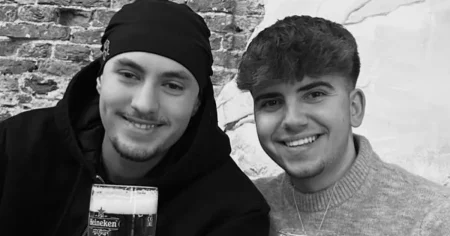



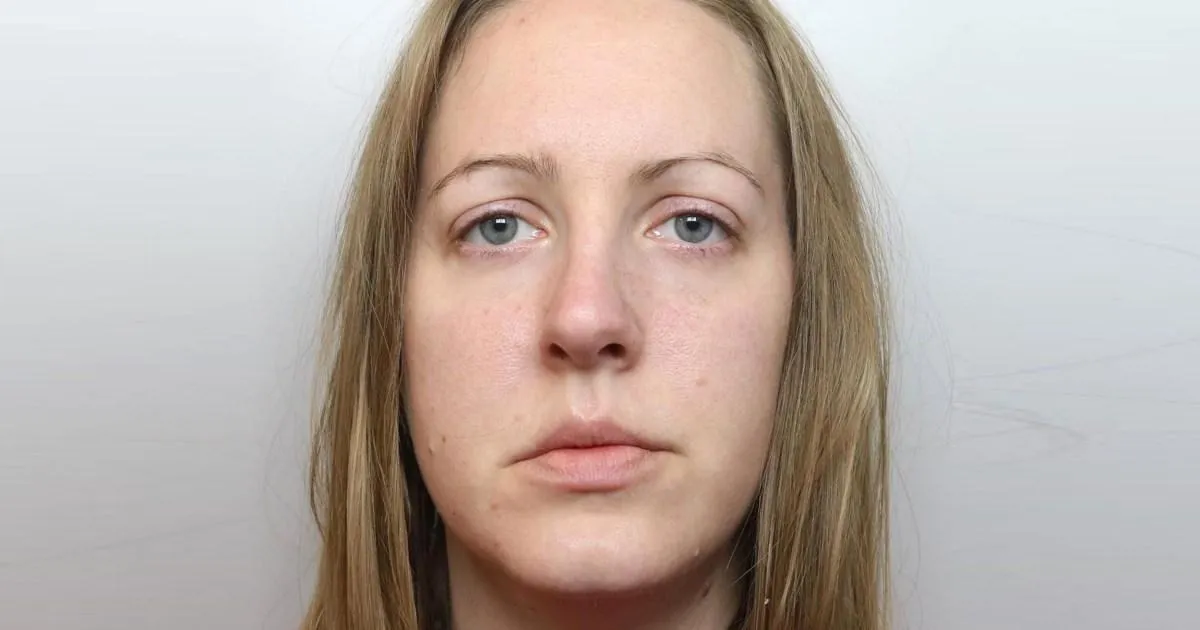
The quiet, devastating aftermath of the Lucy Letby case has claimed another toll, this time upon a man whose name was never publicly revealed but whose life became inextricably woven into the fabric of one of Britain’s most harrowing criminal investigations. Dr A, the consultant paediatrician described in court as Letby’s “boyfriend,” was found collapsed in his car at Whiston Hospital in Merseyside, a place where he had worked after leaving the Countess of Chester Hospital. He was rushed to intensive care, and for nine days, medical staff fought to save him, but on July 3—eight years to the very day since Lucy Letby was first arrested on suspicion of murdering babies—he died. The cruel symmetry of that date was not lost on those who followed the case. An inquest into his death has been scheduled for next February, but the official cause has not been announced, and reports suggest he had been seriously ill for some time. Yet it is impossible to separate the physical collapse from the emotional and professional devastation that followed his entanglement with Letby. He was not a perpetrator, not a villain, but a man who found himself caught in the orbit of a serial killer, and whose life was quietly dismantled piece by piece in the years that followed.
The doctor’s fall from grace was as public as it was agonising, even with his identity shielded by anonymity. In the months before his death, he had been sacked from his position over messages exchanged with Letby about one of the babies she would go on to try to kill. According to reports, he faced a disciplinary hearing in June over those messages, which were said to have breached patient confidentiality. For a man who had devoted his career to saving vulnerable infants, the accusation was not just a professional death sentence but a personal one. He had spent years building a reputation as a skilled and compassionate consultant, someone parents trusted with their most fragile children. To be dismissed over conversations with a woman who had secretly been harming those very children was a betrayal of everything he stood for, even if he himself had been deceived. The messages in question concerned Child N, an infant Letby attempted to murder in early June 2016. In one exchange, she asked about the child’s condition and whether she had done anything wrong, and Dr A replied with kindness: “Oh Lucy, poor little thing. I am sure he has had the best care possible and you will have done everything you could for him.” Those words, intended as comfort, would later be held up as evidence of how completely she had manipulated him.
During the ten-month trial at Manchester Crown Court, the only flicker of emotion Letby ever betrayed came when Dr A walked into the witness box. His voice alone was enough to break through her chilling composure, and she broke down in tears, abruptly leaving her seat and heading toward the exit of the dock. It was a moment that stunned the courtroom, a rare crack in the mask of a woman who had shown no remorse for her crimes. When she later entered the witness box herself, she described him as a “trusted friend” and insisted she was not in love with him, though the prosecution painted a very different picture. Jurors heard how the two had exchanged 1,355 Facebook messages over four months between June and September 2016, conversations that often centred on babies who had collapsed while they were on shift together. The sheer volume of messages, their intimate tone, and their focus on the very infants Letby was attacking pointed to something far deeper than a professional relationship. For Dr A, those messages were likely a lifeline, a way to process the stress of a demanding job, but for Letby, they were part of a sinister game. She used his trust, his kindness, and perhaps his affection as cover for her crimes, all while pretending to be just another worried colleague.
The prosecution’s theory was that Letby had developed a “crush” on Dr A and that she attacked infants to gain his attention at work. His name appeared repeatedly in scrawled notes found at her home after her arrest, notes that investigators interpreted as disturbing evidence of her obsession. She admitted they would meet outside work, telling jurors that sometimes he came to her house and sometimes they went out for meals, coffee, or walks. It was a friendship that she said “fizzled out” at the beginning of 2018, just months before she was finally arrested. But by then, the damage was done. Dr A had been drawn into a web of deceit that would define the rest of his life. He was not aware that the babies he was treating were being systematically attacked, nor that the woman he was messaging was the one responsible. He was simply trying to be supportive, to offer reassurance to a colleague who appeared concerned about the children under their care. In hindsight, he admitted during the Thirlwall Inquiry, he had shared too much. He had given clinical details that he thought were helpful but now recognised were inappropriate. He described his messages as a “supportive gesture” that now felt like a mistake, something he had considered on a daily basis for the last six to eight years. Those words reveal a man consumed by guilt, even though he was himself a victim of Letby’s manipulation.
The Thirlwall Inquiry, which is examining how the deaths and non-fatal collapses might have been prevented, gave Dr A a final opportunity to speak publicly before his death. In his evidence in 2024, he admitted that Letby had “misled and maybe manipulated” him into giving her information about babies she had attacked. When asked by counsel Rachel Langdale KC whether it had been appropriate to message about Child N with her, he answered plainly: “In hindsight, no.” He acknowledged that while it was common for clinicians to give updates about patients without naming them or sharing extensive clinical detail, he had crossed a line. He had trusted her, and that trust was weaponised against him. The inquiry heard how he had tried to make sense of what happened, replaying every conversation in his mind, wondering if he could have done something differently. It is a tragic irony that a man who spent his career caring for others was left to carry a burden of guilt that was never truly his. He was not the first person to be deceived by a manipulative individual, nor will he be the last, but the scale of the deception and the horrific nature of the crimes made his case uniquely devastating. By the time he spoke at the inquiry, it was clear that he was a broken man, still struggling to reconcile the Lucy Letby he thought he knew with the cold-blooded killer she really was.
Now, with his death, another layer of tragedy has been added to a case already overflowing with grief. Lucy Letby, from Hereford, is serving fifteen whole-life orders after being convicted of the murder of seven infants and the attempted murder of seven others, including two attempts on one victim, between June 2015 and June 2016. She will likely never leave prison, but the ripple effects of her crimes continue to spread far beyond the families of the babies she harmed. Dr A is one of the many silent casualties of her reign of terror, a man whose reputation, career, and ultimately his life were destroyed by his association with her. He died on the anniversary of her arrest, a date that must have haunted him every year. The inquest next February may offer some answers, but no legal proceeding can undo the loss. His story is a reminder that murder victims are not the only ones whose lives are taken; there are also the survivors who are left to pick up the pieces, often invisible, often forgotten. In the end, Dr A was less a “boyfriend” than a pawn in Letby’s twisted psychology, a prop she used to maintain her facade of normalcy while committing unimaginable crimes. His death should be mourned not with suspicion but with compassion, for he was as much a victim of her manipulation as anyone, and he paid the ultimate price for trusting the wrong person.