
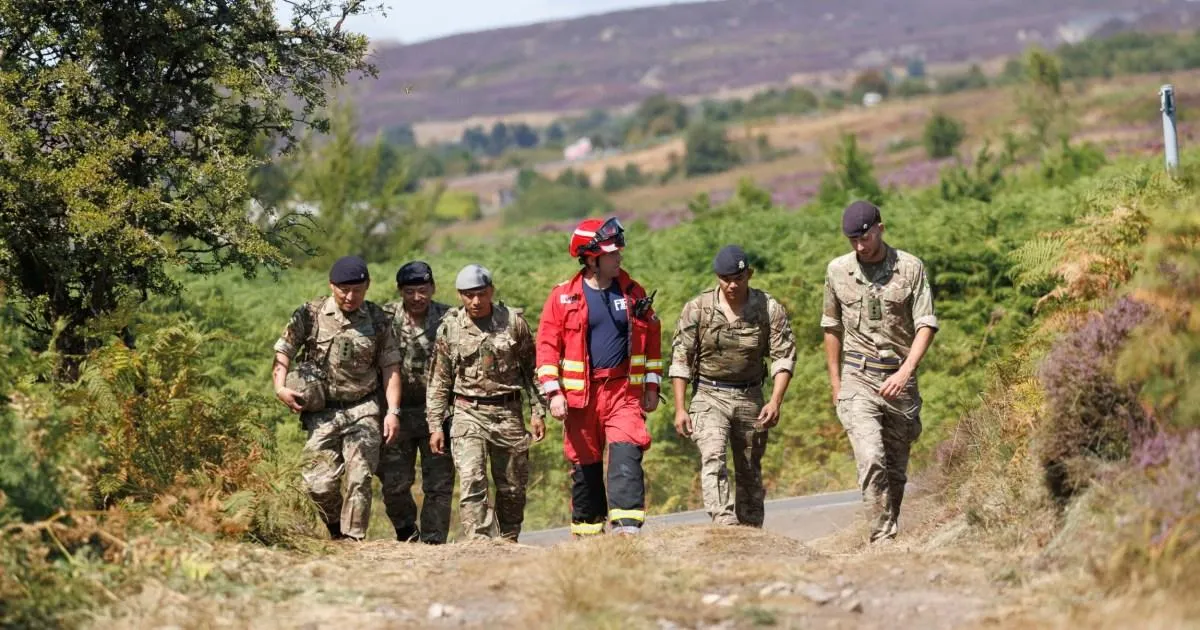
There are moments when a British summer, usually so gentle and unpredictable, turns suddenly menacing, and this week the country felt that shift in the most visceral way possible. Across England and Wales, wildfires have torn through communities with an almost biblical ferocity, leaving behind charred homes, blackened fields, and a lingering sense of shock. The skies turned orange, then grey, then choked with smoke; the air smelled of burning timber and melted plastic; and in some neighbourhoods, people had seconds to grab their children, their pets, and whatever else they could carry before their houses were swallowed by flames. It was, in the words of officials, an apocalyptic series of outbreaks, and the scale of the crisis demanded a response unlike anything seen in peacetime in recent memory. So it was that military support was deployed to Wales, with soldiers sent to relieve exhausted firefighters and to help protect communities still at risk. Prime Minister Andy Burnham, who has been visibly shaken by the speed and severity of the blazes, described the country as a tinderbox, and his government moved quickly to put every available resource into the effort. The deployment of troops is not something Britons are used to seeing on their own streets, but these are not normal times. The sight of military vehicles rolling into Welsh villages, with camouflage and determined faces behind the windscreens, was a stark reminder that nature, when pushed to its limits by heat and drought, can humble even the most advanced nation. For the families who have lost everything, the arrival of the Army was a small comfort, a sign that the state had not abandoned them, but for many it also raised a difficult question: how had it come to this, and what more could have been done before the fires broke out? The answer, for now, is that the priority is simply to stop the flames from spreading further and to keep people alive.
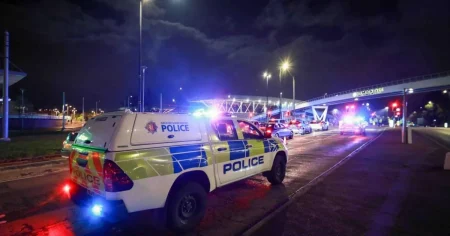
In the West Midlands, the human cost of the fires has been devastating and deeply personal. In Stourbridge, a place of quiet streets and family homes, nineteen houses were gutted by the blaze and eighteen more were damaged, leaving an entire community in mourning for the ordinary lives that once filled those rooms. Neighbours described watching in horror as fire crews battled the flames, and the grief on the faces of those who returned to find nothing but ash and twisted metal was unbearable. Even more tragically, in Stoke-on-Trent, residents of the Goldenhill area spoke of losing everything in a matter of seconds, as fire raced through their homes with a speed that seemed almost impossible. One moment they were sitting down to dinner or watching television; the next, the walls were burning, the ceilings were collapsing, and the world they had built was gone. In the aftermath, two people were arrested after allegedly starting a grass fire, a reminder that some of these disasters are not purely accidents of weather but the result of recklessness, or worse. The police have not released many details, but the anger in the community is palpable; there are few things more infuriating than knowing that a mindless act may have cost people their homes. Meanwhile, in South Wales, the situation remained critical, with around thirty separate wildfires still raging across the region. Fire crews warned that there was an extremely high risk of further spread, and huge plumes of smoke could be seen for miles, casting an eerie shadow over valleys that are usually lush and green. It was against this backdrop that the Prince of Wales issued a heartfelt message, thanking the firefighters, emergency responders, and volunteers who had been battling the flames day and night. He said his thoughts were with everyone affected, particularly those who had lost their homes, and with those working tirelessly to protect communities, homes, and the countryside. For the families watching the news from temporary accommodation, those words offered a small thread of connection to a wider world that understood their pain.
The decision to bring in the military came after days of increasingly desperate struggle. South Wales Fire and Rescue Service, which had been stretched to breaking point by the sheer number of simultaneous blazes, submitted a formal request for two hundred military personnel to assist civilian teams. This was not a decision taken lightly. For a fire service to admit that it cannot cope is a humbling moment, but it is also a honest one, and the authorities in Wales knew that they were fighting a battle that could not be won with existing resources alone. Having already declared a major incident, Welsh officials warned that the fires were affecting a number of communities in various locations and generating smoke that might be visible for miles, and they made it clear that additional support was essential. The request was granted, and soon soldiers were on the ground helping with logistics, clearing firebreaks, moving equipment, and providing the kind of muscle that weary firefighters no longer had. Elin Jones, the Cabinet Minister for Finance, expressed profound gratitude to the Army, saying that the Welsh Government stood ready to provide funding for the military support operations should that be required. Stephen Kinnock, the Secretary of State for Wales, explained that the military personnel were there for logistical support and to ease the pressure on the ground, and their presence certainly did that. But behind the scenes, Ministry of Defence sources were already exploring how resources could be diverted even further, with options including the deployment of water pumps and fire engines used by the Defence Fire and Rescue Service, a unit normally tasked with protecting British defence estates and property. This kind of Military Aid to the Civil Authorities, known as MACA, is reserved for genuine emergencies, and the last time the public saw anything like it was during the Covid-19 pandemic, when soldiers helped administer vaccines. The contrast between those two moments, one a health crisis and one an environmental one, says a great deal about the era we are living in.
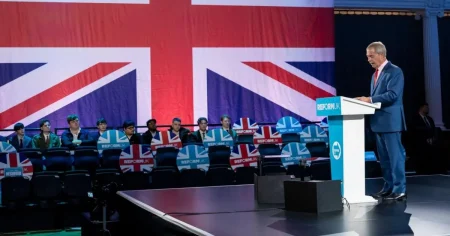
Politically, the crisis has forced leaders to move beyond the usual routines of press conferences and photo opportunities and into a more serious mode of coordination. On Wednesday, a Cobra meeting was held, bringing together the Prime Minister, officials, and representatives from the emergency services to plan for navigating the soaring weather conditions. It was a much more urgent gathering than the standard summer briefing, and after it ended, the Welsh First Minister, Rhun ap Iorwerth, revealed that attendees had considered specialist capabilities such as helicopters and support from the Ministry of Defence and the RAF where appropriate. The mention of helicopters raised an issue that has been a source of frustration for firefighters for years: the United Kingdom does not currently have direct access to wildfire-fighting aircraft capable of dropping six tonnes of water in a single pass. Such aircraft are used effectively in countries like Greece, Spain, and the United States, where they can slow a fire’s advance enough to give ground crews a chance. But in Britain, the military’s firefighting aircraft are all deployed in Cyprus, thousands of miles away, and the gap in capability is becoming harder to ignore. The Fire Brigades Union, which represents around thirty-four thousand people in the rescue service, has argued for some time that access to aerial firefighting capabilities is needed where appropriate, and this week’s events have only strengthened that argument. Watching the fires rage from the ground, with nothing but hoses and hand tools, has felt like fighting a dragon with a teaspoon, and the union’s calls are likely to grow louder in the coming weeks. For now, however, the focus is on the here and now, and every conversation is dominated by one question: how do we stop this from becoming even worse?
In response to the escalating danger, the Prime Minister has appealed directly to the public, urging people not to light anything that could spark a fire, including barbecues, campfires, and fireworks. It is a plea that sounds simple, but in the context of a drought-stricken landscape, it is a matter of life and death. The ground is so dry that a single spark from a disposable barbecue can ignite an entire hillside within minutes, and the sale of disposable barbecues has already been banned in several areas due to their significant risks. For many people, the ban has been an inconvenience, but for those who have watched their neighbours’ homes burn, it is a necessary and welcome step. Then, on Friday night, millions of phones across the country let out a piercing alarm, startling people in their living rooms, in pubs, and in bed. It was the government’s emergency alert system, and although it caught many by surprise, it carried an urgent message from the fire and rescue services about the extreme risk of wildfires. The Prime Minister later explained that the alert was sent at the direct request of fire and rescue services, and he urged everyone to take the message seriously. For some, the alert was a nuisance; for others, it was a life-saving warning. But it also served as a symbol of how thoroughly this summer has changed the national conversation. A few years ago, the idea that Britain would need emergency alerts for wildfires seemed almost absurd; now, with temperatures exceeding 38 degrees Celsius in August, it feels like a grim new normal. Burnham compared the country to a tinderbox, and the image has stuck, because it captures not only the physical dryness of the land but the fragility of the systems we have built to live on it. The message from the government is clear: the priority is to keep everyone safe and to prevent more fires from starting, and that requires a collective effort from every single citizen.
As the fires continue to burn, and as the smoke drifts across the landscape, there is a growing sense that this is not a one-off anomaly but a warning of what lies ahead. The communities that have been affected will need enormous support in the coming months, not just to rebuild houses but to process the trauma of having watched their lives go up in flames. Charities and volunteer groups are already mobilising to help, and the gratitude that people feel towards the firefighters and soldiers on the front lines is impossible to overstate. They have worked until they could barely stand, their faces blackened with soot, their eyes red from smoke, and they have done so with a quiet determination that has inspired the whole country. But there is also a sense of anger, or at least frustration, that more was not done earlier. Climate scientists have been warning for decades that rising temperatures would bring more frequent and more severe wildfires, and the infrastructure to fight them has not kept pace. The absence of aerial firefighting capabilities, the lack of investment in rural fire prevention, the slow move toward banning the most dangerous forms of outdoor burning; all of these are failures that have been exposed with cruel clarity by the flames. In the short term, the focus must remain on keeping people safe and preventing new fires from starting, but in the longer term, Britain will have to confront some difficult questions about how it prepares for a hotter, drier future. The Prince of Wales thanked those who were working tirelessly to protect communities, homes, and the countryside, and his words echoed the feelings of millions. But gratitude, while important, is no substitute for action. The tinderbox is still there, waiting for the next spark, and only a serious, long-term commitment to resilience and adaptation can ensure that the scenes we have witnessed this week do not become a regular part of British summer. For now, though, the nation holds its breath, watches the skies, and prays for rain.