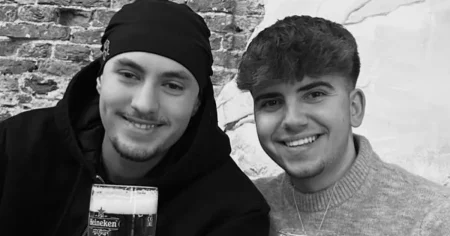


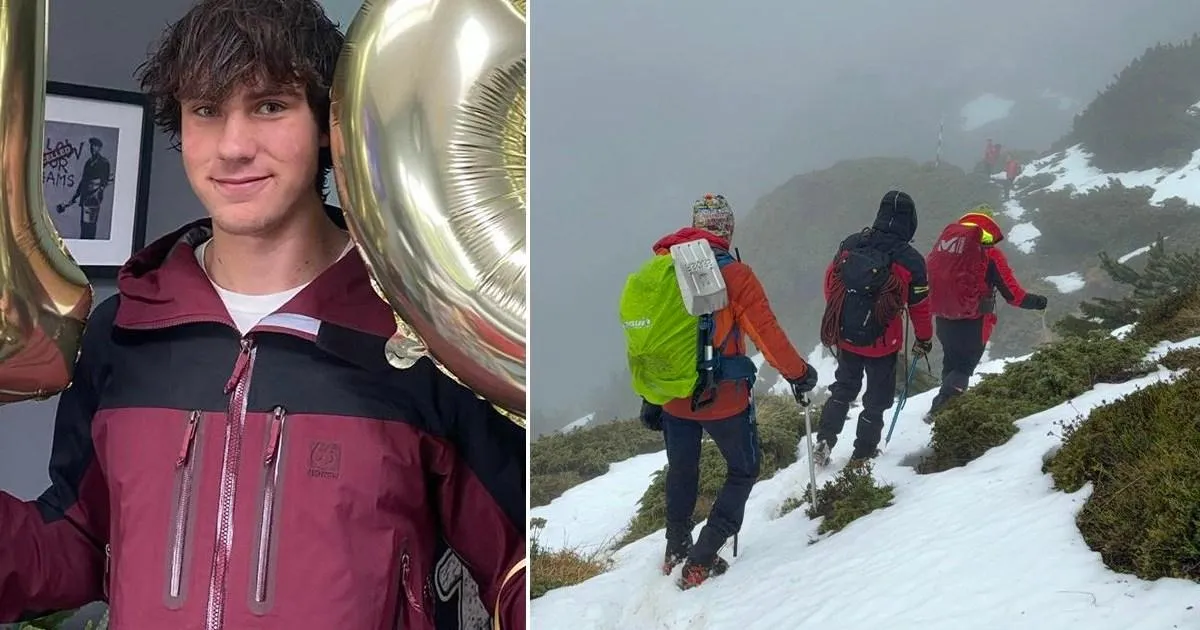
George Smyth was only eighteen years old, a geology student with his whole life in front of him, when he set out on what should have been an unforgettable adventure in the Romanian mountains. From Bristol, England, he had travelled to the Carpathian region with all the excitement and curiosity of a young person who loved the natural world. On 23 November, he decided to go on a hike through the Bucegi Mountains, heading towards the village of Bran, a place known around the world for its striking castle, often marketed as “Dracula’s Castle.” It is easy to understand why a geology student would be drawn to such a landscape: the mountains are ancient, dramatic, and rich with rock formations and natural history. But the same rugged beauty that draws hikers to the area can also be unforgiving, and the Bucegi range is known for its sudden weather changes and challenging terrain. For George, a journey that began with a simple walk in the hills became something no one could have predicted. He disappeared, and his disappearance would launch a long, painful search that would not bring closure until many weeks later.
The first signs that something was terribly wrong came when George himself contacted emergency services. He was alone in the mountains, exhausted, and suffering from hypothermia. Hypothermia is a silent danger, a condition that creeps into the body and mind, clouding judgment and draining strength. For a young hiker, even one with knowledge of the outdoors, it can be overwhelming. His call for help was a desperate attempt to be rescued before his body gave out. The location he gave placed him somewhere in the Bucegi Mountain region, a vast and wild area where every hour of delay can be critical. Rescue teams were immediately alerted, and a large-scale search operation was launched. Salvamont, Romania’s mountain rescue service, joined the effort along with local authorities and later police from the United Kingdom. They scoured ridges, valleys, forests, and ravines, working in conditions that were often extremely difficult and sometimes dangerous. But as days passed, there was no sign of George. Search efforts continued even as the autumn weather turned to winter, with freezing temperatures, snow and ice making the work harder. The world watched and waited, hoping for a miracle.
For George’s family, the weeks that followed were a living nightmare. They were thousands of miles away in Bristol, trying to make sense of a situation that made no sense. Every phone call could have brought news, and every moment of silence was filled with anxiety. The uncertainty was perhaps the worst part. Not knowing whether George was alive, whether he had found shelter, whether he was in pain, whether he was still fighting to survive—that endless not-knowing weighed on everyone who loved him. Avon and Somerset Police stayed in close contact with Romanian authorities, while the University of Bristol, where George was a student, offered its own support to his family and friends. The family also leaned on the Salvamont Mountain Rescue team, who remained in constant communication with them, sending updates, explaining the search, and doing everything they could to bring George home. The rescue workers became more than just searchers; they became a lifeline for a family waiting in anguish. In their grief, George’s family would later speak of these people with deep gratitude, describing how they had worked tirelessly for months despite the very difficult and often dangerous conditions. It was a reminder that human kindness and dedication can shine even in the darkest moments.
Then, on a Saturday, the heartbreaking news came. A body had been found in the search area, and police said they believed it was George Smyth. Formal identification was still to take place, but the family was informed. A family liaison officer was assigned to support them, and the news, as devastating as it was, finally brought an end to the torture of waiting. In a statement released through Avon and Somerset Police, George’s family poured out their grief. “We are all devastated by George’s death,” they said. “He was the best of us and is deeply missed by his younger brothers, family and friends.” Those few words carry the weight of a family’s love and loss. To lose a child is a pain that no parent should ever have to endure, and to lose a brother is to lose a companion, a guide, and a part of one’s own childhood. The family’s words also revealed that George was more than a missing person; he was a young man who was loved deeply, who had siblings who looked up to him, and who was regarded as the very best of a close family.
In the same statement, George’s family showed an extraordinary capacity for gratitude, even while their hearts were breaking. They wanted to thank Salvamont Mountain Rescue, who had worked without rest since November to find George, often putting their own safety at risk. “They are an amazing team,” the family said, “and have remained in constant communication, helping us greatly throughout this awful time.” They also thanked Avon and Somerset Police and the University of Bristol, saying both organisations had gone above and beyond in their efforts to find George and support the family. Then came the painful but necessary acknowledgment that the search was over. “Although this latest news is incredibly painful, the torture of waiting is finally over, so we can now focus on bringing George home and saying goodbye.” These words speak to the strange mix of grief and relief that can come with an answer, even a terrible one. The family could finally stop waiting and start mourning. Efforts would now be made to return George’s body to Bristol once formal identification had taken place. There would be a funeral, a final farewell, a grave to visit, and a future in which George would be remembered, but not seen again.
The story of George Smyth is a tragedy, but it is also a story of love, devotion, and the deep bonds that hold people together in unimaginable times. A young man with a passion for geology went to Romania to explore the dramatic landscapes of the Carpathians, and he never came home. Bran Castle, a place associated with vampires and legend, now stands in the background of a very human story—a story of a family saying goodbye too early, of rescue teams who refused to give up, and of a community that grieved with the family. George’s life may have been short, but it touched many people. His younger brothers will grow up without him, but they will always know that he was remembered as “the best of us.” His friends will carry the memory of a bright, curious, adventurous soul. And those who followed his story from afar will pause to think about the fragility of life and the importance of caring for one another. As the family asked for privacy to come to terms with their loss, the rest of us can only offer our deepest sympathy. George Smyth was not just a missing hiker or a name in a news article. He was a son, a brother, a student, and a young man full of promise. And he will not be forgotten.