

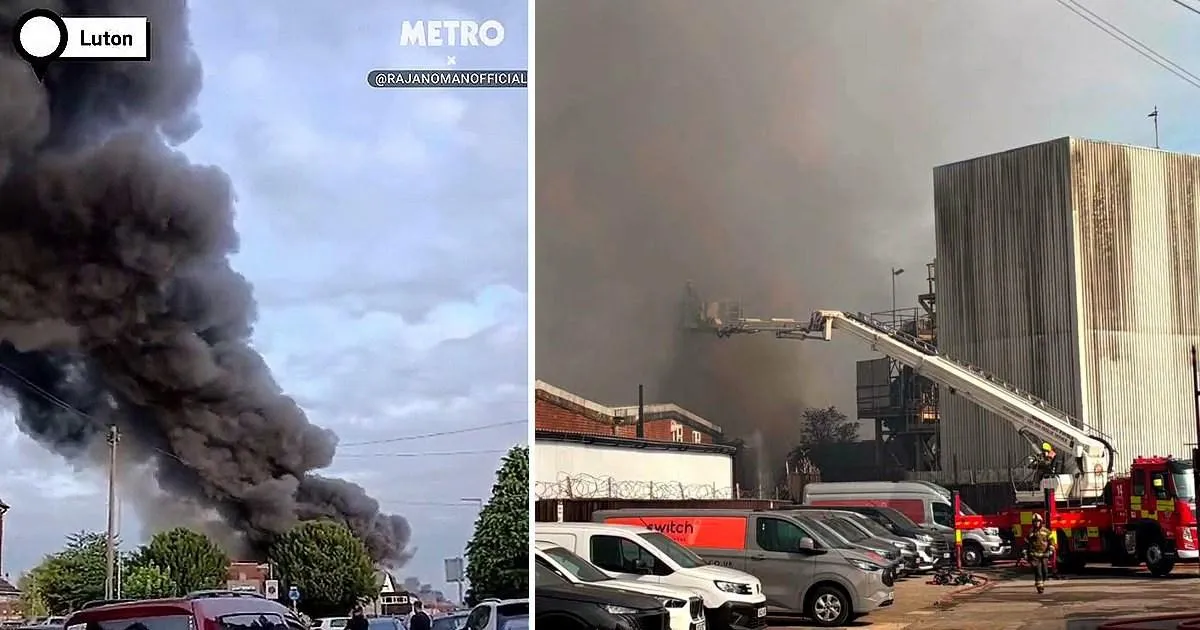
Just after 6am, the first alarms split the morning quiet of Luton. A fire had broken out in a bathroom showroom on Selbourne Road, close to the railway line, and within minutes the streets around it were transformed into a live emergency zone. Residents woke to the smell of smoke and the roar of engines, and many stumbled out to see an orange glow against the pale sky. Those living on Wingate Road were told to evacuate their homes immediately, while people in the surrounding streets were instructed to close every door and window and stay inside, because the smoke was dense enough to be dangerous. Bedfordshire Fire and Rescue Service arrived in overwhelming force, deploying ten engines, three aerial platforms, two water carriers and an incident command unit. The sheer scale of that response told its own story. This was not a small showroom fire; it had quickly become a serious threat to the surrounding community. The fire service issued a striking plea to the public, saying that its control room was incredibly busy and asking people not to call 999 to report the fire because responders were already aware and already on the scene. For those living nearby, the morning became a blur of fear, confusion and helplessness. Parents grabbed children, neighbours phoned one another, and everyone tried to work out how close the danger actually was. Smoke began to drift across roads and gardens, and the sound of sirens seemed to come from every direction. The fire itself may have started in a commercial building, but its impact was deeply personal, turning an ordinary weekday into a frightening and uncertain wait for answers.
Firefighters moved quickly to surround the building, training powerful water jets onto the flames while aerial platforms gave them a view from above. The fire service later described the conditions as challenging, and it was easy to see why. The heat, the smoke and the location near the railway line all added layers of difficulty to an already exhausting operation. Despite the intensity of the blaze, there was a moment of relief when crews confirmed that all people were accounted for. No one had been reported missing, and no lives had been lost. That news mattered enormously to residents who had rushed out of their homes unsure whether everyone had made it out safely. Still, the operation was far from over. Firefighters expected to remain at the scene for the rest of the day, dampening down hotspots and trying to make the area safe. The fire had burned through significant parts of the building, and the work was slow and painstaking. With so much equipment tied up in one incident, it was also a reminder of how much pressure the emergency services were under. Police had been called just after 6.18am to help with the response, and as the morning wore on, the focus shifted from fighting the fire to protecting the community from its ongoing effects. Nearby residents were warned that they might experience low or no water pressure, because the firefighting operation was drawing heavily on the local supply. Affinity Water sent a technician to the scene to help manage the situation and try to limit the disruption.
The effects of the fire were felt far beyond the showroom itself. Four junctions near Selbourne Road remained closed, causing traffic to snake through side streets and forcing buses and commuters to find alternative routes. Roads were cordoned off, and emergency vehicles continued to arrive and leave throughout the day. The smoke, which had initially been thick and black, lingered in the air, and the advice to keep doors and windows closed stayed in place for the surrounding area. For residents, that meant an uncomfortable kind of isolation: staying indoors, avoiding the smoke, and waiting for news. Local people began sharing photographs and videos of the incident, trying to piece together what had happened. There was a sense of a community holding its breath, with neighbours checking on the elderly and vulnerable, offering space in their homes to anyone who had been evacuated. The fire service, already stretched thin, worked methodically through the chaos. The fact that a bathroom showroom had been destroyed felt almost secondary. What mattered was that the people in the area were safe, that no one had been injured, and that the fire was being brought under control. But the closure of so many junctions and the ongoing presence of emergency crews meant that the disruption would continue. For many, the day had been turned upside down before breakfast, and even as the smoke began to thin, the emotional impact of the fire remained heavy.
This blaze came less than 24 hours after a nationwide emergency alert had been sent to phones across England and Wales, warning of an extreme risk of wildfire. The message was described as the most extensive use of the UK’s emergency alert system in response to an active incident, and it had been sent directly from fire and rescue services. It urged people not to light anything that could spark a fire, including barbecues, campfires and fireworks. The alert was not a drill. Over the previous days, fires had destroyed homes and devastated communities in other parts of the country. In Stourbridge, 19 homes had been destroyed and 18 others damaged, leaving families with almost nothing. In Stoke-on-Trent’s Goldenhill area, houses had turned to ash in a matter of minutes, the flames moving so fast that people had barely enough time to escape. The misery and loss were still fresh in people’s minds when the Luton fire broke out. Andy Burnham, who had been vocal about the dangers of the hot, dry weather, implored people to take the warning seriously. He stressed that the request had come directly from fire and rescue services, and that the priority was to keep everyone safe and prevent more fires from starting. The baton of fear and frustration was being passed from one community to another, and the dry conditions meant that any spark, no matter how small, could become a catastrophe.
The broader context made the Luton fire even more alarming. Britain was described as a tinderbox, with soaring temperatures drying out gardens, parks and fields. The hottest day of the year had been recorded on August 13, when a provisional temperature of 38.1°C was noted in Kew Gardens, and the heat had not relented. More than 70 percent of England and all of Wales were officially in drought, and the landscape was brittle and dry. Against this backdrop, officials had already made the decision to impose a temporary ban on the sale of disposable barbecues, citing the significant risk they posed to public safety. It was a measure that would have seemed extreme just a few years earlier, but now it was considered necessary. The Prime Minister added that people must face up to the changing climate, and the words hung in the air as another fire sent smoke into the sky over Luton. For those watching from their windows, the connection between the larger climate crisis and the flames in their own neighbourhood was unmistakable. The earth was dry, the heat was relentless, and the environment was primed for disaster. A discarded cigarette, a stray ember, or perhaps simply a combination of heat and brittle materials could be enough. The fire at the bathroom showroom was a local emergency, but it was also part of a much larger pattern.
As the day went on, the firefighters became the quiet heroes of Selbourne Road. They had worked incredibly hard in challenging circumstances, and their presence was a comfort to a shaken community. The fire service knew that the work would not end quickly, and they prepared to stay on site for the rest of the day. The incident command unit remained in place, coordinating the response and providing updates. Police continued to manage the cordons and keep people away from danger. Water pressure issues lingered for some residents, and the water company stayed involved to limit the inconvenience. But slowly, the situation began to stabilise. The thick smoke faded to a wisp, the roar of engines became less frequent, and people started to believe that the worst was over. Still, the images of the burning building, the evacuation orders and the desperate calls for people to stop flooding the emergency line stayed with everyone who had experienced it. There was relief that all people were accounted for, but also a deep awareness of how easily the outcome could have been different. In a landscape so dry and so vulnerable, every fire is a warning. The blaze in Luton was a reminder that emergency services cannot do it alone. The public has a role to play: taking alerts seriously, respecting bans, and thinking carefully before doing anything that could create a spark. The morning had been terrifying, but it could have been far worse. As the sun climbed higher and the firefighters continued their painstaking work, the community took a long, quiet breath and began to piece its day back together.