


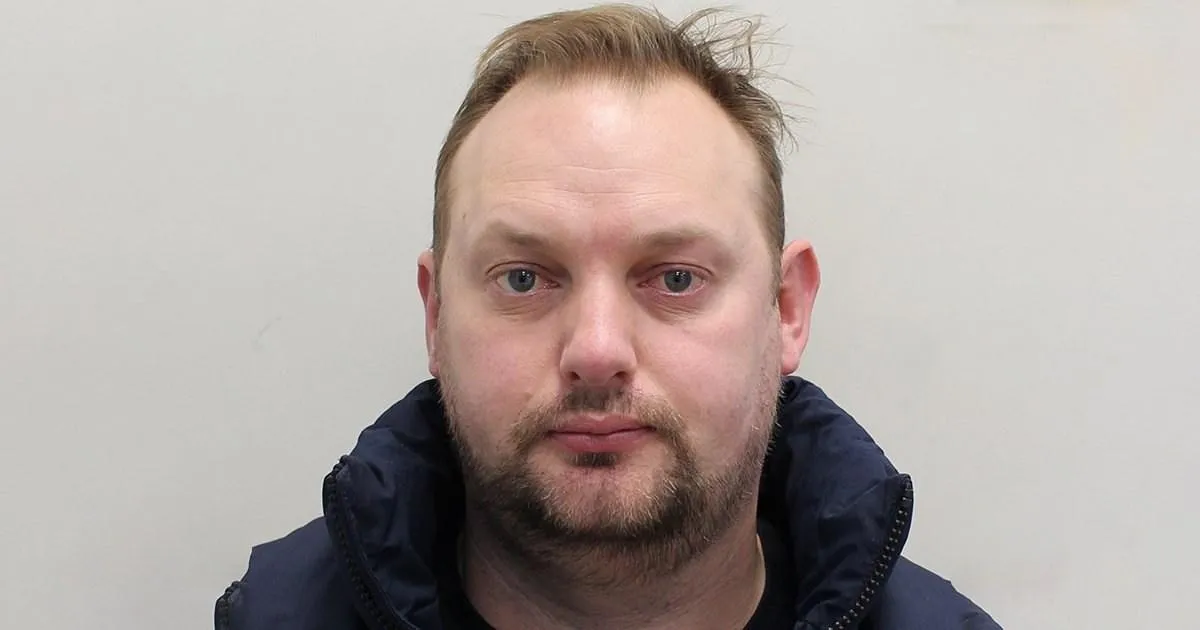
In a case that has sent shockwaves through the military and beyond, Graham Jarvis, a 38-year-old soldier in the Household Cavalry, has been sentenced to twelve years in prison for planning to commit unthinkable sexual violence against two young children—a seven-year-old girl and a ten-month-old baby. The sentencing took place at Southwark Crown Court, where Judge Adam Hiddleston delivered a stern and unflinching assessment of Jarvis’s intentions, rejecting any suggestion that this was a mere fantasy or a lapse in judgment. Instead, the court heard how Jarvis had genuinely believed he was communicating with a mother willing to facilitate the abuse of her own children, and that he had every intention of driving from his barracks in central London to a home in Wales to carry out the assaults. What Jarvis did not know was that the woman he was speaking to was not a mother at all, but an undercover police officer working to expose predators hiding in plain sight. The case is a chilling reminder that danger often wears a familiar face—in this instance, that of a serving soldier, someone trusted by the nation, trained to protect, and yet secretly plotting the most vile violations imaginable.
The details of the case are as disturbing as they are difficult to absorb. In mid-January 2024, Jarvis began an online conversation with a woman who presented herself as the mother of two young daughters. The conversation quickly turned dark, with Jarvis stating that he was “into girls” and showing a predatory interest in the children. He asked questions about the older daughter’s sexual experience and was told—likely as part of the undercover operation—that she had previously been abused by two men. Rather than expressing horror or disgust, Jarvis reportedly used that information to further his plans, asking the supposed mother to help him rape the child as well. He then turned his attention to the ten-month-old baby, discussing explicit details and asking the woman for assistance in carrying out the rape. Throughout the conversations, his messages were described by the judge as “cold and clinical,” revealing a man who viewed the children not as human beings but as objects to be used for his gratification. Jarvis agreed to travel to Wales in February 2024, and it was at that point that police moved in and arrested him. The arrest was not simply the end of a sting operation; it was the interception of a real and imminent threat to two innocent lives.
To humanize this story is to confront the terrifying reality of what was almost allowed to happen. The intended victims were not abstract figures or fictional creations—they were a seven-year-old girl with a life ahead of her, and a baby who had barely begun to experience the world. A ten-month-old child is still in the delicate, dependent stage of infancy, unable to speak, unable to defend herself, entirely reliant on the adults around her for safety. The thought that someone could plan to rape such a child is almost beyond comprehension, and yet the court found that Jarvis was not only serious but methodical in his approach. Judge Hiddleston told Jarvis directly: “I have no doubt whatsoever that at the time you made the arrangements, you believed the children were real, a seven-year-old girl and a 10-month-old baby, you wanted to meet them, and when you did, with the assistance of their mother, you intended to rape them.” These words carry the weight of certainty, and they strip away any possibility of excuses. For parents, for anyone who has ever held a baby or watched a child play, this case touches a primal fear. It reminds us that there are individuals among us who harbor such darkness that even the innocence of an infant does not move them, and that the online world—where so much of our daily lives now takes place—can also be a hunting ground for the most dangerous among us.
The background of the offender adds another layer of unsettling complexity. Graham Jarvis was a member of the Household Cavalry, a regiment steeped in tradition and prestige, often seen guarding royal residences and participating in ceremonial duties. He was living in barracks at Hyde Park, one of the most visible and symbolic locations in the United Kingdom. His defense lawyer, Lisa Wilson, described him as a man with an “extremely positive military career” who was “at a low ebb” due to a “traumatic period” at the time of the offences. This mitigation attempt raises a difficult question: how can someone who has served their country, who has been trained to uphold discipline and honor, fall so far as to plot the rape of children? The answer, as uncomfortable as it may be, is that predatory behavior does not always fit a stereotype. People who commit terrible crimes can also be high-functioning, respected, and outwardly successful. They can be colleagues, neighbors, even heroes. Jarvis, who denied the offences and was convicted at trial, has since been dismissed from the military. He had also completed a degree in animal psychology from the Open University while in custody, a fact that adds yet another layer of strangeness—a man capable of academic study and intellectual achievement, yet utterly devoid of moral compass when it came to the most vulnerable humans imaginable. His denial of guilt, despite overwhelming evidence and the judge’s firm conclusion, suggests a refusal to face his own dark reality.
The sentence handed down by the court reflects both the gravity of the crimes and the perceived ongoing danger Jarvis poses. He was sentenced to twelve years in prison for two counts of attempting to arrange the commission of a child sex offence. The judge ordered that he serve at least two-thirds of that term, meaning a minimum of eight years behind bars, with an additional two years on licence. This structure is designed not only to punish but to protect the public. Judge Hiddleston explicitly noted that Jarvis may pose an ongoing risk to children, and the extended licence period will allow authorities to monitor him after his release. The sentencing sends a clear message that the justice system takes online grooming and attempted child sexual abuse with the utmost seriousness, even when the intended victims are spared through undercover intervention. But it also raises sobering questions about rehabilitation. Can someone who has planned such acts truly be reformed? Twelve years is a significant sentence, but for those who care about child safety, it may never feel like enough. The fact that Jarvis showed no remorse and forced his victims’ family—and society—through a trial adds to the trauma. Justice, in this case, is not about healing; it is about containment. It is about ensuring that for at least a significant period, this man cannot act on the urges that the court found to be all too real.
In the end, this case is a stark reminder of the importance of vigilance, both online and offline. The work of the undercover police officer who posed as the mother was critical in stopping a horrific crime before it could occur. Their deception was not a trick played on an innocent man; it was a shield placed between a predator and his intended prey. This successful operation highlights the quiet, often unseen work that law enforcement does every day to identify and intercept those who would harm children. But it also underscores the need for ongoing public awareness, education, and conversation about online safety, grooming behaviors, and the warning signs of abuse. Parents cannot watch their children every second, and predators are skilled at hiding their intentions. What society can do is create systems of protection: robust policing, vigilant platforms, supportive communities, and a justice system willing to take these threats seriously. The story of Graham Jarvis is a dark one, but it is also a story of intervention and hope. Two children never met the man who wanted to hurt them. They will grow up unaware of the danger that once surrounded them, thanks to a stranger who stepped into a dark online world to protect the innocent. It is a sobering thought that such evil can exist in the heart of a soldier, but it is also a reminder that alongside that evil, there are those who dedicate their lives to stopping it—and that sometimes, justice does prevail.