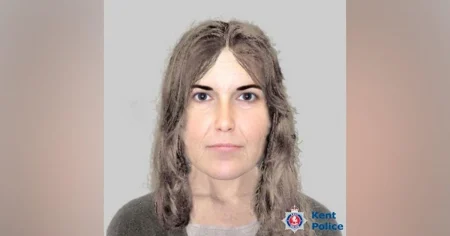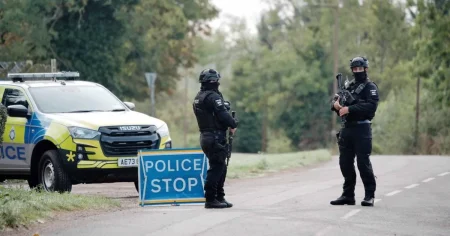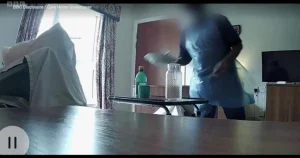


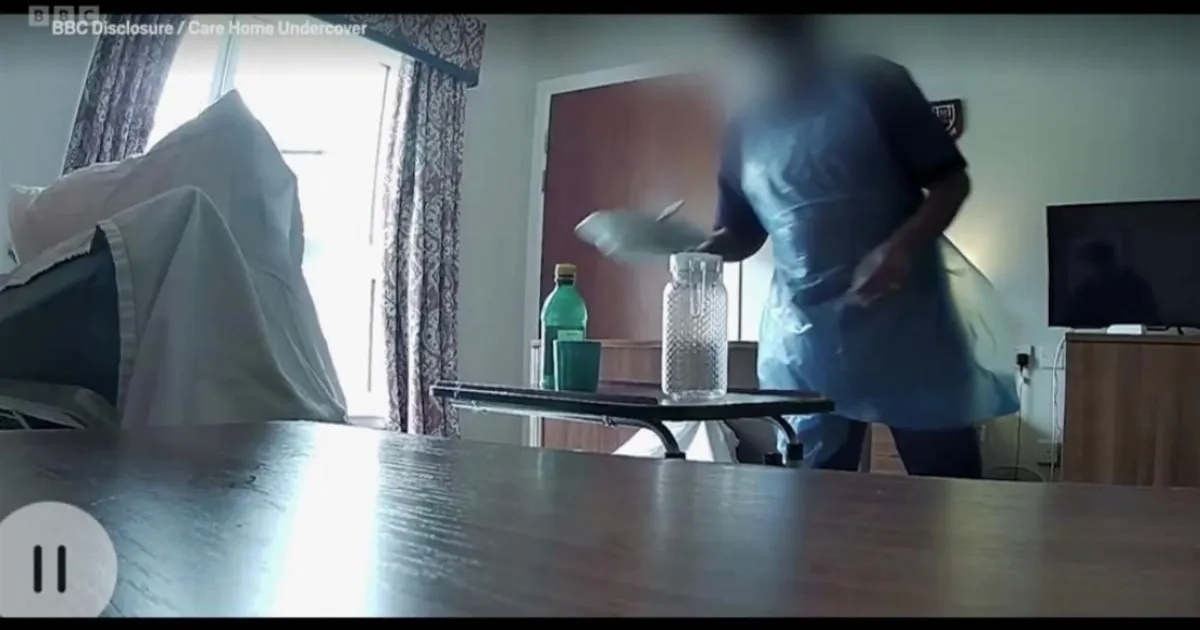
The secret footage was never meant to be a weapon. It was meant to be a last resort. Su Christie had watched her father, an 81-year-old man living with dementia, change in front of her eyes. The man who had raised her, who had once been strong and independent, was now frail, confused and completely dependent on others. She had moved him into Castlehill Care Home in Inverness because she believed the staff would care for him better than she could alone. But something was wrong. He seemed dirtier than she had ever seen him, smelling despite the promises of daily care. He was more anxious and withdrawn, flinching at movements and sounds. She complained, she asked questions, she tried to work with the home. But nothing was resolved. So she made the heart-wrenching decision to hide a small camera in his room. It was not a betrayal of his privacy. It was an act of desperate love, a daughter trying to protect the father who could no longer protect himself. When she finally watched the footage, her fears were not confirmed. They were exceeded. She saw carers who were supposed to be gentle and professional behaving with casual cruelty. She saw her father being tormented, threatened and treated as though his dignity meant nothing. She later described the footage as “distressing,” but the word seems far too small for what she had witnessed.
The most painful part of the footage was not just what Amina Sani said. It was how clearly she understood the resident’s vulnerability and chose to exploit it. The elderly man had a lifelong fear of showers, something he had carried since childhood. His care plan, the document that was supposed to guide his daily care, explicitly stated that he should be offered a bath or a bed wash instead. Sani ignored that instruction completely. Repeatedly, relentlessly, she brought up the word “shower” at least 22 times in nearly as many minutes. The more distressed and agitated he became, the more she continued, as if his fear was a toy she could use to amuse herself. She threatened him with police and court, words that made no sense to a confused elderly man but still frightened him deeply. She looked at him and said, “I am not your maid. You hit me, I will hit you,” a threat that completely inverted the duty of care. She was not there to serve him; she was there to dominate him. In another moment, she pulled his duvet off without any warning, exposing him physically and emotionally. This was not a misunderstanding or a lapse in concentration. It was a deliberate pattern of psychological abuse, carried out in the privacy of a room where this man should have felt safe, in the presence of a carer who was supposed to be one of the people he trusted most in the world.
Sani was not the only one caught on camera. The inquiry into the care home heard another carer, Oluwabunmi Salami, admitted to causing the resident distress by lowering and raising his bed suddenly. For an older person with dementia, the sudden movement of the bed can feel like falling or being shaken by an unseen force. It is disorienting and terrifying, and Salami acknowledged that she had done it. Then there was the male worker whose actions were perhaps even more sinister because of their casual cruelty. He entered the room and shook the bed from the footboard, startling the resident for no apparent reason other than to disrupt his peace. He then picked up the resident’s glass, drank from it, and recorded the man as having taken a sip, falsifying official records to cover his own contemptuous act. These behaviours are not isolated mistakes. They are signs of a culture in which vulnerable residents are seen as burdens rather than human beings. They show carers treating an elderly man’s body, his possessions and his personal space as if none of it deserved respect. For Su Christie, watching this must have been agonizing. She had entrusted her father to this place because she had no other choice, and the home had betrayed both of them. She moved him out within weeks of capturing the footage, but the consequences of the abuse did not disappear simply because he left.
When the case came before the Scottish Social Services Council, Sani’s defence tried to explain away her behaviour. Namatirai Chipere, the carer’s representative, argued that she had not received adequate training and had been “thrown in the deep end” in what was her first job in the United Kingdom. He called the footage an “isolated incident” and insisted it did not reflect a broader pattern of behaviour. But Morar Living, the company operating Castlehill Care Home, rejected that excuse outright. The company said Sani had completed training in dementia awareness, adult support and protection, and communication. The panel concluded that she had failed to use the de-escalation techniques taught in those courses. In other words, she knew what she was supposed to do, but she chose not to do it. That distinction is crucial, because it transforms the case from a discussion about inadequate preparation into an account of personal accountability. Still, the company’s response raises difficult questions. Why did no one notice what was happening in that room? Why did it take a family member’s hidden camera to expose cruelty that must have been visible to anyone walking past the door? Morar Living insisted it had “acted promptly” once the allegations were made and that it had suspended the carers concerned. But the company could not comment directly about the case while proceedings remained ongoing. A spokesperson offered reassuring words about the safety, dignity and wellbeing of residents, but for Su Christie those words must have felt hollow. She had raised concerns before she reached for the camera. She had tried to work with the system, and the system had failed her father.
This case is not simply one bad care home or one cruel individual. It is a reminder of what can happen to vulnerable people when the institutions meant to protect them lose sight of their humanity. Dementia is a condition that steals memory, communication and independence, but it does not steal feeling or fear. The resident in this case had carried a fear of showers since childhood, and that fear remained with him even as other parts of his mind faded. A care plan is supposed to be a promise that such personal histories will be honored, that care will be delivered with respect for the whole person, not just the body in bed. When Sani ignored that plan, she was not just refusing to follow a procedure. She was crushing whatever sense of safety and identity this man still possessed. The other carers who shook his bed and drank from his glass were doing something equally dehumanizing. They were treating him as an object, as a source of amusement, as a body that could be manipulated and recorded and filed away. Abuse thrives behind closed doors, in quiet moments, in words spoken in low voices or threats muttered just out of sight. It thrives when no one is watching, and that is why families in Su Christie’s position are sometimes forced to become surveillance operators. A hidden camera is an extreme measure, but it is also a loving one. It is a refusal to accept silence, a declaration that a parent’s suffering matters even when that parent can no longer articulate it. The footage was distressing, but it was necessary. Without it, the abuse would have continued, and the word of a family member might never have been believed.
What happens next matters for every family that will one day place a loved one in a care home, and for every older person who will depend on the kindness of strangers in their final years. The Scottish Social Services Council’s finding against Sani is an important step, but accountability cannot end with a single disciplinary decision. Care homes must do more than require staff to complete training courses and sign certificates. They must cultivate a culture in which compassion is not an abstract value but a daily practice, monitored and supported by managers who take every concern seriously. They must listen to families, who know the residents better than any external inspector ever will, and treat their complaints as valuable information rather than inconvenient interruptions. They must also recognise that abuse is not always loud or obvious. It can be a word repeated twenty times. It can be a duvet pulled off without warning. It can be a bed raised and lowered to frighten. It can be a glass lifted from a bedside table. These small cruelties add up to an unbearable weight, and they leave marks that cannot be seen in a medical examination. There is a deep urgency here, because the number of people living with dementia is growing and the pressure on care systems is increasing. If we do not learn from cases like this, the same patterns will repeat themselves. No family should ever have to install a hidden camera to keep a parent safe. No elderly man should have to lie in bed listening to a carer mock the fears he has carried since childhood. No carer should ever speak to a resident as if he were a burden rather than a human being. Su Christie recorded that footage because she loved her father. The least the rest of us can do is honour her courage by insisting that every resident, in every care home, receives the dignity they deserve.