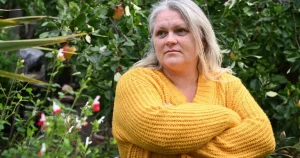


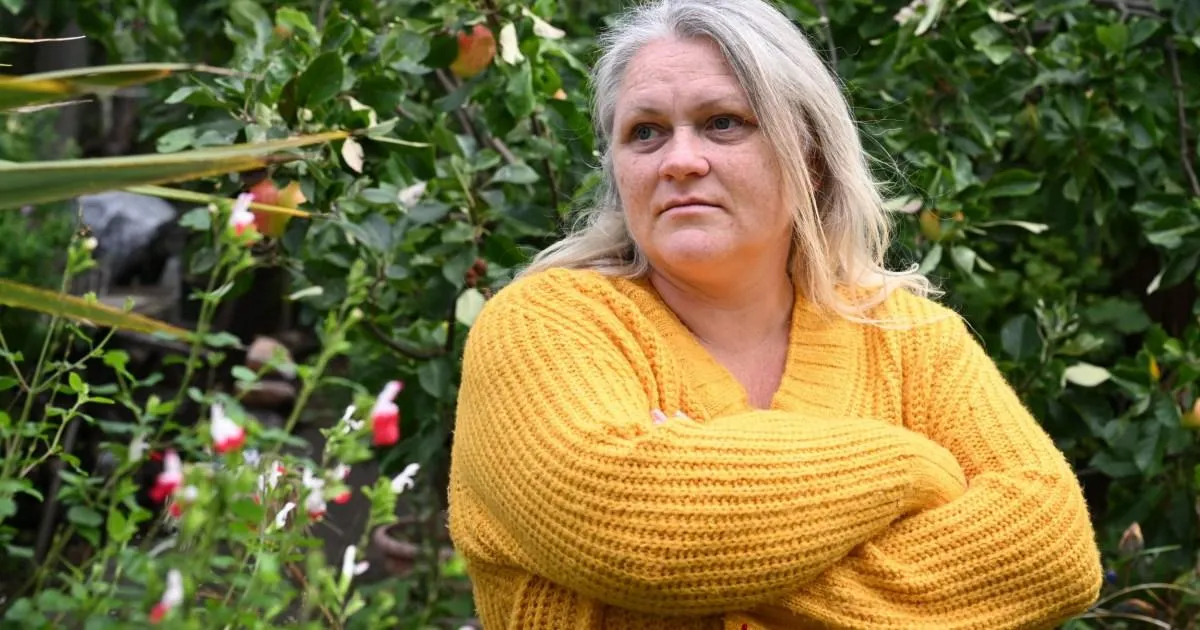
Sam Hammond sat with her son’s blood test results and felt her world narrow to a single, unbearable thought: “I’ve introduced my children to that way of life.” The numbers on the page were described as “off the scale” by the law firm Leigh Day, which had arranged the tests. Her son had been exposed to perfluorooctanoic acid, or PFOA, a synthetic “forever chemical” that does not break down in the human body, at levels unlike anything previously recorded in the United Kingdom. For Hammond, who lives in Thornton-Cleveleys, a Lancashire town not far from the Fylde coast, the result was not a clinical statistic but a parent’s worst nightmare. “I know it isn’t my fault, but the guilt is horrific,” she said. “Knowing that I’ve offloaded what levels I probably had over the years into those children when I breastfed them – that’s heartbreaking.” Her family’s experience is part of a wider crisis unfolding in the community. Almost seven in ten of a sample of forty-nine local residents tested for the presence of PFOA had the chemical in their blood. One local had more than 400 nanograms per millilitre of PFOA in their blood, the highest level of synthetic chemicals ever recorded in a person in the UK. Hundreds of homes sit within half a mile of the AGC Chemicals Europe factory at Hillhouse Industrial Estate, a facility that pumped PFOA into the air for decades before ending its use of the compound in 2012. For Hammond and her neighbours, the results have turned ordinary domestic life into a source of dread. They are left to wonder what these chemicals are doing to their children’s developing bodies, and whether the most basic routines of motherhood, breastfeeding, cooking, and playing in the garden, have become pathways for poison.
The AGC Chemicals Europe plant at Hillhouse Technology Enterprise Zone has been part of the local landscape for a very long time. It manufactured PFOA for use in coating frying pans and other non-stick products until 2012, and over years of operation it released the compound into the air and the surrounding environment. The site itself has a deep industrial history: chemical manufacturing has taken place there for more than a century, long before AGC Chemicals Europe Ltd was established. That long history means no single actor is easily isolated, but the consequences for the community are unmistakable. Since 2024, council and government officials have been testing soil in the area, and what they have found has already changed daily life in lasting ways. Residents have been warned not to eat fruit, vegetables, or eggs produced locally, and two allotments have been closed because they are considered contaminated land. For people in Thornton-Cleveleys, these warnings are not abstract environmental bulletins; they are the reason a carefully tended garden can no longer feed a family. The same soil that children play on, the same beds where seeds were sown each spring, have become suspect. The frustration is compounded by the fact that the contamination was invisible for so long. There were no warning signs in the air, no strange smells, no obvious particles on the windowsill. Just the quiet accumulation of a chemical that does not break down, settling into water, soil, and human bodies. And while the factory may have stopped using PFOA in 2012, the legacy of those years of emissions is now written in the blood of the people who live nearby. The testing published this week shows that many of the forty-nine people sampled are carrying levels of PFOA far above what would be considered safe, with those living nearest to the factory among the most exposed. The pattern is unmistakable: proximity to the industrial site and dependence on local produce are the two strongest predictors of contamination. Every meal drawn from the land, every egg laid by a backyard hen, may have added to the load.
“Forever chemicals” is a deceptively simple name for a class of substances that are anything but benign. Per- and polyfluoroalkyl substances, known collectively as PFAS, and the specific compound perfluorooctanoic acid, or PFOA, are found in a vast array of everyday items: microwave popcorn bags, shampoo, dental floss, non-stick pans, waterproof clothing, and firefighting foam. The chemical key to their usefulness is also the source of their danger. Carbon and fluorine atoms bond together with immense strength, creating properties that resist heat, water, and degradation. These molecules do not break down easily; they linger in the environment for centuries, moving through soil, water, and food chains. Dr Anna Watson, director of policy and advocacy at the charity CHEM Trust, explains the scale of the problem: “They don’t break down easily and will exist in the environment for generations, meaning that every emission adds to more pollution in the environment and increases the background level of exposure experienced by both people and wildlife. They are now found throughout the UK, in our drinking water and in our bodies, and the more we learn about the harmful properties of PFAS, the more concerned we become.” The health implications are serious. PFOA is classified as a carcinogen, an agent that promotes the development of cancer, and it has been banned from use in the UK and internationally. Scientific studies have linked exposure to increased risks of kidney cancer, testicular cancer, and ulcerative colitis, a chronic bowel disease. The chemicals accumulate in tissue, and because they are passed from mother to child through breast milk and the placenta, exposure can begin long before birth. That is why Sam Hammond’s guilt is so acute. She feels she has unwittingly passed a dangerous substance to her children through the most natural and intimate act of care. Many of the risks of these chemicals piling up in the body remain unclear, and one study suggested that chemical industry bosses downplayed the dangers for decades, knowing more than they publicly admitted. For the residents of Thornton-Cleveleys, each blood test result is a reminder that the human body has become part of a wider environmental story, a story that was never told to them until it was already inside them.
The blood testing programme that laid bare the crisis was funded by investigative journalism outlet Watershed Investigations and carried out by Manchester Metropolitan University. The data published this week offers a stark picture of chemical exposure in a community that never asked to be part of an experiment. Of the forty-nine people tested, almost seven in ten had PFOA in their blood. The overall average level of forever chemicals was 26 nanograms per millilitre, a figure that would already raise concern among environmental health specialists. But the averages hide the true extent of the problem. People who lived within one kilometre of the factory had higher-than-average PFOA concentrations, demonstrating just how heavily the local environment has been saturated. Seventy-five per cent of those who ate locally grown fruit and vegetables were classified as high-risk. None of the participants returned results in the low-risk category of below two nanograms per millilitre. That is a chilling finding: not one of the forty-nine people tested could claim the reassurance of a clean bill of health. At the extreme end sat Sam Hammond’s son, whose levels were so high that they defied the scale, and another local had more than 400 nanograms per millilitre of PFOA in their blood, the highest such level ever recorded in the UK. For a community of this size, these numbers are not just outliers; they are a warning that the contamination is wide, deep, and still ongoing in its effects. The tests were arranged at a time when residents had already begun to suspect that something was wrong, but seeing the results in black and white transformed suspicion into fear. For parents, the anxiety is focused on their children’s futures. What will these chemicals do to a growing body? Will the elevated counts in the bloodstream translate into illness decades from now? The medical literature already points to cancer and bowel disease as possible outcomes, and the uncertainty itself is a heavy burden. Sam Hammond’s words capture the emotional toll perfectly: “I feel guilty because I’ve introduced [my children] to that way of life.” She knows intellectually that she is not responsible for the factory’s emissions, but guilt does not follow logic. It follows love, and the fear that she has somehow failed the people she was meant to protect.
The implications of Thornton-Cleveleys extend far beyond Lancashire. Rowan Stanforth, a project officer at the anti-pollution charity Fidra, told Metro that the village’s experience is “devastating” but far from unique. A report by the Environment Agency last year identified around 10,000 “high risk” PFAS contamination sites across the UK, and Thornton-Cleveleys is one of them. The sheer scale of the problem suggests that many other communities may be living with similar hidden burdens, waiting for the day their own water, soil, or blood is tested. In Jersey last year, residents were advised to undergo bloodletting, a procedure used to lower concentrations of these chemicals in the body, after drinking water supplies were contaminated by firefighting foams containing PFAS. The advice was a striking admission of how serious PFAS exposure has become. Stanforth stressed that no one is immune: “We are all exposed to ‘forever chemicals’ every single day, and every day of inaction locks in pollution that will impact future generations. But it’s not too late to act.” Dr Anna Watson echoed that urgency, saying that residents of Thornton-Cleveleys “are now living with the fear of what this contamination could mean for their health and their children’s futures.” She argued that the community deserves more than sympathy. “This community deserves real accountability and answers from both the company responsible and the government. The polluter must pay for the harm they have done, and the government must provide continued support to the community through health monitoring and advice.” That call for accountability reflects a broader sense of injustice. The people of Thornton-Cleveleys did not choose to live next to a chemical factory that emitted PFOA; they were simply going about their lives, raising families, growing vegetables, cooking with non-stick pans, and trusting that the authorities in charge of public health would step in if there was danger. That trust has been broken. The residents are now left to cope with the medical and emotional fallout, while also navigating a bureaucracy that has yet to give them clear answers. Experts agree that the most urgent need is continued monitoring and support, so that the long-term consequences can be tracked and, where possible, mitigated.
AGC Chemicals Europe, the company whose factory stands near the affected homes, has responded to the blood test results with a statement of cautious distance. It said it is “aware” of the results and of the concerns raised by residents. The manufacturer noted that “The Hillhouse site and surrounding area has been dedicated to industrial chemical manufacturing for well over a century – long before AGC Chemicals Europe, Ltd was established – and a wide variety of historical users have operated on the site.” It also pointed out that officials are still investigating the land, and that the site has not been classified as contaminated under the Environmental Protection Act. “We cannot speculate on future outcomes or next steps,” the company said. For residents, that is unlikely to be enough. They are looking for someone to take responsibility, not just for the legal status of a parcel of land, but for the lives affected by decades of invisible pollution. Meanwhile, public institutions have remained largely silent. Lancashire County Council, which is leading the investigation, was approached for comment but did not provide one. The Environment Agency and the UK Health Security Agency were unable to comment. Earlier this year, the government launched a plan to examine the impact of PFAS on human health and the environment, but for people living in Thornton-Cleveleys, governmental plans and future reviews feel abstract. They want to know why their vegetables are unsafe, whether their drinking water should have been tested sooner, and what medical monitoring will look like going forward. The test results have already been published; the investigation continues. The company points to history, the regulators point to process, and the community is left waiting in the space between. But the experts’ message is clear: it is not too late to act. Reducing exposure, holding polluters accountable, and providing ongoing health support can still make a difference for the children whose blood already carries so much of the past. The question is whether the institutions responsible will move beyond words and give the people of Thornton-Cleveleys the answers and care they deserve, before the next generation unknowingly inherits the same burden.