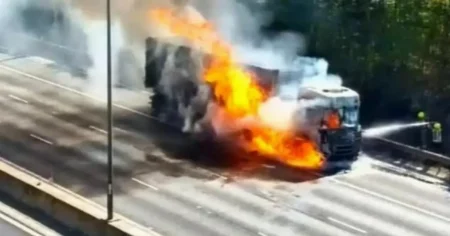

The United Kingdom has recently found itself locked in a relentless struggle against the elements, as months of record-breaking heat and a prolonged absence of rain have transformed the landscape into a tinderbox. What should be vibrant, verdant meadows across the country have instead withered into shades of brittle, pale straw. This environmental stress has not only been an aesthetic blight on the countryside but a dangerous catalyst for disaster, leaving the nation’s infrastructure and emergency services on high alert as the parched earth becomes increasingly susceptible to the slightest spark.
The volatility of this situation was laid bare this week in Leeds, where a passerby named Scott Townend witnessed a harrowing scene at Primrose Valley Park. While out for a walk, Townend observed a group of young boys crouching in the tall, dried-out grass, initially assuming they were simply playing. As he drew closer, however, the gravity of the situation became terrifyingly clear: the children were deliberately igniting the dry vegetation. Despite the obvious risk, the group continued to light fires, and within seconds of Townend alerting the emergency services, what began as a small, controlled flicker had erupted into a rapidly spreading blaze, threatening the surrounding area.
The incident highlights a growing national concern regarding arson during this period of extreme drought. West Yorkshire Police have since identified the 12-year-old boy responsible for the act and are currently working with his family as their investigation into the crime continues. This reckless behavior serves as a stark reminder that during times of environmental fragility, the smallest lapse in judgment can lead to catastrophic consequences. The incident has left local residents shaken, as the threat of fire looms large over every park, garden, and stretch of countryside currently suffering under the relentless summer sun.
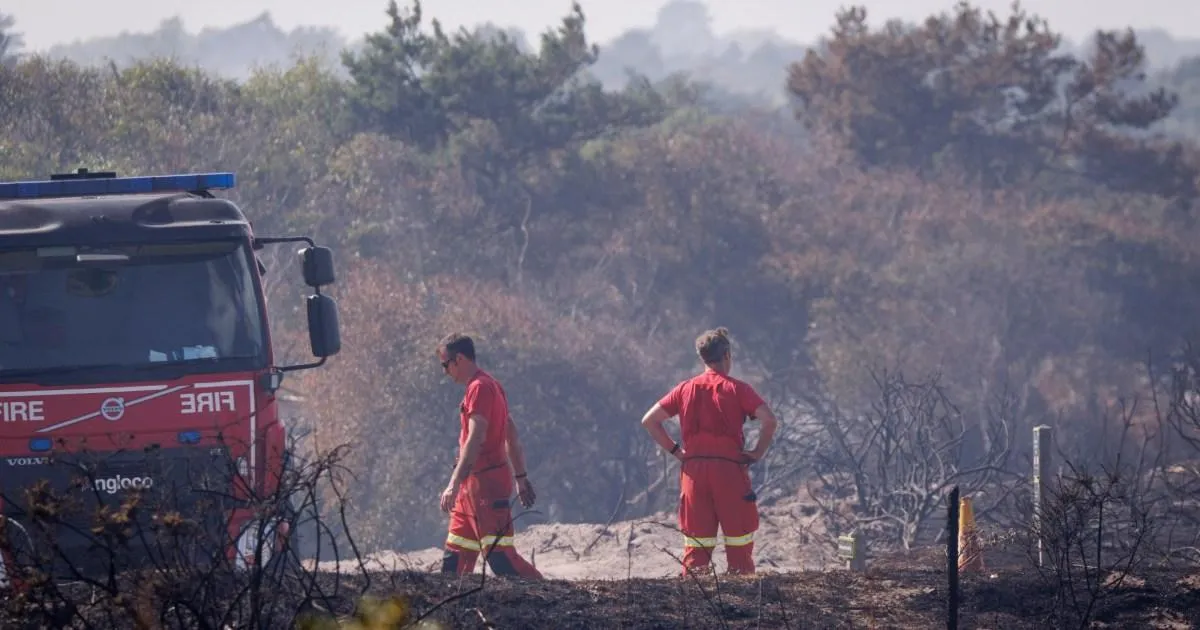
Beyond localized incidents, the broader impact of this heat is being felt nationwide. July broke records as the driest month ever recorded in England and Wales, a statistic that has manifested in wildfires breaking out from the Suffolk coast to the open fields of the West Country. Even the iconic Bristol International Balloon Fiesta, an event typically celebrated for its lush backdrops, was framed by the somber reality of the landscape, with aerial footage revealing vast, scorched plains where emerald green grass once stood. The visual evidence of the drought is undeniable, serving as a bleak backdrop to one of the country’s most beloved seasonal events.
Looking ahead, the weather forecast provides little comfort to those hoping for a return to normalcy. While the country has seen a slight dip in temperatures this week, offering a fleeting moment of respite, experts are warning that the summer is not yet finished with us. Meteorological models suggest that another spell of intense heat may be on the horizon before the season concludes. While it remains too early to definitively confirm a fifth heatwave, the overarching trend indicates that temperatures will likely remain higher than the historical average, keeping the risk of fire and agricultural strain at the forefront of the public consciousness.
As the nation navigates these challenging conditions, the focus remains on caution and vigilance. Whether it is the danger of human-sparked fires or the wider environmental toll taken by prolonged drought, the UK is clearly facing a summer of unprecedented climatic pressure. The resilience of the British landscape is being tested, and as residents look toward the remainder of August, there is a collective hope for cooler conditions and the much-needed rainfall required to restore the health of the land. For now, the story of the summer of 2026 remains one of scorched earth, cautious communities, and a climate that continues to defy expectations.