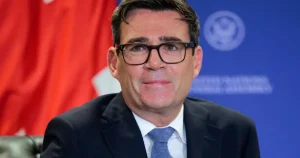



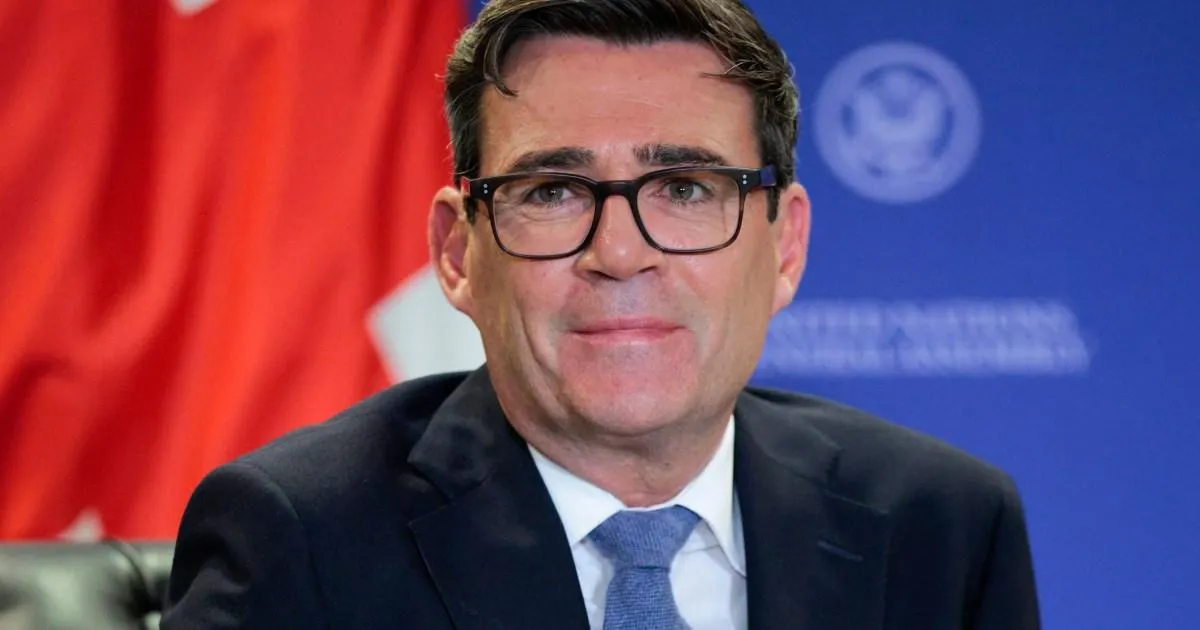
Deep beneath the chaotic surface of the United Nations General Assembly in New York, in a cramped space that aides privately nicknamed a “crusty basement,” two political worlds collided. Andy Burnham, Britain’s newly installed prime minister, arrived with the kind of warmth and directness that had made him a beloved figure in Manchester. Donald Trump, the American president, arrived with the kind of theatrical authority that has defined his return to the global stage. They had never met face-to-face before. Their history, however, was already complicated. Trump had famously dismissed Burnham as “mayor of some town,” and his relationship with Burnham’s predecessor, Keir Starmer, had curdled badly after Starmer refused to support American military action in Iran. The pressure on Burnham was enormous. He came to Manhattan not merely to exchange pleasantries but to rebuild the so-called special relationship—the transatlantic bond that every British leader must nurture, no matter how awkward the circumstances. The setting did not help. Instead of a grand conference room with chandeliers and flags, the two men were tucked into a low-ceilinged basement space, the kind of place where diplomats usually send junior staff. Yet Burnham seemed prepared to make the best of it. He smiled, leaned in, and projected an almost folksy earnestness. Trump, as ever, was harder to read—equal parts curiosity and calculation. Around them, aides and security personnel hovered, cameras flashed, and the machinery of global diplomacy hummed. But for a few crucial minutes, it was just two leaders trying to decide whether they could work together.
If the conversation was diplomatic, the body language was unintentionally revealing. Judi James, a body language expert who has spent decades decoding political gestures, watched the footage with forensic attention. She noticed that Trump immediately settled into his signature alpha posture—a hunch that somehow made the room feel smaller, with his knees splayed wide and his hands steepled between them, fingers lightly touching. It was a pose designed to transmit dominance, relaxation, and control. Burnham, by contrast, looked like a man who had not quite found his footing. His body was curled forward, tense, as though he were trying to make himself less conspicuous. His hands—large, noticeable hands—seemed to have a mind of their own. At first, he clasped them together tightly, fingers interlocked in a mesh that was anything but relaxed. When he finally unlinked them, he started picking at his fingers, then nervously fiddled with his wedding ring. James described these movements as self-comfort rituals, the kind of gestures people make when their inner calm is slipping away. They hinted, she said, that a down-to-earth leader like Burnham was out of his comfort zone in the presence of so much Trump-style power play. Even when he spoke, Burnham would spread his hands outward in an open, expressive gesture—but the effect, James noted, was more of a diminishing shrug than a confident assertion. Trump, meanwhile, appeared attentive. He tilted his head and listened, which in itself was a surprise. But there was a tell: his fingertips began to tap together in a slow, metronomic rhythm, a gesture that suggested impatience. Burnham had entered the lion’s den, and the lion was waiting to see if he could hold his nerve.
Yet amid all the tension, there was one genuine flash of human connection. At some point, a journalist asked Burnham whether he preferred Manchester or Manhattan. The question seemed to catch him off guard—but in a good way. His face brightened, his posture relaxed, and his natural, self-deprecating wit bubbled to the surface. He said something that made Trump laugh, a real laugh, the kind that cuts through diplomatic formality and reminds you that politicians are, after all, people. For a moment, the alpha hunch and the nervous hand-clasping disappeared, and the two men simply enjoyed the exchange. James described it as “one glimpse of a possible potential for rapport.” It was not a breakthrough, but it was a beginning. She noted, however, that Burnham had walked into an almost impossible role: he was the sixth British prime minister to sit across from Trump during the president’s long, chaotic return to power. Every predecessor had faced the same puzzle—how to build trust with a man who respects strength and punishes weakness, who treats alliances like business deals and loyalty like a transaction. Burnham, with his everyman image and his carefully polished charm, would need to put in considerable work to convince Trump that he was both “a keeper” and a man of power. The shared laugh suggested the foundation was there. But the impatience in Trump’s tapping fingers suggested the American president was not yet ready to be won over entirely. The basement may have been crusty, but it was also a test chamber, and Burnham had only just begun the long climb.
After the meeting, Trump emerged in an unexpectedly generous mood. Speaking to reporters outside, he declared that the special relationship between the United States and Britain was “more up” now—stronger, he implied, than it had been under Keir Starmer. When asked whether Burnham was a man he could do business with, Trump did not hesitate. “Yeah, I do. He’s a natural business person,” he said. “We’ve had a lot of discussions, even before this meeting. He gets it. He understands what he has to do.” Then, with a flourish, he added: “Based on my relations with your prime minister, Andy, I think we’re doing very well.” The verdict was strikingly different from the dismissive sneer Trump had used in the past. After all, this was the same president who had once dismissed Burnham as the mayor of “some town.” Now, standing in the fluorescent glare of the cameras, Trump seemed almost pleased. He praised Britain as a country with “tremendous potential” and “great patriotism”—a nation, in his words, “just waiting for success.” For Burnham, it was a small but significant triumph. He had come to New York as an unknown quantity, a man whose name Trump could barely remember. He left with a presidential seal of approval, at least for the moment. Still, no one in Burnham’s camp was foolish enough to believe the warmth would last. Trump is famously changeable, and today’s compliments can easily become tomorrow’s insults. The question was whether Burnham could turn this initial amiability into something durable—a trade deal, a security arrangement, a reliable channel of communication that would survive the inevitable storms.
The issues on the table were anything but trivial. Burnham said he spoke with Trump about trade, Ukraine, and the Falkland Islands—areas where British interests are deeply entangled with American policy. On the Middle East, Burnham made a point of signaling Britain’s readiness to stand alongside Washington. “We’re still ready to play our part in the Middle East, in terms of helping you stop the conflict, open the Strait,” he said. “We’re with you that Iran must never be a nuclear power.” It was a carefully calibrated statement, strong enough to please Trump but vague enough to preserve some diplomatic flexibility. Earlier, in a speech that even by Trump’s standards was extraordinary, the president had directly threatened Iran’s leaders, who were sitting just yards away. “Will a deal be made with Iran that lets them rebuild and create a far greater country than it ever was before?” Trump asked, before offering a chilling alternative: “Or do I annihilate the Islamic Republic and do it quickly?” He also promised that Russia’s four-year war in Ukraine would soon end. “We will get that one done,” he said confidently, without offering details. For Burnham, sitting through these remarks must have felt like walking a tightrope. He needed to show support for Britain’s most important ally, but he also had to preserve his own credibility as a leader of a thoughtful, rule-based nation. His response was to echo the parts he could agree with while steering toward cooperation rather than confrontation. “It has been great to be with you and the team today,” he told Trump, closing the meeting on a gracious note. Whether that graciousness will translate into concrete results—a real trade deal, a coordinated policy on Iran, a sustainable thaw in the special relationship—remains to be seen. Diplomacy is a game of incremental steps, and this was only the first.
In the end, the meeting was a small but meaningful step in the strange dance of international politics. Andy Burnham went into that crusty basement as a man with something to prove, and he came out with a handshake, a photograph, and some unexpectedly kind words from a notoriously difficult partner. The body language experts saw nerves, and the nerves were real. But they also saw a politician who knew how to reset, who found humor in a stressful moment, and who refused to be flattened by Trump’s overwhelming presence. Trump, for his part, seemed to enjoy the encounter. His insults toward Burnham had been replaced by praise, his irritation with Britain by a sense of possibility. Whether this marks the beginning of a durable friendship or just a diplomatic honeymoon is impossible to say. Trump is a weather system, always shifting. Burnham is a steady, down-to-earth presence, more accustomed to town halls than presidential basements. Yet somehow, in that cramped room, the two found a language that worked—partly through talk of trade and security, and partly through a shared laugh. For Britain, the stakes are high. The special relationship has survived many changes of leader, from Churchill to Thatcher to Blair to Starmer. Burnham’s turn is just beginning. He will need more than charm to hold Trump’s respect; he will need results, patience, and the ability to absorb the unpredictable. But for one night in Manhattan, the boy from Manchester stood his ground, met the storm, and managed to make the most powerful man on earth smile. Sometimes that is enough.