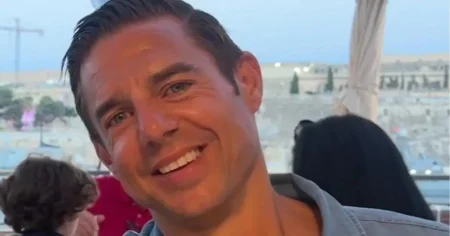

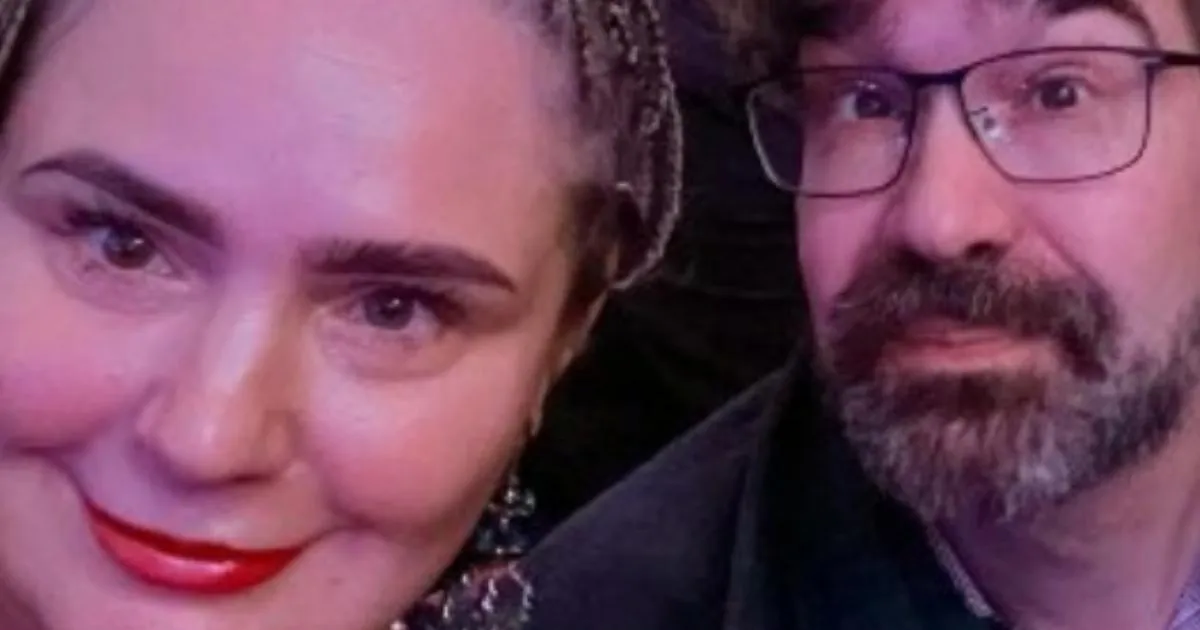
Few things in life can fracture a person as completely as the moment they realize the person they love has chosen someone else. That moment, according to prosecutors, is what tore apart the life of Joanna Cierpka, a 51-year-old Polish national now on trial for the murder of her boyfriend, Henrik Slotsaa. The couple shared a home in Elephant and Castle, south London, and Henrik, 52, worked at Citibank’s office in Canary Wharf. On what should have been a day of celebration—Joanna’s birthday—Henrik told her that he had met someone else. The news landed like a grenade in the middle of their relationship. Within weeks, Henrik was dead, found stabbed in the flat they had shared. Joanna has admitted that she killed him, but she insists it was not murder. She has pleaded not guilty to murder, while admitting manslaughter on the grounds of diminished responsibility. Her case is now being heard at the Old Bailey, where a jury must decide not simply what happened, but how much of her actions were shaped by a mind that had been pushed to the edge. The courtroom has heard intimate, painful and often confusing evidence about the final months leading up to that fatal day, painting a portrait of a relationship that had become tangled in betrayal, loneliness, mental illness, and an intense, desperate search for connection.
The trial has also revealed that in the summer before Henrik’s death, Joanna had her own romantic entanglement—one that complicates any simple narrative of a woman scorned. While on holiday in Greece, she exchanged a series of explicit Viber messages with a restaurant worker she called her “sweet boy.” His name was Dennis Leftakis, and the messages suggest a flirtation that quickly became physical. At one point, Joanna worried that she was too old or too heavy a presence for him, writing that perhaps he needed rest “instead of depressing old woman.” His response was warm, even affectionate: “No don’t say that,” he told her, adding that he wanted to kiss and hug her. The next morning, she messaged him again, asking how he was and adding, with a mixture of playfulness and anxiety, “Hope I did not drain you dead.” He replied gently, “Alive, not dead but alive.” The exchange is not just evidence of infidelity; it also reveals a woman who seemed hungry for reassurance, validation and physical comfort. Later that same day, after picking up Henrik from the airport, Joanna messaged Mr Leftakis again with a line that has stayed in the minds of everyone in the courtroom: “Still feel you on and in me.” It was a confession whispered into a phone while the man she supposedly loved was sitting beside her—or perhaps waiting at the arrivals gate. The moment captures a cruel emotional paradox: Joanna appeared to be clinging to Henrik even as she was reaching for someone else, perhaps because she was terrified of losing him, or perhaps because she had already lost herself.
Yet even as Joanna was texting the waiter in Greece, she referred to Henrik in other messages as “my Viking.” That nickname suggests admiration, strength, attachment—a sense of belonging and pride. She called him hers at the same time as she was physically involved with someone else. When Henrik joined her in Greece, he may have known nothing about the flirtation, or he may have felt the distance already growing between them. What is known is that after returning to London, the relationship continued to unravel. On 15 March 2026, police were called to the couple’s home in Elephant and Castle after welfare concerns were raised, and there they found Henrik’s body. He had been stabbed to death in what prosecutors have described as a violent and deliberate attack. The court also heard that a woman named Aimee O’Shaughnessy had struck up a friendship with Henrik in the months before his death, a reminder that he was not just a name in a tragedy, but a man with friends, routines, and a life that was still unfolding. The discovery of his body marked a sudden, brutal end to that life, and it set in motion a legal process that would force his partner to confront not only what she had done, but the brokenness that had been building inside her for years.
Prosecutor Danny Robinson KC has taken jurors through a series of internet searches found on Joanna’s phone in the days before Henrik’s body was discovered, and these searches offer a dark window into her state of mind. On 19 February, her phone was used to search for the phrase “I don’t want to live anymore, how to end it.” That is not the language of someone who is merely angry or jealous; it is the language of despair. Then, on 8 March, just a week before Henrik’s death, searches were made for “which artery bleeds the fastest” and for instructions on how to find the aorta, femoral and carotid arteries. The following day, the phone was used to look up the “highest penalty in the UK.” The prosecution argues that these searches show a woman who was planning an attack, researching the most effective way to kill and calculating the legal consequences. But they also show a woman obsessed with death—not only Henrik’s, but perhaps her own. The earlier search about not wanting to live suggests that her mind was already circling around mortality long before the fatal incident. At the very least, the searches reveal a person in crisis, caught between suicidal thoughts, violent impulses, and a terrifying curiosity about the mechanics of death. The jury will have to decide whether those searches prove premeditation or whether they are the fragmented actions of a severely disturbed mind.
The defense does not deny that Joanna killed Henrik, but it argues that she was not in control of her actions at the time. Her lawyers have presented evidence that she had been made redundant, which hit her self-confidence hard, and that she had previously received treatment and medication for depression. They say her mental state had deteriorated to such an extent that her responsibility for what happened was significantly diminished. In English law, this can reduce a charge of murder to manslaughter if the defendant was suffering from an abnormality of mental functioning that substantially impaired her ability to exercise self-control or make rational decisions. Joanna, a Polish national living in London, has therefore entered a plea that acknowledges her role in Henrik’s death while asking the court to understand the psychological context around it. The image that emerges is not that of a cold, calculating killer, but of a woman who was emotionally fragile, vulnerable, and deeply wounded long before she picked up a knife. The redundancy, the depression, the medication, the betrayal—these were not excuses, her lawyers suggest, but explanations. They paint a picture of someone whose mind had become a storm, and in that storm, a life was lost.
As the prosecution case concluded, the trial was adjourned until Wednesday. The jurors will soon have to weigh all of this evidence and decide whether Joanna Cierpka is guilty of murder or manslaughter. But in a human sense, the trial is about more than legal categories. It is about two people who once shared a home and a future, and who ended up separated by violence. It is about the ways in which love and loneliness can become tangled, how infidelity and fear can corrode a relationship, and how mental illness can twist a person’s thoughts until death feels like the only possible outcome. The messages Joanna sent to Dennis Leftakis are painful to read because they show someone reaching for life and pleasure while standing at the edge of an abyss. The internet searches are painful because they show someone researching her own end and the end of another. And Henrik Slotsaa’s death is painful because he was a man with a name, a job, friendships, and a future that was taken from him in a flat in Elephant and Castle. Whatever the jury decides, there is no verdict that can undo what happened on that March morning. There is only the difficult, imperfect task of trying to understand how a birthday confession, a series of secret messages, a history of depression, and a moment of violence could combine to destroy everything. The court will decide the legal guilt; the rest of us are left with the quiet tragedy of it all.