



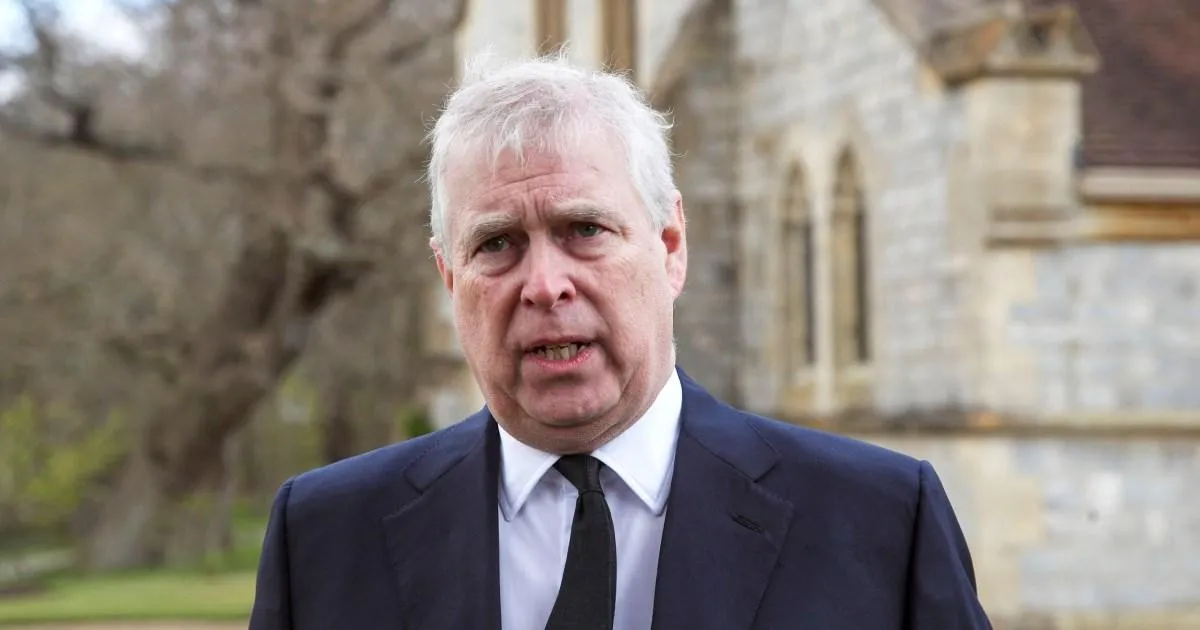
The ongoing discourse surrounding Prince Andrew, now formally referred to as Andrew Mountbatten-Windsor, has reached a point of intense public scrutiny following reports that he remains slated for a full royal ceremonial funeral. Despite his dramatic fall from grace and the subsequent stripping of his HRH style and military titles due to his associations with the late convicted sex offender Jeffrey Epstein, government “bridge” plans—the long-standing protocols for royal deaths—apparently still categorize him for a high-profile send-off. This revelation has ignited a firestorm of controversy, raising fundamental questions about the intersection of institutional tradition and public morality in modern Britain.
At the heart of the outcry are the advocates for those harmed by Epstein, who view the prospect of a state-sanctioned, taxpayer-funded funeral as a profound insult. Prominent attorneys, including Gloria Allred and Spencer Kuvin, have voiced sharp criticism, arguing that such honors are entirely incompatible with the disgrace Andrew has brought upon the Royal Family and the nation. For victims of abuse, the idea that a man so closely tethered to a notorious paedophile would be afforded the pageantry usually reserved for those of unblemished service is not just baffling; it is seen as a callous dismissal of the trauma endured by those caught in the Epstein web.
The debate further touches on the sensitive issue of public expenditure. Critics are increasingly adamant that, as a private citizen without royal titles or official duties, Mountbatten-Windsor should not be a beneficiary of state coffers in death. Political figures from across the spectrum, including the Liberal Democrats and members of the Conservative Party, have suggested that his funeral should be handled as a private matter, funded exclusively by his own estate. There is a palpable frustration that, despite his removal from public life, the machinery of the state continues to prepare for his passing with the same level of administrative deference once afforded to active, working royals.
The logistical complications of such a funeral only serve to highlight his diminished standing. Traditionally, a royal send-off involves pallbearers drawn from the military regiments with which the deceased had formal associations. However, because Andrew was stripped of his honorary military roles, the path forward is murky. While some, like retired Rear Admiral Chris Parry, argue that his past service in the Falklands War grants him a certain level of respect, the optics of military personnel honoring a figure so embroiled in scandal remain highly contentious. The question of who would—or should—carry his coffin has become a symbol of the broader struggle to separate the man’s past military contributions from his current reputation.
In terms of tradition, experts speculate that the ceremony would likely take place at St George’s Chapel in Windsor, a venue synonymous with the most intimate and solemn moments of the monarchy. Burial, perhaps at the private Royal Burial Ground at Frogmore, would place him alongside other controversial figures, such as King Edward VIII, who abdicated amidst his own historic scandal. Yet, comparisons to past historical figures do little to assuage the current public mood. Unlike historical figures of the past, the questions surrounding Andrew remain active and raw, with many calling for a total revocation of any plans that imply his continued standing within the royal establishment.
Ultimately, the silence from both Buckingham Palace and the Cabinet Office has done little to stifle the public demand for clarity. As Andrew lives out his days in relative seclusion, the gap between his private reality and the government’s official planning remains a glaring point of tension. For many in the public eye, the “bridge” plans are not merely bureaucratic preparations; they represent a moral stance. Whether the government will eventually revise these arrangements to reflect his status as a private citizen, or insist on upholding the long-standing protocols of the institution, remains an open question that continues to challenge the evolving relationship between the British Crown and its subjects.