



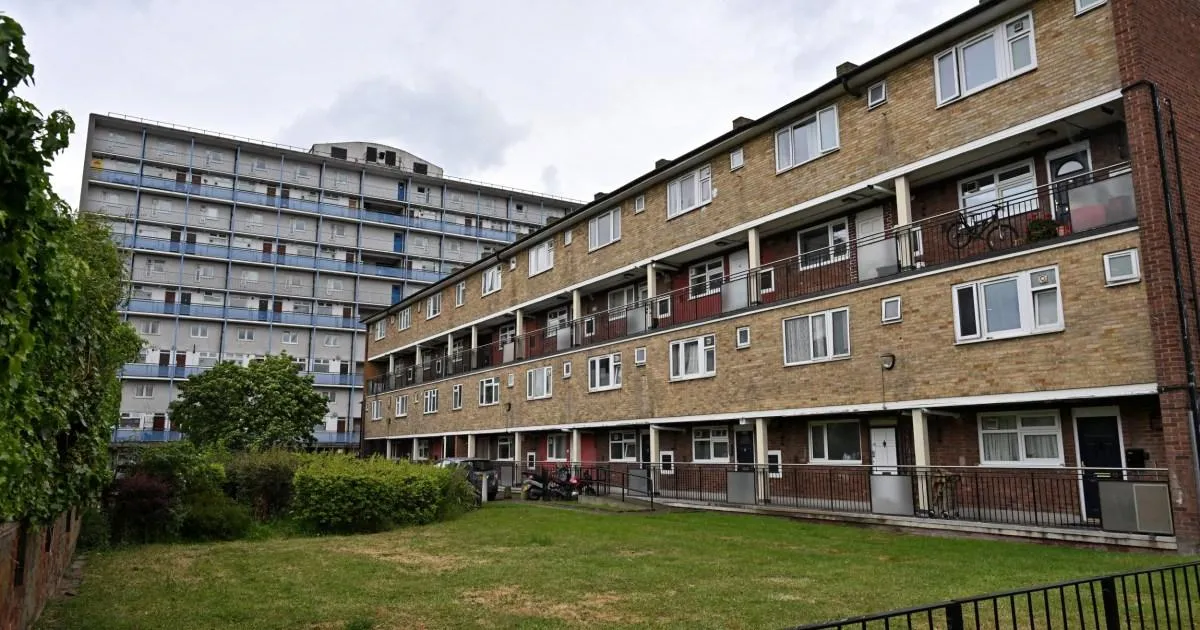
The Conservative Party has recently unveiled a contentious proposal that aims to restrict access to social housing exclusively to British citizens, effectively barring foreign nationals—including those from the EU and Ireland—from future tenancies. Under this plan, the party estimates that approximately 230,000 households currently living in social housing would lose their eligibility. These residents would be granted a six-month window to secure alternative private accommodation before being forced to vacate their current homes. The leadership frames this as a necessary step toward restoring a “link between contribution and entitlement,” arguing that the welfare system should serve as a safety net for those who have fully integrated into British society rather than acting as a default benefit for new arrivals.
Critics of the policy, particularly from the Labour Party, have labeled the proposal as both “unserious” and “unworkable.” They argue that the plan fails to address the fundamental structural issues of the UK’s housing crisis, which they contend was exacerbated by long-term Tory governance. Furthermore, opponents point out that the policy would disproportionately impact vulnerable populations, including refugees and long-term residents who have lived and worked in the UK for years. Perhaps most significantly, the policy would affect essential workers, including many dedicated staff within the NHS who do not hold British citizenship. By targeting these groups, the plan risks displacing people who are already integrated and actively contributing to the nation’s economy and essential services.
The political context surrounding this announcement is fraught with tension, as it follows a similar, perhaps even more radical, proposal put forward by Reform UK leader Nigel Farage. His approach suggested giving foreign nationals as little as three months to move out, with the threat of deportation for those who fail to comply. By adopting this rhetoric, the Conservatives appear to be attempting to shore up their base by positioning themselves as the party of strict immigration control. However, this shift has drawn sharp criticism from human rights advocates and housing charities, who warn that such a mandate would inevitably lead to a surge in homelessness, ultimately forcing the government to foot the bill for emergency temporary accommodation at the taxpayer’s expense.
At the heart of the debate is a fundamental disagreement over how the UK should define “contribution.” Shadow Work and Pensions Secretary Helen Whately argues that making Britain a home should be “earned” through work and tax payments, and that the country should not be viewed as a “cash machine for the world.” This narrative resonates with a segment of the electorate that feels left behind by current immigration policies. Conversely, the opposition suggests that this rhetoric serves as a distraction from the government’s inability to manage the housing market effectively. They argue that the primary cause of long social housing waiting lists is not the residency status of current tenants, but rather a persistent failure to build an adequate number of affordable homes over the past several decades.
In response to the growing housing emergency, the current government has outlined an ambitious roadmap, including a pledge to launch the largest council house building program since the post-war era. Their plan involves a ten-year, £39 billion investment strategy aimed at delivering roughly 300,000 social and affordable homes. While the Conservatives argue that their residency-based restrictions are necessary to ensure that “British families” take priority, the Labour administration maintains that the only viable path forward is an aggressive expansion of supply. This highlights the deep ideological divide in British politics: one side focuses on restricting access through increasingly stringent entry requirements, while the other emphasizes large-scale construction as the only way to alleviate the pressure on waiting lists.
Ultimately, the debate exposes the profound human costs associated with housing policy in an era of high migration and economic uncertainty. Behind the statistics of 230,000 households lie families, essential workers, and long-term residents who have built their lives in the UK. Whether this proposed policy would actually free up significant space for native-born families or simply create a new wave of bureaucratic and humanitarian crises remains a point of intense contention. As the political maneuvering continues, the reality for those living in social housing remains one of anxiety, as they wait to see how these competing visions for Britain’s housing future will impact their ability to keep a roof over their heads.