


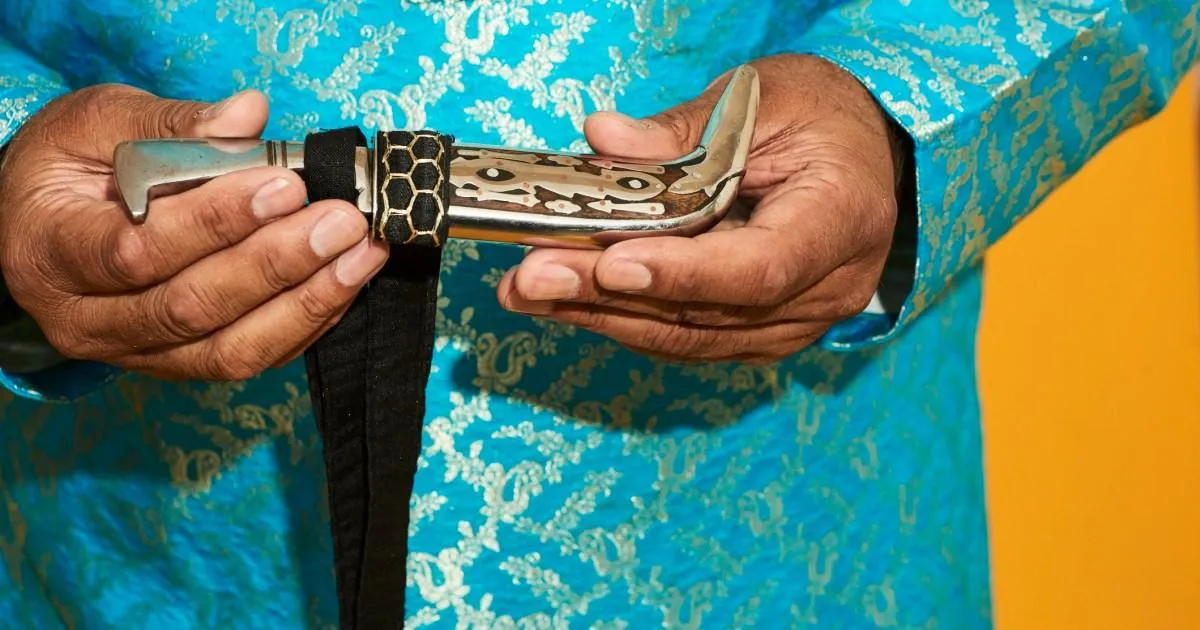
The murder of Henry Nowak has ignited a complicated and emotionally charged debate in Britain regarding the “kirpan”—the ceremonial blade carried by Amritdhari Sikhs as one of their mandatory “Five Ks” of faith. The conversation reached a fever pitch after the perpetrator, Vickrum Digwa, attempted to justify his possession of a weapon by invoking his religion. This claim has been met with swift, unequivocal condemnation from the British Sikh community. Leaders, including the Sikh Federation and Labour MP Tan Dhesi, have been quick to clarify that the weapon used in this horrific crime was not a religious kirpan, stressing that the Sikh faith carries a heavy responsibility that strictly forbids the misuse of such items for violence.
Justice Secretary David Lammy has waded into the firestorm, carefully balancing legal reality with the necessity of maintaining civil peace. During a recent interview, Lammy underscored that while the law provides certain accommodations for religious practice, these are not indefinite rights that override the fundamental necessity of public safety. By labeling the carrying of such blades a “privilege,” he signaled that legal protections are rooted in the expectation that they be used for peaceful, ceremonial purposes. He noted that if the public’s confidence in these practices is compromised by misuse, the legal framework allowing them could face scrutiny and could, in extreme scenarios, be revoked.
The discussion has inevitably pulled in other cultural traditions, drawing uncomfortable comparisons that highlight the complexities of modern British identity. Many have pointed to the Scottish sgian dubh, a small knife worn as a traditional accessory with Highland dress. As the debate over whether or not to ban blades in public spaces grows, questions remain about how to distinguish between malicious intent and long-standing cultural heritage. Lammy acknowledged this, noting that Sikhs and Scots alike have carried such items peacefully for generations. The underlying challenge for the government is how to protect the multicultural fabric of the country without creating loopholes that criminals can exploit under the guise of religious or cultural expression.
Beyond the legal questions, the tragic nature of Henry Nowak’s death has exposed deep, raw nerves within the British police force and the wider public. Leaked footage of his final moments, during which police officers reportedly dismissed his pleas that he had been stabbed, has drawn comparisons to historic injustices like the deaths of George Floyd and Stephen Lawrence. Lammy described the video as “deeply traumatic,” acknowledging that it forces a painful examination of institutional bias. For many, the focus has shifted from the weapon itself to the question of whether authorities are failing to protect citizens due to skewed perceptions or institutional failings, regardless of the attacker’s background.
The political discourse surrounding the case has become increasingly binary, reflecting the wider polarization currently gripping British society. Figures like Nigel Farage and representatives from Reform UK have framed the incident in the context of broader anxieties over migration and claims of “anti-white prejudice,” while government officials are forced to manage these inflammatory narratives while simultaneously addressing the real-world failing of police conduct. Lammy’s recent engagement with U.S. political figures—specifically refuting claims made by JD Vance that the murder was a symptom of mass immigration—highlights the government’s struggle to contain a tragedy that is being weaponized as a proxy for a much larger, global culture war.
Ultimately, the goal for leaders is to find a path that respects religious and cultural identity while ensuring that nobody is above the law. The consensus among reasonable voices appears to be that the kirpan is a symbol of duty and faith, and its misuse is as much a betrayal of the Sikh community as it is a crime against the public. As the UK grapples with the fallout, the focus remains on the need for accountability in law enforcement and an honest, nuanced conversation about the limits of religious exemptions. It is a sobering reminder that in a diverse nation, the privilege of freedom must always be tempered by the shared responsibility of keeping one another safe.