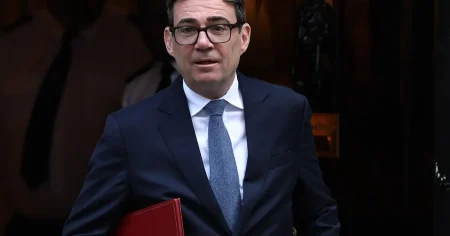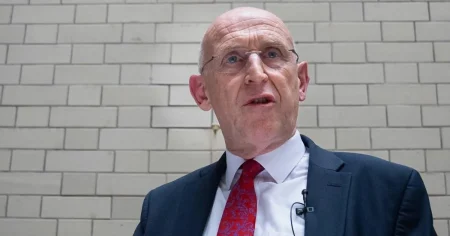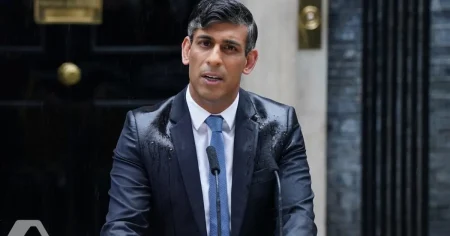



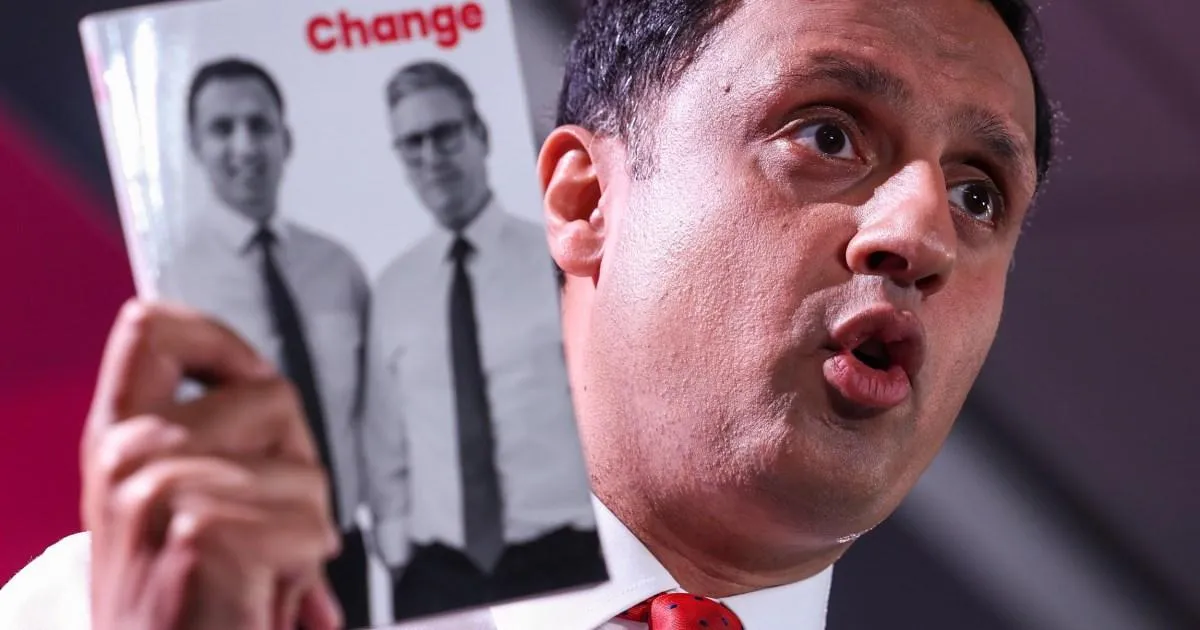
The landscape of British politics is currently undergoing a seismic shift, with reports suggesting that Scottish Labour leader Anas Sarwar is preparing to step down from his role at Holyrood. His anticipated transition involves moving away from the Scottish Parliament to take on a prominent role in the newly established administration of Prime Minister Andy Burnham. According to recent accounts, Sarwar is expected to be elevated to the House of Lords, securing a ministerial position within the revamped Department for Business, Innovation, Science, and Trade. This move would place him at the heart of the new government, working alongside Jonathan Reynolds to shape the future of British industry and innovation.
This development is particularly notable given Sarwar’s complex track record with the central party. It was only in February that he publically called for Sir Keir Starmer to step down as Prime Minister, signaling a desire for different leadership at the national level. Now, however, the political tides have turned rapidly. Sarwar has been quick to praise the incoming Prime Minister, Andy Burnham, for offering what he describes as a “bold Labour vision” for the country. This pivot marks a striking transformation in the power dynamics of the Labour Party, showcasing how quickly alliances and loyalties are being redrawn under the new Downing Street regime.
Predictably, the news has drawn fierce criticism from the Scottish National Party (SNP), who view the appointment as a betrayal of democratic principles. Keith Brown, the deputy leader of the SNP, lashed out at the move, labeling it a “terrible look” for a Prime Minister who campaigned on promises of transparency and the devolution of power. Brown argued that placing a politician in the unelected House of Lords after the struggles faced by the Scottish Labour Party under Sarwar’s tenure represents an “undemocratic trick.” By highlighting the party’s past electoral difficulties, the SNP is clearly aiming to frame this move as a reward for party loyalty rather than a legitimate reflection of the public will.
The transition is all the more jarring when considering Sarwar’s recent public commitments. Having led Scottish Labour since 2021, he had previously signaled a strong desire to stay the course, explicitly stating his intention to remain leader for a five-year term at Holyrood. As recently as June, following Sir Keir Starmer’s resignation, Sarwar had expressed a fierce hunger for the political fight ahead, particularly in terms of challenging the rise of figures like Nigel Farage and the Reform Party. The sudden shift from his localized leadership battle in Scotland to a cushioned ministerial role in London has left many questioning the consistency of his political ambitions.
Simultaneously, the broader context of Andy Burnham’s first days in office involves a flurry of high-stakes diplomatic maneuvering. Beyond filling cabinet vacancies, the new Prime Minister has been navigating international relations, including an “extremely warm” opening conversation with U.S. President Donald Trump. Their dialogue—which touched on trade, North Sea oil, and even global security concerns like the demining of the Strait of Hormuz—highlights the contrast between domestic political maneuvering and the realities of global governance. President Trump’s characteristically blunt assessment of the UK’s economic potential, specifically his advocacy for increased North Sea drilling, underscores the urgent and often controversial issues that Burnham’s new government must immediately address.
Ultimately, this period of British politics is defined by both volatility and reinvention. As the country adjusts to the arrival of a new Prime Minister, the shuffling of veteran figures like Anas Sarwar highlights the tension between established political norms and the public’s changing expectations. While supporters might view these appointments as necessary to consolidate a fresh vision for a modern Britain, critics see them as a return to the “old politics” of institutional reshuffling. As Burnham fills the final gaps in his ministerial team, the success of his government will likely depend on whether he can move past these initial controversies and deliver on the bold promises that brought him into power in the first place.