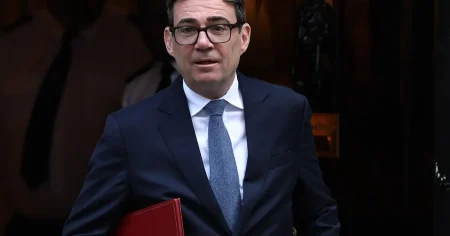


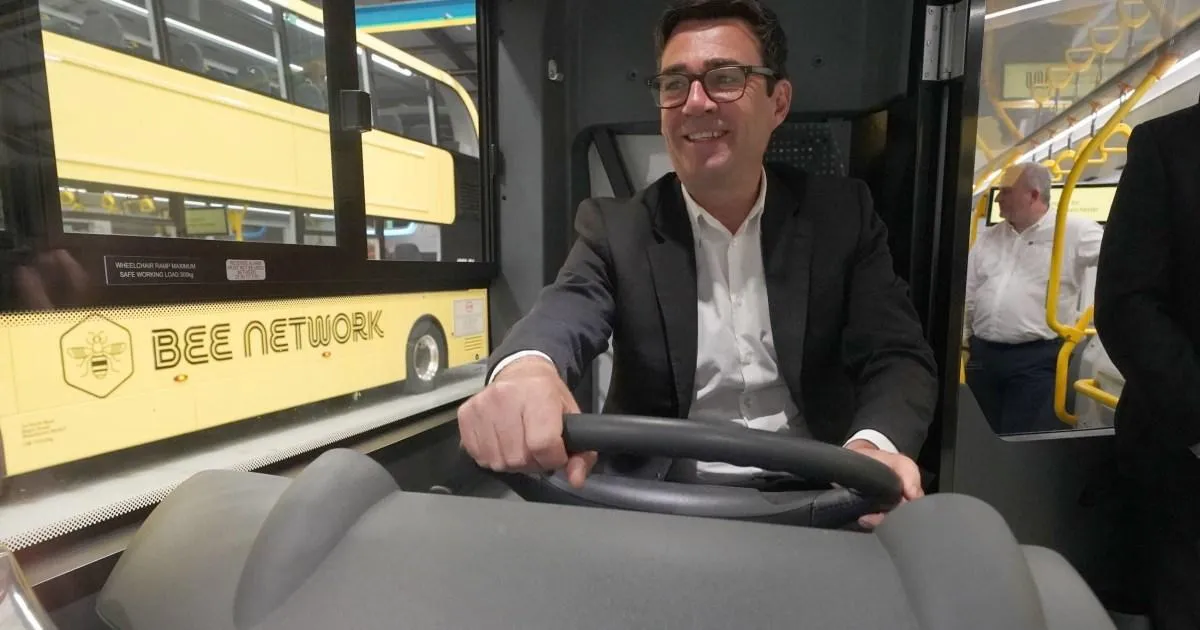
In a significant move that highlights his commitment to grassroots priorities, Prime Minister Andy Burnham has announced that single bus fares across England will be capped at £2 starting this January. This policy, which Burnham successfully championed during his time as the Mayor of Greater Manchester, is designed to remove the financial barriers that often prevent people from accessing vital education, employment, and social opportunities. By standardizing the cost of travel at this accessible price point, the government aims to provide immediate relief to millions of citizens currently grappling with the relentless pressures of the cost-of-living crisis.
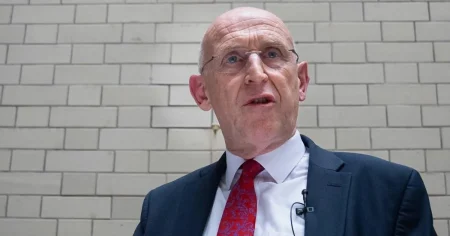
The decision represents a major policy reversal, effectively undoing the previous government’s controversial move to increase the fare cap to £3. Chancellor John Healey has framed this as a win for the average commuter, emphasizing that slashing fares by a third will put tangible savings back into the pockets of working families. While the £500 million price tag is substantial, the government insists that the initiative is being funded through creative fiscal management—specifically by reallocating international climate finance into loans and identifying efficiencies within the Department for Energy Security and Net Zero—ensuring that the policy is delivered without imposing new burdens on taxpayers.
However, the ambitious plan has not been without its critics or logistical hurdles. Opposition figures, including Shadow Chancellor Mel Stride, have slammed the move as a return to the high-spending, high-intervention economic policies of the 1970s. Furthermore, while transport secretary Heidi Alexander has voiced full support for the policy, she has acknowledged that the finer details of the funding structure and the long-term mechanics of the loan system remain under review. This has prompted skepticism from some quarters, particularly regarding the viability of relying on shifting budget priorities to sustain a nationwide subsidy that many argue is essential but costly to maintain.
It is worth noting that this scheme will not apply to London, where the transport network operates under a different financial and administrative framework, with existing fares already hovering near the proposed cap. For the rest of the country, however, the move codifies a standard that regions like Liverpool, Manchester, and the northeast had already fought to maintain locally. By elevating a regional success story to a national mandate, Burnham is signaling a shift in governance; he is prioritizing the “Bee Network” philosophy—a model of integrated, locally-controlled transport—over more abstract economic strategies, proving that he intends to govern with the same pragmatism that defined his time at the helm of Manchester.
Beyond the buses, the government has moved quickly to unveil a broader suite of cost-of-living interventions, including a reduction in VAT on domestic energy bills. Yet, even here, the rollout has been rocky. Claims that certain initiatives would be bankrolled by scrapping digital ID schemes were met with immediate pushback from former ministers, who argued that those savings were never fully accounted for in the first place. This tension between the government’s desire for quick, popular policy wins and the reality of a complex national budget remains a central friction point as Burnham navigates his first few months in Number 10.
Ultimately, the £2 bus fare cap serves as a litmus test for the Burnham administration. It is a bold, populist measure that seeks to rebuild trust by addressing the daily, bread-and-butter frustrations of the British public. While the Opposition warns of long-term economic instability and fiscal recklessness, the Prime Minister is betting that the immediate, visible improvement to people’s mobility will pay dividends in public goodwill. As January approaches, the success of this policy will depend not just on the funding—which is still being audited—but on whether the government can prove that affordable, reliable public infrastructure is no longer a luxury, but a fundamental right for every citizen in England.