



Here is a humanized summary of the recent political developments, broken down into six paragraphs.
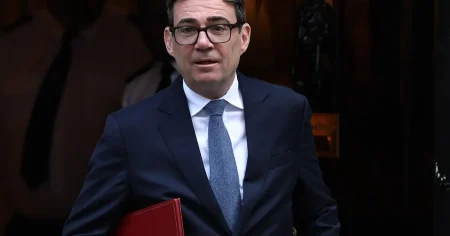
The political landscape of the United Kingdom has undergone a seismic shift as Andy Burnham officially took up residence at Number 10, immediately signaling a departure from the previous administration’s trajectory. In his inaugural policy move, Burnham addressed the lingering anxiety of the cost-of-living crisis by announcing the removal of VAT on household electricity bills, effective October 1. The move aims to provide a tangible cushion—estimated at around £45 per household—as citizens face the terrifying prospect of rising energy costs exacerbated by mounting geopolitical tensions. Business Secretary Jonathan Reynolds confirmed that this relief is intended to span the remainder of the financial year, though he remained cautious about long-term fiscal planning, suggesting that more permanent structural decisions await the upcoming Budget.
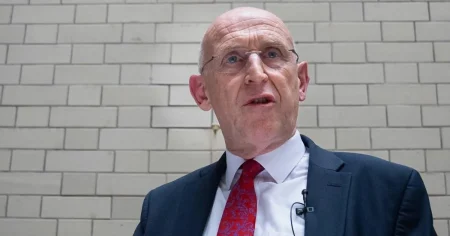
However, the rapid rollout of this policy has already ignited a firestorm of internal friction within the Labour Party. Chancellor John Healey framed the decision as a compassionate intervention, arguing that it provides essential “breathing room” for families struggling to balance their household finances. To justify the financial mechanics of the cut, the government claims they are reallocating funds previously earmarked for the Digital ID programme. This pitch, while popular with voters, has met with immediate friction from within the party’s own ranks, suggesting that the transition of power in Downing Street is far from seamless and that the new administration’s internal cohesion is already being tested.
The criticism was spearheaded by Darren Jones, the architect of the now-scrapped Digital ID initiative, who used social media to publicly challenge the Treasury’s accounting. While Jones offered a polite nod to the necessity of lowering inflation via energy relief, he sharply retorted that the Digital ID program was not a surplus-generating asset; it was unfunded. By labeling the new policy as essentially “unfunded,” Jones effectively signaled to the public that the books do not yet balance, placing the Prime Minister on the defensive regarding his economic credibility. This public rebuke provided an easy opening for opposition MPs, who were quick to seize on the narrative that the government’s math is already spiraling out of control.
Conservative Shadow Energy Secretary Claire Coutinho adopted a mix of tactical validation and sharp critique, essentially accusing the new government of plundering opposition policy ideas while simultaneously warning of future economic burdens. By pointing out that energy bills have climbed significantly since Labour took office, the Conservatives are attempting to frame the VAT cut as a “too little, too late” gesture. More importantly, by amplifying the concerns regarding the lack of funding, they are setting the stage for a narrative that suggests massive tax hikes will be inevitable in the next Budget to cover the shortfall created by today’s populist announcement.
Beyond the immediate fiscal debate, the scale of internal housecleaning undertaken by the new Prime Minister cannot be overstated. Burnham’s arrival at Number 10 has been marked by a ruthless purge of Keir Starmer’s closest allies, including the high-profile removals of Rachel Reeves, David Lammy, and Peter Kyle. In their stead, Burnham has installed a cabinet that reflects his own vision, appointing Ed Miliband as Foreign Secretary and Wes Streeting as Defence Secretary, while restoring Angela Rayner to the Housing portfolio. This drastic Cabinet reshuffle indicates that, while the policies may address the cost of living, the top-down shift in power is intended to fundamentally rewire the identity of the government.
As we look ahead, the political climate remains volatile, with Burnham now serving as the country’s fifth Prime Minister in less than four years. His recent comments regarding the frustration of voters over the personal tax allowance suggest that he is hyper-aware of the “doorstep” grievances that arguably paved his path to power. Balancing these populist promises with the cold, hard realities of the national deficit will be the defining challenge of his premiership. For now, the nation watches to see whether these early, high-stakes maneuvers will provide the relief voters crave or simply deepen the political turbulence that has defined British governance for far too long.