


In an effort to break through the traditional, often dusty mold of political campaigning, the Green Party has recently turned to the high-energy, pulsing beats of London’s electronic music scene. Recognizing that mainstream media outlets often prioritize larger parties, the Greens teamed up with “Green Space”—an organization dedicated to weaving creativity and community into the political fabric—to host the ‘GreenParty PARTY’ at The Cause. This outdoor dance event, featuring names like Badger and Toddla T, was designed to bridge the gap between policy-making and the younger generation. It was a bold attempt to prove that political engagement doesn’t have to happen solely within the stiff, formal confines of Parliament, aiming instead to foster genuine connection through shared joy and rhythmic expression.
However, the experience of attending the event was a blend of surreal spectacle and suburban club reality. Upon arrival, the atmosphere was surprisingly subdued compared to the venue’s usual roar, with the MCs struggling to read a room that felt somewhat sparse. The banter, ranging from stating the obvious about speaker volume to invoking tired, old-school chants, felt a bit disconnected from the typical crowd one finds at a London day rave. As someone familiar with the scene, it was clear that the event lacked the organic buzz of a sell-out night. Yet, there was an interesting curiosity here: it highlighted a core challenge for the Greens, specifically that their grassroots outreach hasn’t quite achieved the saturation needed to spark the kind of viral anticipation that turns a modest turnout into a packed dancefloor.
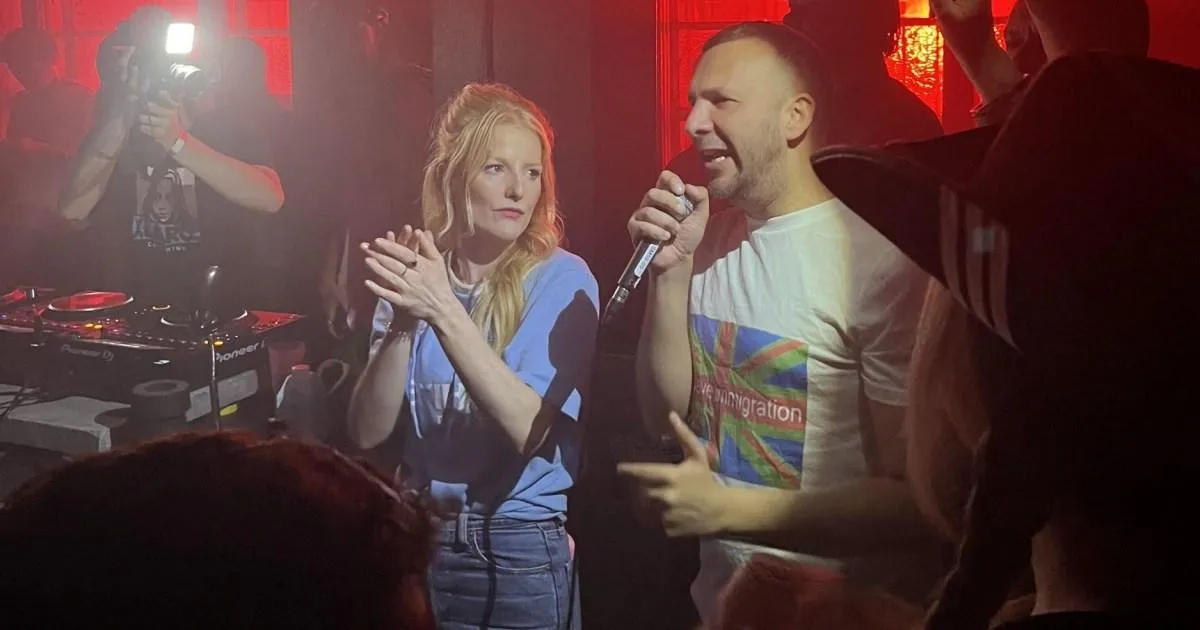
When party leader Zack Polanski took the stage, the vibe shifted perceptibly. His appearances were carefully timed, turning short, slogan-heavy speeches—focused on rallying cries like rent control—into moments of levity and community spirit. It was arguably effective; he didn’t try to lecture the crowd on dense policy, but instead used the platform to build rapport. Watching the party leadership weave through the crowd, rather than standing behind a wooden podium, created a relaxed sense of inclusivity. It prompted those in attendance to engage with political figures as approachable human beings rather than untouchable, grey-suited representatives of a party identity that some potential supporters, even those attending the rave, still found confusing.
The surreal nature of the event hit its peak during Polanski’s second set of remarks, where he was joined by Green MP Hannah Spencer. As the music dipped, they touched on weightier themes—trans rights and taxing the wealthy—before pivoting right back into a high-energy dance session. Seeing a politician dancing to Avicii in the middle of a crowd felt like a stark departure from the traditional spectacle of public office. It is difficult to imagine a Keir Starmer or a Rishi Sunak in a similar position, and that contrast is precisely what makes the movement so fascinating. While the sight of a party leader on the dance floor may seem whimsical to some, it offers a glimpse into a brand of politics that is trying to be fundamentally present in the daily lives of its constituents.
This approach invites a necessary question: is this a viable roadmap for political success, or is it merely a gimmick? Compared to the spectacle-driven stunts often employed by other parties—like Ed Davey’s headline-grabbing, physical antics during the last election—the Green Party’s approach feels significantly more community-oriented. By prioritizing spaces for people to gather and exist together, the Greens are emphasizing a “values-led” connection rather than a transactional one. The event succeeded to the extent that it made the party leadership feel more like a collective of peers than a distant elite, proving that while they may not have mastered the art of the mainstream pop-up event yet, they certainly understand the value of showing up where people actually live and breathe.
Ultimately, the ‘GreenParty PARTY’ served as an experimental canvas for a new style of political outreach. While it may have benefited from more aggressive marketing and a more refined connection to the local nightlife culture, it succeeded in stripping away the stuffiness of the career politician. Whether or not it converts every raver into a lifelong voter remains to be seen, but the intentionality behind the event was clear: the Greens are aiming to represent a fusion of activism and social life. For everyone already in the tent, it was a rare opportunity to party with those holding the reins of their movement, proving that sometimes, the most effective political statement isn’t a speech at all—it’s simply showing up to dance.