


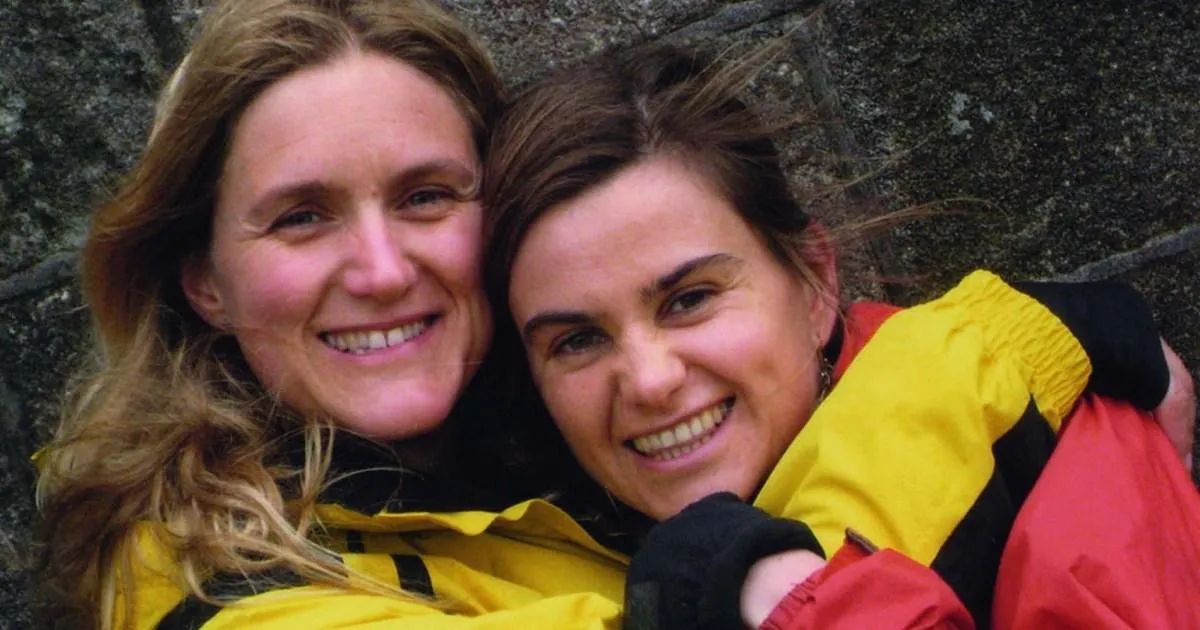
Watching Jo Cox’s maiden speech today, nearly a decade after it was delivered, one is struck by a sense of profound normalcy. Standing in the House of Commons in 2015, the new MP for Batley and Spen donned a simple red dress, clutching her notes with the characteristic warmth of her Yorkshire roots. She cracked small jokes and spoke with a quiet, grounded passion about her community. It was here she uttered the now-immortal words: “We are far more united and have far more in common than that which divides us.” At the time, the chamber largely overlooked the sentiment, but for her sister, Kim Leadbeater, the video is now a source of immense internal conflict. While she finds comfort in childhood photos, hearing Jo’s voice and seeing her in motion is a painful reminder of her permanent absence—a stark reality that trauma sometimes guards against by blanking out the early, darkest months following the tragedy.
The murder of Jo Cox in 2016 by a right-wing extremist remains one of the most chilling moments in modern British history. It was a brutal punctuation point in an already feverish political climate, coming just a week before the Brexit referendum. For Kim, those initial months after the attack are a blur, a defense mechanism against the overwhelming shock of losing her sister to political violence. There was a fragile, fleeting hope in the immediate aftermath that the nation would pivot toward a more compassionate, respectful style of politics. However, as the Brexit debates descended into acrimony and further violence surfaced—eventually claiming the life of Sir David Amess in 2021—it became clear that the promise of a kinder, more unified discourse was quickly broken. Even today, as we mark a decade since Jo’s death, the streets of our country are still being marred by the shadows of civil unrest.
Kim Leadbeater, now serving as the MP for her sister’s former constituency, views the current state of national discourse with genuine alarm. She identifies a cynical ecosystem where social media platforms and certain media outlets actively profit from hostility, pushing a narrative that renders nuance impossible. But she is also quick to note that this decay of civility is not confined to the halls of Westminster; it is a rotting of our everyday social fabric. She points to the depressing necessity of signs in doctor’s offices asking patients to please treat staff with basic respect and kindness—a plea that would have been unimaginable just a few generations ago. To her, this loss of fundamental human decency is a source of profound worry, reflecting a society that feels increasingly forced into binary, argumentative camps.
Despite the darkness that ended her life, Jo Cox’s identity was never defined by the rage of her killer. Her sister fondly recalls how Jo was a fierce advocate, someone who never took “any crap,” and who wielded her intelligence like a weapon against injustice—most famously, she once reduced a seasoned Russian diplomat to stuttering incoherence when confronting him over atrocities in Syria. Yet, this public strength was built on a foundation of hard-won growth. Many who see her as a political icon forget that she was an incredibly shy child who had to laboriously construct her own self-assurance. This quiet, thoughtful kindness was the core of her character, and it is this legacy of empathy that Kim is determined to keep alive, reminding us that Jo was a human being before she was a martyr.
Today, Jo’s influence is woven into the very DNA of her home community. Her name lives on through scholarship awards for the kindest pupils at primary schools, plaques at the local birthing unit, and a sixth-form center dedicated to her memory. For Kim, these are not just memorials; they are active, living reminders that while history can be shaped by horrific acts, it can also be reclaimed by the persistence of goodness. When she speaks to local schoolchildren, she avoids the grandiosity of political rhetoric, focusing instead on a simple truth: we cannot control whether bad things happen, but we can control how we respond to them. By fostering these “Great Get Together” events, she is trying to steer the country’s attention away from the toxic noise of the internet and back toward the local, tangible connections that actually sustain us.
As the tenth anniversary of Jo’s passing approaches, the lesson of her life remains urgent. While the political and social climate feels more fragmented than ever, the antidote remains what it has always been: the courage to be kind and the determination to hold onto our commonalities. Jo Cox’s life proves that empathy is not a sign of weakness, but a trait honed through effort and conviction. As Kim Leadbeater carries on the work her sister started, she serves as a reminder that we are not helpless in the face of division. By choosing to honor the person Jo was—caring, shy, fierce, and fundamentally decent—we can hopefully find a way to silence the static of our current climate and return to the uncomfortable, yet vital, work of building a community that genuinely reflects the best of what we hold in common.