


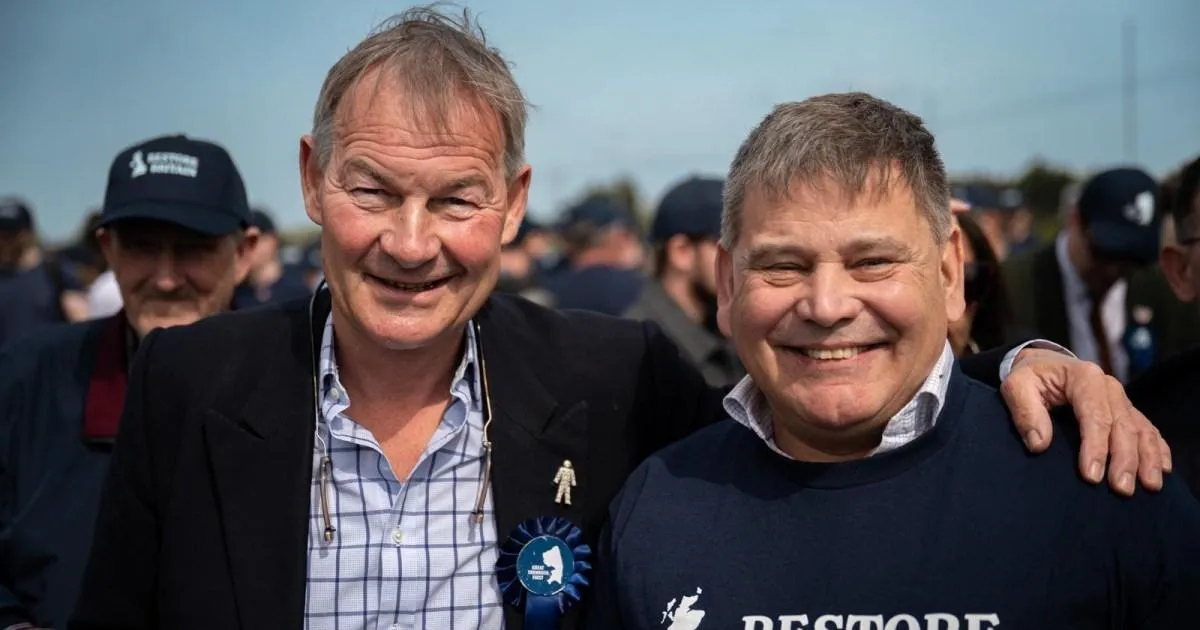
The current political landscape in the UK is witnessing a tense, somewhat chaotic shake-up as the new party ‘Restore’ makes its mark on the Makerfield by-election. Founded by Rupert Lowe following his bitter departure from Reform UK, the party is quickly positioning itself as an ideological rival to Nigel Farage’s movement. Adding significant weight to this local contest is the vocal support of high-profile figures like entrepreneur Andrew Bridgen and, perhaps more surprisingly, tech billionaire Elon Musk. While critics argue that Restore is merely a spoiler faction destined to split the right-wing vote and inadvertently hand an easy victory to Labour’s Andy Burnham, supporters view the situation through a different lens, characterizing it as a necessary challenge to the political status quo.
Andrew Bridgen, a former Conservative MP who joined the Restore ranks shortly after its inception in March, has pushed back hard against the “vote-splitting” narrative. In frank discussions about the party’s strategy, Bridgen dismisses the idea that they are simply a secondary force designed to prop up or undermine Reform. Instead, he argues that the mainstream political commentary fails to grasp the nuances of modern voter apathy. According to Bridgen, the party isn’t just poaching voters from Farage; it is actively engaging with a massive, untapped demographic of citizens who have historically disengaged from the democratic process altogether. He suggests that by energizing those who have long felt abandoned or unheard, Restore is expanding the electorate rather than just dividing the existing base.
The polling numbers currently swirling around the Makerfield contest highlight a precarious situation for the right. Surveys from organizations like More in Common and Opinium suggest that while Andy Burnham holds a commanding lead, the margins remain tight enough for every percentage point to matter. Bridgen, however, remains unconvinced that Reform’s path to victory is being blocked by their new neighbors on the right. He maintains that a large segment of their support originates from “disillusioned non-voters”—people who have witnessed the systemic failures of current governance and have reached a point of despair. In his view, these individuals are looking for an alternative that genuinely speaks to their grievances, rather than choosing between what he describes as the “least worst” options presented by the established parties.
The tension between Reform UK and Restore has turned personal, most notably in the critique leveled by Nigel Farage against Elon Musk. Farage, clearly frustrated by Musk’s public endorsement of Restore, suggested that the billionaire is essentially acting as a disruptive force, trying to fracture British conservatism for unknown ends. Farage’s dismissal of Restore as “one man with a social media account” was met with sharp rebuttal from Bridgen, who insists such characterizations are a defensive reaction to a genuine threat. Bridgen observes that the supporters he encounters on the campaign trail are not former Reform loyalists or hardened partisans, but rather frustrated individuals who are finally finding an outlet for their voices.
Perhaps the most revealing aspect of Bridgen’s shift toward Restore is his personal history with Farage. Reflecting on a meeting in early 2023, Bridgen recounts a fundamental disagreement over political priorities, specifically regarding discussions around Covid-19 vaccine safety and efficacy. Bridgen claims that he was advised by Farage to avoid these “fights” if he wanted a productive path forward in politics. For the former Tory, this was a breaking point; he interpreted the advice as a move away from the bold, confrontational politics he believes is necessary for true reform. This ideological friction serves as the bedrock of his commitment to Restore, proving that for him, the party is about principle and the freedom to debate controversial issues that he feels other right-leaning parties are too afraid to touch.
Ultimately, as the Makerfield by-election approaches, the broader question remains: is Restore a legitimate vehicle for change, or just a source of political noise? For Bridgen and his colleagues, the stakes go far beyond a single seat. They argue that the focus on whether they might help a Labour candidate win is missing the forest for the trees. By ignoring the segment of the population that has checked out of the political system, the current establishment is failing to address the deep-seated skepticism that defines the modern British voter. Whether or not Restore secures a victory in this specific by-election, they are intent on proving that there is a significant, angry, and unheard constituency ready to revolt against the traditional political order.