


Here is a humanized summary of the news story, expanded into six paragraphs.
—
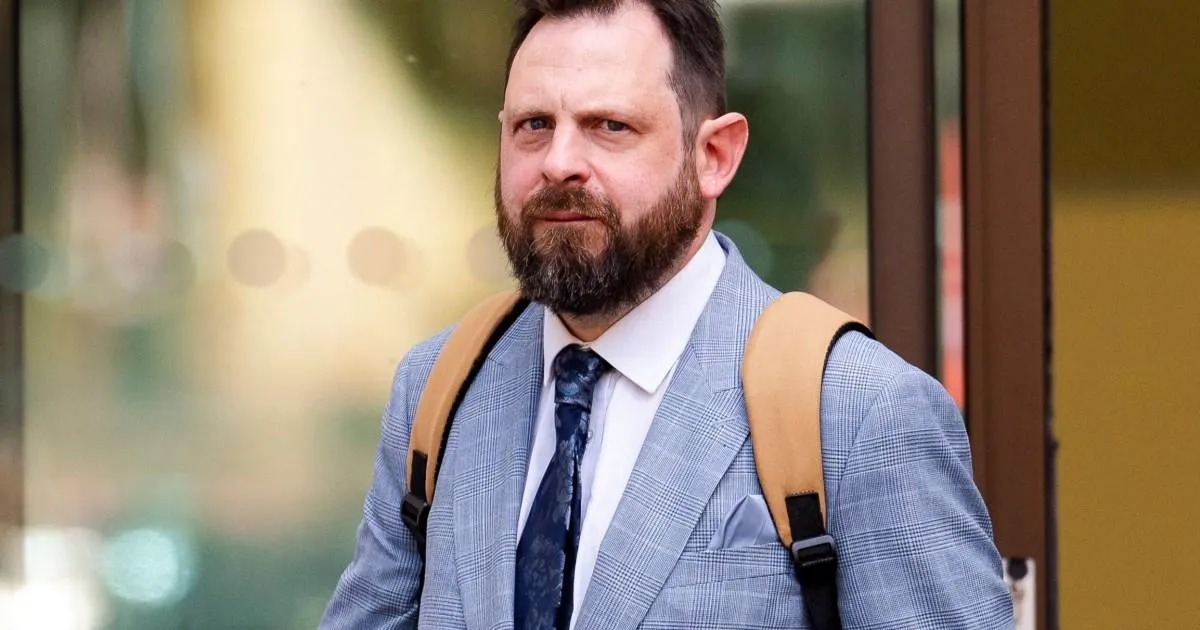
There is a particular kind of cruelty in targeting someone through the very channels meant to connect them with the public, and that cruelty was on full display in a London courtroom when Kieran Kyle, a 43-year-old former secondary school teacher from Gillingham, Kent, was sentenced to 20 weeks in prison. Kyle, who once held a position of trust in a classroom, responsible for guiding and shaping young people, chose instead to craft and send a series of vile, racist, and threatening emails to Kemi Badenoch, the leader of the Conservative Party and Leader of the Opposition, as well as to her husband, Hamish Badenoch. His messages were not merely angry outbursts; they were calculated attempts to intimidate, dehumanize, and instill fear. The court heard that he sent these communications to Mrs. Badenoch’s parliamentary email address, and in doing so, he crossed a line that should never be crossed. For a brief moment, he took on the persona of a menacing figure, claiming to have once been a member of the IRA and weaving that fabricated history into threats of unspeakable violence. The image of a former educator, someone who should embody patience and the nurturing of ideas, reduced to spewing hatred and threatening to shoot a political leader dead, is both jarring and deeply saddening. It forces us to confront the reality that hatred can lurk in the most unexpected places, and no profession or background grants immunity from it.
The details of the messages themselves paint a chilling picture of obsessive and venomous behavior. In one email, sent on April 29, Kyle used a deeply offensive racist term directed at Mrs. Badenoch, who is of Nigerian heritage, and then turned his attention to her husband, telling him he should “put a leash on her”—a phrase that reduces a powerful woman to the status of an animal, and strips away her agency and humanity. But his fixation did not stop there. Just three days later, Kyle reacted to a video posted by Mrs. Badenoch on social media, a video in which she used footage from Bloody Sunday to criticize proposed legislation addressing the Troubles. For those unfamiliar, Bloody Sunday is a wound that runs deep through the history of Northern Ireland, a day of violence and tragedy that remains painfully raw for many. Kyle sought to exploit this trauma, writing: “I’m ex-IRA, so Bloody Sunday references from you are going to give you trouble.” This was no casual comment; it was a deliberate act of psychological warfare, intended to remind Mrs. Badenoch that he believed he could reach her, that he was willing to use even the most painful chapters of history as a weapon. In another message to Hamish Badenoch on May 2, Kyle repeated the racist term and delivered a threat so specific and visceral that it is hard to read without a chill: he told Hamish to “pray she never ends up in Belfast cos she’ll be left face down in a ditch with a bullet in her head.” These are not the words of a confused individual; they are the calculated threats of someone who understood exactly how to terrify his targets. The impact on the Badenochs cannot be overstated, and the fact that these emails were sent to her official parliamentary address, a place meant for constituents and civic engagement, turns the act into an assault on the democratic process itself.
When it came time for Kyle to defend his actions, the excuses offered in court were almost as disturbing as the crime itself. His lawyer, Baiju Thittala, claimed that Kyle “did not know” who Kemi Badenoch was at the time he sent the emails, and that he only realized who she was after the fact. He told the court that Kyle had simply “googled it” and discovered she was the opposition leader. This explanation, however, quickly unraveled. District Judge Sam Goozee saw through the flimsy defense, pointing out the obvious contradiction: Kyle’s very first emails were addressed to Hamish Badenoch, which would have required him to research the family before contacting the Conservative leader. “The first emails were sent to Mr Badenoch, so I don’t think he did not appreciate who Mrs Badenoch was,” the judge observed. “So he clearly knew who Mrs Badenoch was because he researched her husband’s details first.” It was a devastating rebuttal, a moment of cold, logical clarity in the courtroom. The suggestion that a man could accidentally stumble upon the personal, non-public email address of a political figure’s spouse while remaining blissfully unaware of the politician herself is not just implausible; it is insulting to the intelligence of the court. Additionally, his lawyer maintained that Kyle had never actually been a member of the IRA, despite his boasts—a claim that, while it may have shielded him from the full weight of a terrorism-related charge, only served to highlight his willingness to weaponize a violent organization’s legacy for his own cowardly agenda. His lies were transparent, but they revealed a mind that believed intimidation could be cleverly disguised as ignorance.
The true human cost of these threats was brought into sharp focus when the court heard the victim impact statement from Kemi and Hamish Badenoch. Rather than focusing solely on their own fear, they chose to address the wider societal damage caused by such behavior, and their words served as a powerful reminder of why these matters are so serious. They said: “Our primary concern arising from this offence is not the personal impact on us, but the wider consequences that malicious communications and targeted harassment have on our democratic life. When individuals choose to intimidate, threaten, or aggressively target elected representatives or public figures, the harm extends far beyond any single person. It undermines a healthy democracy.” Those words are a testament to their resilience and their commitment to public service. In a world where online abuse of politicians has become alarmingly common, it is easy to forget that behind every public figure is a human being, a parent, a spouse, a person who deserves to feel safe in their own home. Hamish Badenoch, who is not a politician himself, was dragged into this nightmare simply because of who he married. He was forced to read graphic threats against his wife’s life, and that kind of psychological torment leaves scars that are not visible to the naked eye. The Badenochs’ refusal to be defined by their victimhood, and their insistence on highlighting the broader significance of the crime, is a quiet act of courage. They understood that when a citizen threatens an elected official, they are not just threatening an individual—they are threatening the very fabric of a society that relies on the free exchange of ideas and the safety of those who step forward to lead.
The legal outcome, while providing a measure of justice, also highlights the seriousness with which the courts must treat such offenses. Kyle, who had previously pleaded guilty to two counts of sending communications of an indecent or offensive nature, was sentenced to 20 weeks in prison. This was not a slap on the wrist; it was a firm statement that this behavior will not be tolerated. Alongside the prison sentence, the court imposed a five-year restraining order, prohibiting Kyle from contacting Kemi Badenoch, Hamish Badenoch, or Mrs. Badenoch’s parliamentary office. The restraining order is a crucial protective measure, offering a layer of safety and legal recourse should he attempt to renew his campaign of harassment after his release. For the Badenochs, the sentence likely brings a mix of relief and exhaustion. Creating a safe environment for public discourse is essential for democracy to flourish. The fact that Kyle was jailed shows that the system still has the capacity to protect those who serve the public, but it also raises troubling questions. How many other public figures are quietly enduring similar threats? How many are forced to accept this kind of abuse as part of the job? The case of Kieran Kyle is not an isolated incident but a symptom of a larger ailment in our political culture, one that has become increasingly poisoned by hatred, racism, and a willingness to dehumanize anyone who holds a differing viewpoint.
In the end, this case is about more than one man and his despicable actions. It is a story about the fragile nature of democracy and the courage required to stand in the public eye. Kemi Badenoch and her husband have emerged from this ordeal with dignity, their voices not silenced but strengthened by the knowledge that they have the law on their side. The sentencing of Kieran Kyle is a small victory in the ongoing battle against online and offline vitriol, but it is also a call to action for the rest of us. We must ask ourselves what kind of society we want to live in. Do we want to live in a world where a woman of color leading a major political party has to worry about being “left face down in a ditch” because of the color of her skin or her political beliefs? Do we want to live in a world where spouses of public figures are targeted simply for loving someone who chose to serve their country? The answer, of course, is no. We must do more to call out racism and misogyny in all its forms, to support those who are targeted, and to remember that behind every email and social media post is a real person with real fears and real hopes. Kieran Kyle’s prison cell may hold him for a time, but the hatred he embodies will only vanish when we, as a society, collectively decide that this is not acceptable. It is a long road, but cases like this remind us that accountability is possible, and that the forces of decency, while often tested, will not simply roll over.