


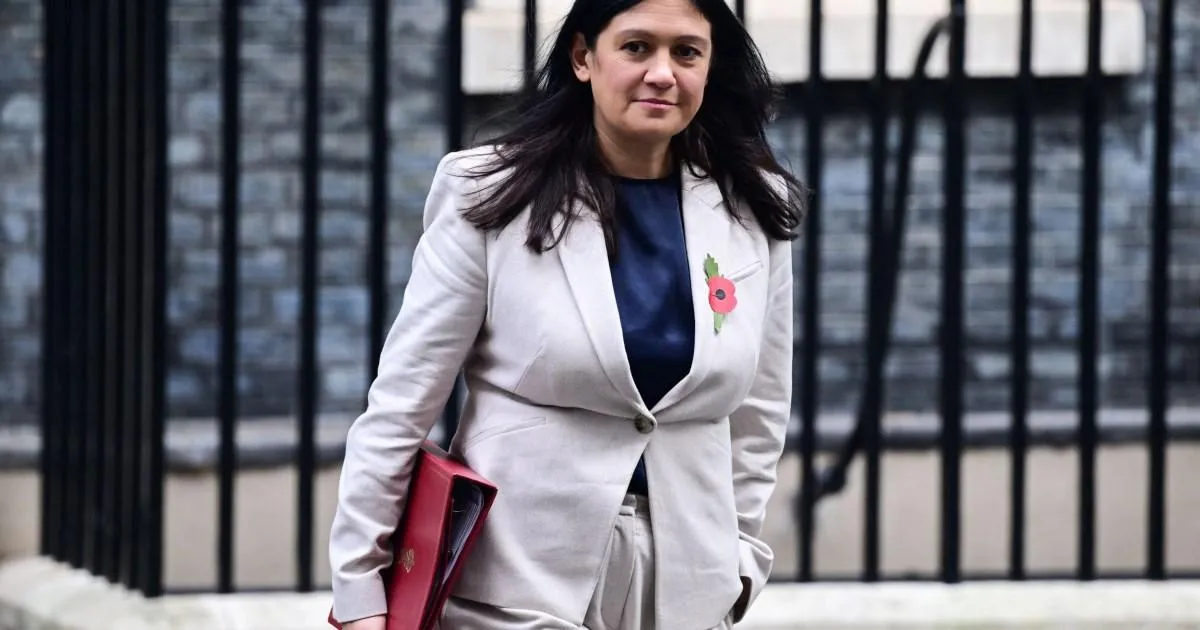
Remembrance Sunday is usually one of those rare moments in British public life when the political noise fades and the country comes together to honour people who served, suffered and died in war. This year, that quiet was broken before the Cenotaph ceremony had even begun. Culture Secretary Lisa Nandy released a statement ahead of the national service that linked the government’s push for closer ties with the European Union to Remembrance Sunday, and confirmed that the UK would rejoin the Erasmus+ student exchange programme next year, six years after Boris Johnson’s government scrapped it after Brexit. The Department for Culture’s release said Nandy would use the moment of reflection to highlight how returning to Erasmus+ “will help young people from every background and region build the strong links with Europe that veterans’ service helped secure.” On paper, it was an attempt to connect past sacrifice with future opportunity: the idea that those who fought helped create a peaceful Europe, and that young people should now be able to build friendships across that continent. In practice, the timing was always going to be delicate. Critics immediately accused the government of turning a solemn day into an EU announcement, and the Conservative Party called the move “tone deaf and frankly shameful.” The row that followed was not really about whether Remembrance Sunday should be respected—everyone involved insisted it should—but about whether a minister should attach a live policy announcement, especially one about Europe, to a day meant for silence, memory and veterans.
Nandy’s own words made her intentions clearer, and they also made the disagreement sharper. She said: “Our future generations must know the significance of those who served in our national story, that they forged a path for friendship and cooperation that meant no one in our country has had to fight a war since.” She went on: “In that spirit, this government is building stronger, better ties with our EU neighbours. After six years away, the UK rejoining the Erasmus+ programme is a clear symbol of our ambition and intent.” And she added: “As we remember the immense courage of those who served our country, we honour them by building the best opportunities for the next generation through closeness and collaboration with our allies.” Read generously, this is a hopeful argument: remembrance should not be only backward-looking. The peace that veterans helped secure is not just a memory to be polished once a year; it is something that has to be renewed through cooperation, education and exchange. Read critically, it is a Labour minister using one of the most sacred dates in the national calendar as a backdrop for a pro-EU message. Nandy was not claiming that Erasmus+ is the same as military service, or that a student exchange scheme is a war memorial. Her point was that peace creates the conditions for ordinary opportunities, and those opportunities are part of what remembrance makes possible. But politics rarely rewards nuance on a day when the public expects restraint. For supporters, she sounded mature and forward-looking. For critics, she sounded opportunistic. That gap between intention and reception is the heart of the story.
The Conservative response was swift and blunt. Kevin Hollinrake, the Conservative Party chairman, said: “Remembrance Sunday is a day for the nation to stand together in silence and honour those who gave everything for our country. It is not a day for a Labour minister to try to make an EU membership pitch.” He continued: “Our veterans did not fight for a student exchange scheme. Using their sacrifice to clear a £570 million cheque to Brussels is tone deaf and frankly shameful. Lisa Nandy should withdraw this release and apologise.” His language was designed to hit two sensitive nerves at once: the sanctity of Remembrance Sunday and the lingering bitterness of Brexit. Notice that he did not spend much time arguing against Erasmus+ on its policy merits. He did not say youth exchanges are worthless or that schools and universities should not work with Europe. He attacked the context, the timing and the cost. That is a classic political move. It shifts the argument from “Is this a good programme?” to “Is this an appropriate thing to say on this day?” For many voters, especially veterans and their families, the criticism will land. Remembrance Sunday feels like it belongs to the fallen, not to ministers with announcements. Using it to promote closer EU ties can feel as if sacrifice is being drafted into a partisan argument. For others, Hollinrake’s intervention will look like exactly the kind of politicisation he was accusing Nandy of. The result was a row about who was politicising remembrance—a row in which both sides claimed the high ground.
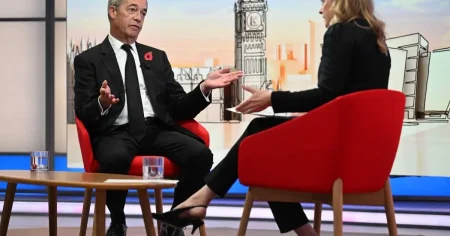
Nandy did not back down. Asked about Hollinrake’s comments on Sky News that morning, she said she would “strongly, strongly disagree” with them. She said: “It’s Remembrance Sunday, it’s not a time for politicking, and I’m actually quite horrified that the chairman of the Conservative Party has chosen to do that. They are the only party that is talking about Brexit and the European Union today.” She added: “I cannot see what is political about saying we want young people from every part of this country to understand the contribution that their grandparents and great-grandparents made.” Her defence was essentially this: she was not making an EU membership pitch; she was talking about young people, memory and opportunity, and the Conservatives were the ones dragging Brexit into the day. In her framing, the statement was educational and commemorative, not partisan. In the Tory framing, it was a policy announcement dressed up as remembrance. Both sides were speaking to different audiences. Nandy wanted to show that the government can be pro-cooperation with Europe while still respecting the solemnity of the occasion. Hollinrake wanted to show that the Conservatives remain the party that guards both remembrance and Brexit. The exchange was human and raw: two politicians accusing each other of politicising a day that is supposed to be above politics. And for the public watching at home, it may have felt uncomfortably familiar. Even the two-minute silence was preceded by an argument about who was being disrespectful.
The practical details behind the row matter, because this was not just a speech or a slogan. The King was due to join former prime ministers and other party leaders at the Cenotaph in London later that morning to remember and pay tribute to those who died fighting for the UK and the Commonwealth. Remembrance services were taking place simultaneously across the country, all leading up to the two minutes’ silence at 11am. Separately, the British Council—the UK’s national agency for Erasmus+—was making up to £400 million available for schools, higher education, youth groups and sports teams to take advantage of the programme. Applications for bids were due to open later that month, the Department for Culture said. That is the policy substance underneath the political noise. Rejoining Erasmus+ is not only about university students, although they are often the most visible group. It also touches schools, youth organisations and sports teams—places where international exchange can feel less elite and more practical. Supporters see it as rebuilding people-to-people links with Europe after Brexit. Critics see it as money going to Brussels and a symbol of closer integration by stealth. The article also captures a telling mismatch in numbers and framing: Hollinrake referred to a “£570 million cheque to Brussels,” while the government announcement emphasised up to £400 million being made available through the British Council. In political fights, the same policy can be described as investment or cost, opportunity or waste, depending on who is talking. The ceremony itself, of course, carried on regardless. The King, the former prime ministers, the party leaders and the veterans were there for a purpose larger than the argument.
In the end, this is a small but revealing example of how hard it is to separate remembrance from politics. Remembrance Sunday asks public figures to lower their voices, stand still and remember. But governments still govern, and ministers often want to announce policies around national moments. The risk is obvious: a message intended to sound forward-looking can feel like exploitation. Nandy’s argument was that veterans’ service secured peace and friendship, so expanding opportunities for young people is a way of honouring them. Hollinrake’s argument was that the day belongs to the fallen, not to an EU membership pitch or a cheque to Brussels. Both claims will resonate with different voters, and both contain a piece of the truth. What remains is the scene at the Cenotaph: the King, former prime ministers, party leaders, veterans, services across the country, and two minutes of silence at 11am. After the silence, the argument resumed. That is modern Britain in miniature: even a student exchange programme can become a proxy for Brexit, and even a day of remembrance can become a battlefield over tone, timing and trust. The row may fade, but it leaves a question that will return: when public figures say “we remember,” what exactly are they asking the rest of us to do with that memory?