



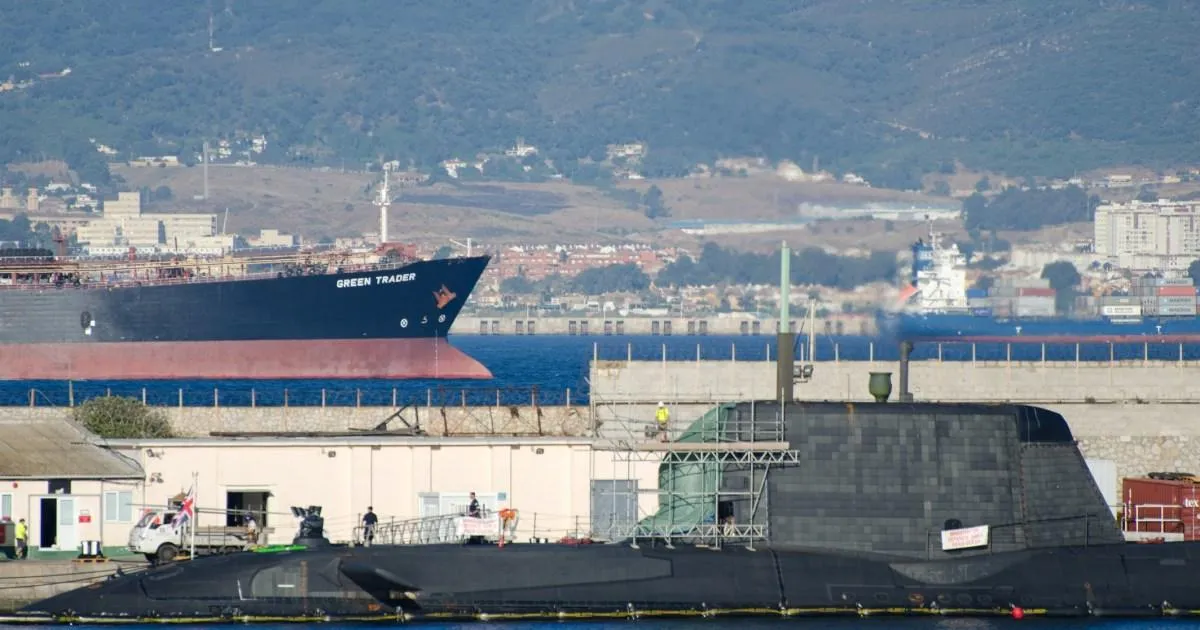
In an era defined by sharpening global tensions, the United Kingdom’s maritime security has hit a precarious stumbling block. Reports have emerged detailing that all five of the Royal Navy’s elite Astute-class attack submarines—the very vessels designed to provide a protective “shield” for the UK’s nuclear-armed Trident submarines—have been sidelined for repair. At a time when top military officials are warning that the geopolitical climate is more dangerous than at any point since the Cold War, the sudden unavailability of these state-of-the-art assets has sent ripples of concern through defense circles. These submarines are not merely ships; they are the primary underwater deterrent, acting as the eyes and ears of the fleet in an increasingly crowded and hostile ocean.
The timing of this maintenance pause is particularly unsettling given the ongoing rhetoric from the Kremlin. Sir Richard Knighton, the Chief of the Defence Staff, recently characterized the current period as the most dangerous of his 35-year career, citing a surge in Russian-led sabotage, cyber warfare, and illicit technology smuggling. By docking these vessels simultaneously, the UK faces an unintentional vulnerability, particularly regarding the protection of undersea infrastructure. Experts fear that with our most advanced sub-surface hunters out of action, critical internet cables and power lines—the lifeblood of the modern digital economy—are left exposed to hybrid warfare tactics that could cripple the nation without a single shot being fired.
Critics argue that this situation was entirely preventable and is the direct result of decades of fiscal neglect. Naval insiders have pointed toward a chronic lack of investment in the “unseen” side of the military: the dry docks, the maintenance facilities, the skilled engineering workforce, and the supply chains for spare parts. It is one thing to fund the purchase of a multi-billion-pound submarine; it is another entirely to fund the boring, day-to-day work of keeping it operational. Former defense officials have voiced deep frustrations, noting that if the infrastructure behind the scenes is allowed to crumble, the most advanced weaponry in the world becomes nothing more than expensive paperweights when needed most.
The Ministry of Defence (MoD) has attempted to project a tone of calm, insisting that the safety of the nation remains uncompromised. A spokesperson emphasized that “strengthening and sustaining” submarine capability is a top priority and that strategic reviews are already underway to ensure long-term resilience. They stress that while they do not comment on specific operational availability, the UK government continues to utilize a mix of warships, patrol aircraft, and other assets to maintain a constant presence in British waters. While this serves as a necessary reassurance, the official stance does little to mask the underlying operational strain being felt across the entirety of the armed forces.
This incident is unfortunately part of a broader, more worrying pattern of instability within the defense sector. The headlines have been crowded recently with reports of technical failures on major warships, such as the issues encountered by the nation’s flagship in Norway, and a staggering number of daily security breaches—including the loss of thousands of pieces of sensitive hardware. These aren’t just one-off administrative errors; they reflect a system stretched thin. When laptops are lost, data is potentially compromised, and ships remain docked, public and political confidence starts to wane. The message from the “inside” is clear: the military is currently struggling to balance legacy obligations with modern, high-intensity threats.
Ultimately, we are forced to grapple with the gap between the defensive power we claim to have and the operational reality on the water. As Sir Richard Knighton noted, our Armed Forces must be ready to deter adversaries from doing something “daft.” However, deterrence requires more than just intent; it requires functional, ready-to-deploy hardware. The current grounding of the Astute-class fleet serves as a sobering wake-up call for the UK, highlighting that deep, sustained investment in the boring, foundational elements of defense is just as critical as the high-tech weaponry that takes center stage. To secure the future, the government must prove it can move beyond patching problems and start building a military that is resilient enough to endure the tests already appearing on the horizon.