
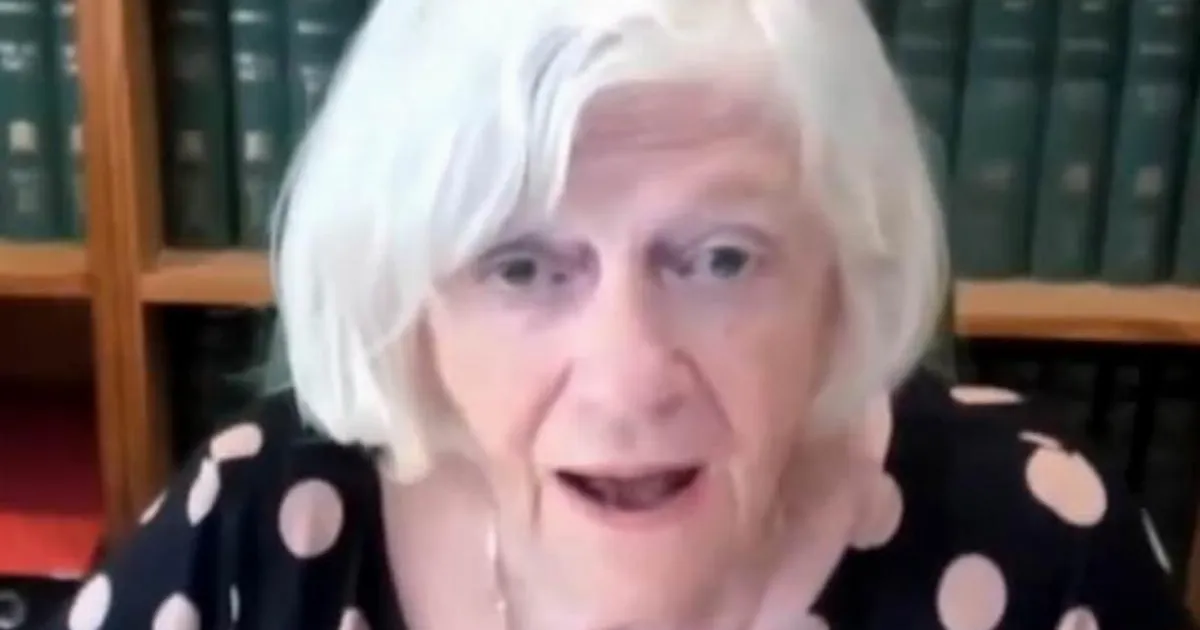
The tragic death of Ann Widdecombe has sent shockwaves through the heart of British politics, marking a somber end to a life defined by unflinching conviction and a sharp, often dry wit. A former Conservative minister and, more recently, a prominent Reform UK spokesperson, Widdecombe was discovered in her Dartmoor home, with investigators pinning her passing to a calculated act of violence. The timeline revealed by authorities is chilling: she was recording an interview just twenty minutes before the window in which police believe she was killed. This final conversation, initially meant for Christian radio, serves as a hauntingly mundane bridge between a life of political advocacy and a sudden, violent departure that has now triggered a broader national security investigation.
In her final public reflections, Widdecombe displayed the familiar, combative spirit that defined her decades in the public eye. She spent her final minutes of recorded conversation dissecting the integrity of the parliamentary process, specifically focusing on the Register of Members’ Interests. With a characteristic blend of intellectual rigor and self-deprecating humor, she critiqued how public transparency laws had drifted from their original purpose. She recalled her own time in the Commons, quipping about the absurdity of being required to declare a small fee for an appearance on a children’s show alongside a fox puppet named Basil Brush. It was a classic Widdecombe moment—using a punchline about a puppet to dismantle the ballooning bureaucracy of modern political oversight.
Beyond the humor, however, was a steadfast loyalty to her political ally, Nigel Farage. During the interview, she championed Farage’s “people versus the establishment” narrative, offering a full-throated defense of his controversial by-election strategy. At the time of her death, Farage was navigating intense scrutiny regarding his financial disclosures and his professional associations. Widdecombe, ever the loyalist, stood by his side, oblivious to the fact that her support for his movement would be among the last sentiments she ever shared with the world. The irony of her final political act—defending a man who frames himself as an anti-establishment outsider—remains a poignant footnote to her storied career.
The revelation of this final interview has added a jarring intimacy to a crime that is now widely recognized as a matter of national importance. Following the discovery of the circumstances surrounding her death, the investigation was escalated to counter-terrorism command. Home Secretary Shabana Mahmood has addressed Parliament with the gravity the situation demands, acknowledging that the attack raises profound questions regarding the physical and digital safety of those who choose to live their lives in the political arena. For someone like Widdecombe, who spent forty years navigating the corridors of power, such a violent conclusion has forced a necessary, albeit painful, national conversation about the risks inherent in public service.
This development has led to an immediate tightening of protection for other prominent figures, most notably Farage himself, who has now been offered formal meetings with the Home Office to review his security protocols. It is a sobering reflection of the current climate, where the words spoken in a small radio studio can be followed almost instantly by a coordinated response from the highest levels of the state. The contrast between the normalcy of a pre-recorded interview about parliamentary rules and the heavy, grim reality of a terror-related manhunt is perhaps the most difficult aspect of this tragedy for the public to reconcile.
Ultimately, Ann Widdecombe’s death leaves a void in the landscape of British discourse. Whether she was debating constitutional details or sparring with political rivals, she carried herself with a sense of certainty that is rarely seen in today’s political class. Her final recorded words, preserved by the grace of her family and shared through the lens of history, provide a snapshot of a woman who remained focused on the mechanics of governance until the very end. We are left with this haunting portrait: a seasoned orator, sharp-minded, unapologetic, and engaged in the “mad world” of politics, unaware that her final broadcast would become the closing chapter of her life.