


The annual San Fermin festival in Pamplona, Spain, is a spectacle known the world over—a high-stakes dash through narrow, cobblestone streets that captures the imagination of thrill-seekers and tourists alike. However, the tradition took a sobering turn this year when an elderly British man became one of the oldest victims to be hospitalized in the event’s long history. The pensioner, who hails from Halesowen in the West Midlands, found himself in the crosshairs of the powerful Jandilla ranch bulls as they navigated the final stretch of the course. Suffering from wounds to his hand, eyebrow, and elbow, his medical outlook remains cautious, marking a stark reminder of the physical cost that often accompanies this ancient, adrenaline-fueled pursuit.
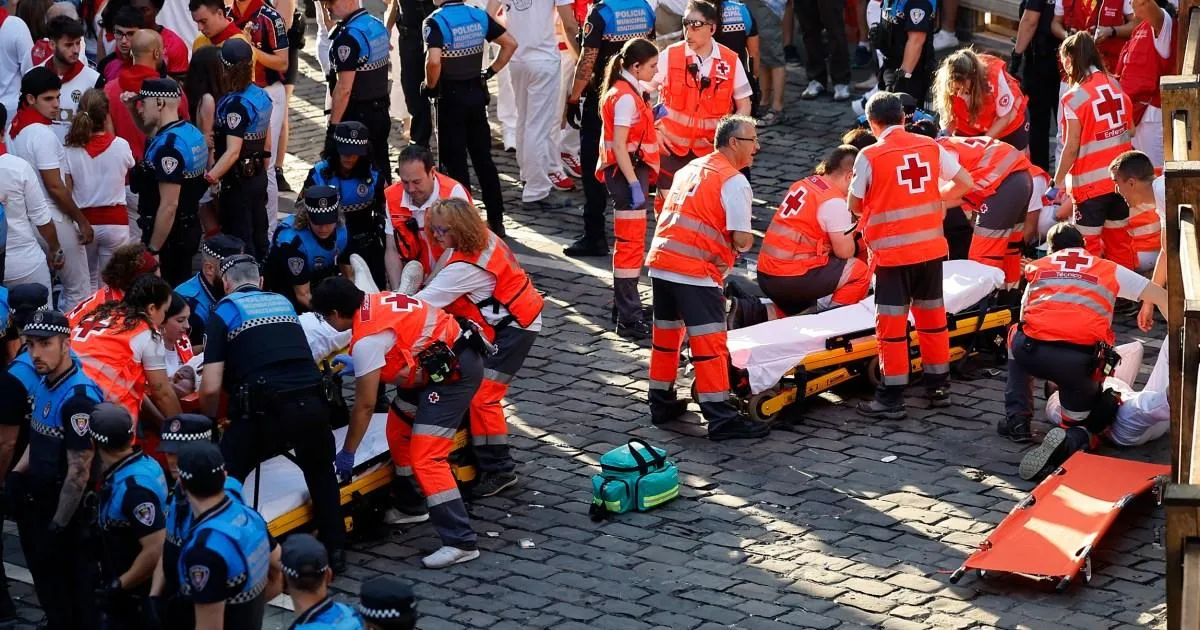
The Halesowen resident was not alone as he was processed through the medical system; he was one of ten individuals who required hospital care following the eighth and final run of the festival. His injury highlights the unpredictable risks of the “encierros,” where a single slip or miscalculation can result in dangerous proximity to fighting bulls weighing hundreds of kilograms. This incident also underscored a troubling trend for British travelers visiting the region, as the pensioner became the second U.K. national to be hospitalized during this year’s festivities. These injuries serve to ground the romanticized, Hemingway-esque image of the run in the harsh reality of emergency wards and recovery beds.
Among those who braved the course this year was William Mitchinson, a 24-year-old tourist who learned firsthand exactly how quickly an exciting social media idea can turn into a painful reality. After being knocked to the ground and trampled by a bull, Mitchinson found himself hobbling out of the Navarra University Hospital with an ankle injury. His candid reflection—acknowledging that while the party atmosphere had drawn him in, his future presence at the festival would strictly be confined to the post-run celebrations—resonated with many. His experience captures the thin line between the euphoria of the “Chupinazo” opening ceremony and the stark danger of standing in the path of a stampede.
The mechanics of the run are as treacherous as they are traditional. During the final morning, witnesses watched in horror as a bull broke from the pack, charging a group of runners near the town hall. One man was thrown into the air, striking his head against the ground in a brutal display of the animals’ sheer strength. Such moments of chaos are punctuated by the speed of the event, which this year lasted just two minutes and twenty-five seconds, yet carried the weight of a life-altering experience for those caught in the melee. While these nine days of revelry are steeped in community pride and historical significance, the frequency of gorings and concussions consistently pushes the event to the edge of controversy.
Stepping back to look at the broader picture, the history of San Fermin is written in both celebration and tragedy. Since records began in 1910, sixteen people have lost their lives in the bull runs, with the most recent death occurring in 2009. The cultural gravity of the event remains immense, kept alive by legacies like Hemingway’s The Sun Also Rises, which immortalized the festival in literature. Yet, for every person who views the run as a rite of passage, there are families and medical professionals who grapple with the aftermath of injuries that reach across borders, affecting individuals from Australia to the United States and the United Kingdom.
As the festival concludes each year with the somber “Pobre de mi” ceremony—where participants gather with lit candles to signal the end of the nine-day cycle—it remains a polarizing and deeply emotional event. The 2024 iteration was marred early on by the sudden, unrelated death of a 40-year-old man who collapsed before the runs even began, setting a heavy tone for the week. For those visiting Pamplona, the allure of the white outfit and red bandana is undeniable, but the recurring hospitalizations of veterans and novices alike serve as a perpetual, cautionary heartbeat to the festival’s frantic pace, reminding the world that some traditions carry a toll far higher than a simple scar.