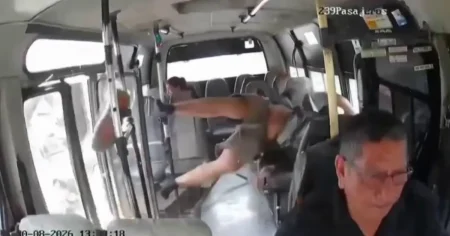



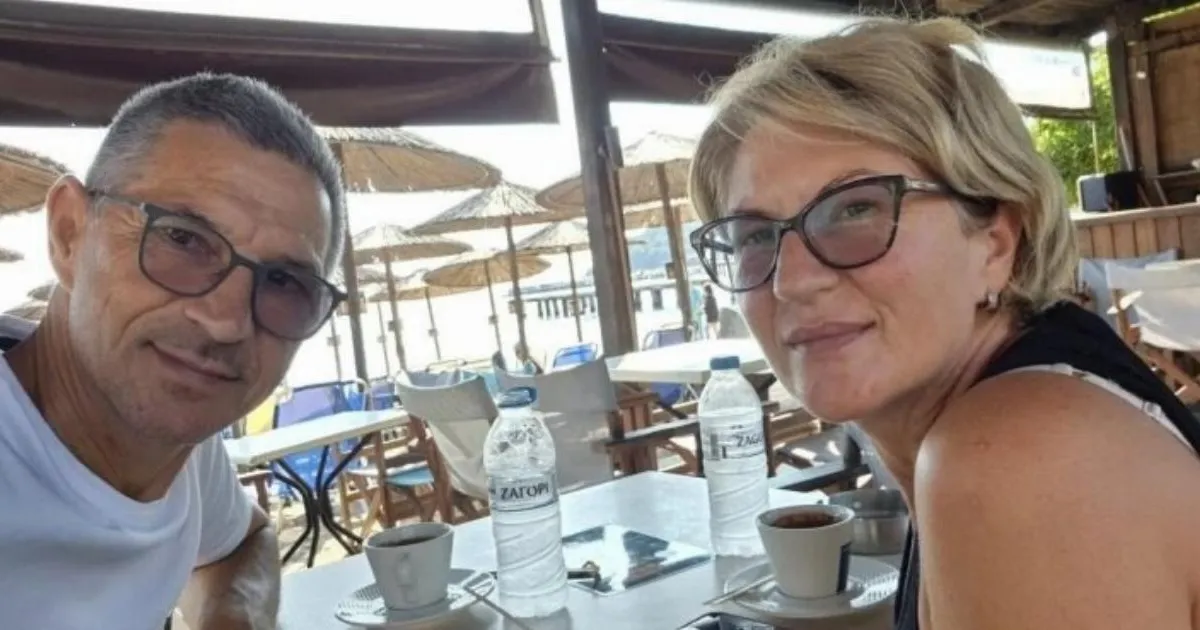
The dream of a relaxing holiday turned into a waking nightmare for Ljubiša Karović and his wife, Svetlana Grković, during a routine Ryanair flight from Thessaloniki to Memmingen. Shortly after takeoff, the peace of their journey was shattered by a deafening bang—the sound of an engine component detaching and violently striking the aircraft’s window. The resulting explosive decompression was immediate and terrifying; the sudden pressure differential acted like a vacuum, forcing the upper half of Mr. Karović’s body through the jagged frame as he was seated directly against the breach.
In those heart-stopping seconds, Svetlana’s instincts took over. With her husband hanging precariously in the open sky thousands of feet above the earth, she lunged for his legs, anchoring herself against the cabin floor. The physical and emotional weight of that moment was insurmountable; she later recounted the harrowing clarity of her internal monologue, admitting she had fully accepted that if they were to die, they would do so together. It was a primal, desperate display of devotion, as she fought against the relentless force of the air pressure to keep her husband from being lost to the wind.
The cabin soon descended into absolute chaos. As the plane’s internal pressure evaporated, oxygen masks dropped from the overhead panels, flapping amidst the roar of the rushing wind through the shattered window. While Svetlana held on with everything she had, she was not alone for long. A courageous man and woman nearby rushed to her side, providing the extra strength needed to finally pull the unconscious Mr. Karović back into the safety of the cabin. Svetlana has since expressed a deep, lingering desire to thank the man who assisted her, noting that his calm intervention was a vital lifeline during those five minutes of pure horror.
The ordeal was not over once the victim was dragged back inside. The plane, now damaged and depressurized, remained in the air for an agonizing thirty minutes while the crew maneuvered for an emergency landing. For the passengers on board, the uncertainty was suffocating. Many, positioned in the back of the cabin, were initially unaware of the gravity of the situation, believing the plane was falling from the sky. Mothers hugged their children with a desperate, crushing force, and the collective terror of not knowing if they would ever reach the ground alive created an atmosphere of profound, shared trauma.
In the aftermath, the physical toll on Mr. Karović became evident. Though he was eventually stabilized after the emergency landing in Thessaloniki, he suffered severe injuries, including painful burns on his hands, and remained in the hospital unable to speak in the days following the incident. For Svetlana, the memories of the flight remain etched in her mind—not just the terrifying pull of the decompression, but the sight of fellow passengers silently bracing for the worst, highlighting the fragile line between the mundane normalcy of air travel and an sudden, catastrophic brush with death.
While Ryanair has since confirmed the aircraft landed safely and provided replacement travel for those affected, the incident serves as a sobering reminder of the mechanical vulnerabilities inherent in modern flight. Comparing the experience to other documented mid-air failures, the resilience of the passengers and the quick thinking of those seated nearby proved to be the difference between a tragedy and a miraculous survival. For the Karovićs, the flight will forever be defined by that narrow, desperate window of time where love, luck, and the kindness of strangers saved them from the unthinkable.