



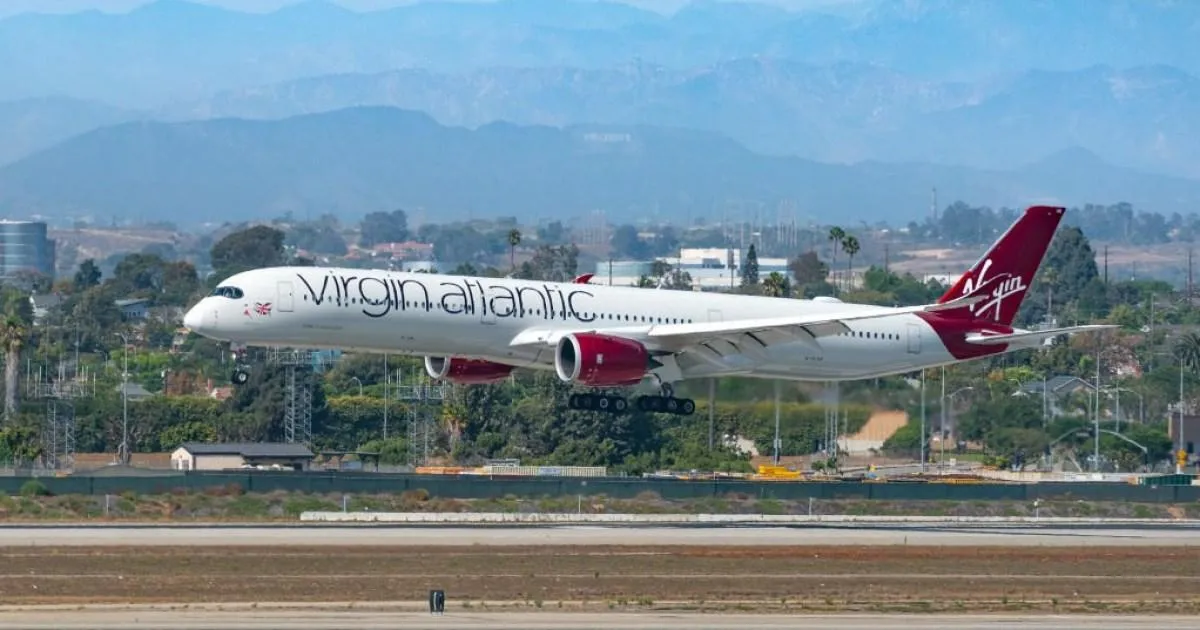
For the passengers aboard Virgin Atlantic flight VS135, what began as a routine Monday afternoon trip from London Heathrow to the sunny allure of Orlando quickly spiraled into an unexpected travel ordeal. The Airbus A350 took off at 12:47 p.m., climbing to a steady cruising altitude of 36,000 feet as it cut across the skies toward the open Atlantic. For those on board, it was the start of a long-awaited journey. However, as the aircraft approached the Irish coast, the plans changed abruptly. The seamless flightpath suddenly inverted, leaving passengers wondering why their plane was turning its back on the horizon and heading toward home.
The mid-air turnaround was anything but a simple U-turn. Aviation tracking data captured the strange, frantic dance of the aircraft as it performed a series of six tight loops off the coast of Dingle, Ireland, before veering further north to complete one final circuit. These maneuvers are often unsettling for travelers, as the sight of a plane circling over the ocean suggests that something is amiss beneath the floorboards. For the passengers, the confusion was only matched by the frustration of realizing that their destination was slipping further away with every passing minute. By 6:00 p.m., the plane touched back down at Heathrow, depositing disappointed travelers back exactly where they had started several hours prior.
Behind the scenes of this sudden detour lies the rigorous world of aviation safety protocols. While the term “minor technical issue” might sound dismissive to a frustrated passenger, it carries a very different weight in the cockpit. Experts explain that pilots operate under strict safety mandates that prohibit them from beginning a long-haul oceanic crossing if any system—even a seemingly trivial one—is malfunctioning. When you are halfway between continents, there is no place to land if a minor glitch escalates into something more serious. Therefore, the pilot’s decision to return to the UK was not a sign of a looming disaster, but rather a deliberate, professional choice to prioritize the absolute safety of everyone on the flight.
Virgin Atlantic later confirmed that the decision was indeed prompted by a mechanical concern that simply could not be overlooked. In a public statement, the airline addressed the situation, acknowledging that the flight had been cancelled to ensure that the aircraft could be properly inspected and addressed in a controlled environment. For the airline, the priority is always to mitigate risk before it ever becomes a factor, a standard that undoubtedly keeps the skies safe, even when the immediate reality is a massive inconvenience for hundreds of people whose vacation plans were suddenly interrupted.
The human element of this story centers on the disappointment and logistical headache of the passengers involved. Sitting on a plane for hours only to return to the departure gate is never the experience anyone pays for, and Virgin Atlantic was quick to offer its apologies for the disruption. The airline’s ground teams scrambled to shift into damage control, reaching out to individual travelers to navigate the difficult process of rebooking flights and rearranging travel plans. It is a stark reminder that while cutting-edge technology makes global travel possible, we are still subject to the unpredictability of machines and the meticulous caution of those responsible for our safety.
Ultimately, while flight VS135 was a “lost day” for its passengers, the incident serves as a testament to the fact that strict safety culture remains the bedrock of modern commercial aviation. The sight of the plane circling the Irish coast may have caused worry in the moment, but it was the safest path forward. As these travelers were rebooked onto new flights, the episode remained a lesson in the balance between modern convenience and the uncompromising need for mechanical perfection in the air. For now, the Airbus A350 remains grounded for maintenance, its pilots and crew having fulfilled their primary role: ensuring that every passenger landed on the ground, safe and sound, even if it wasn’t the ground they originally intended to hit.