
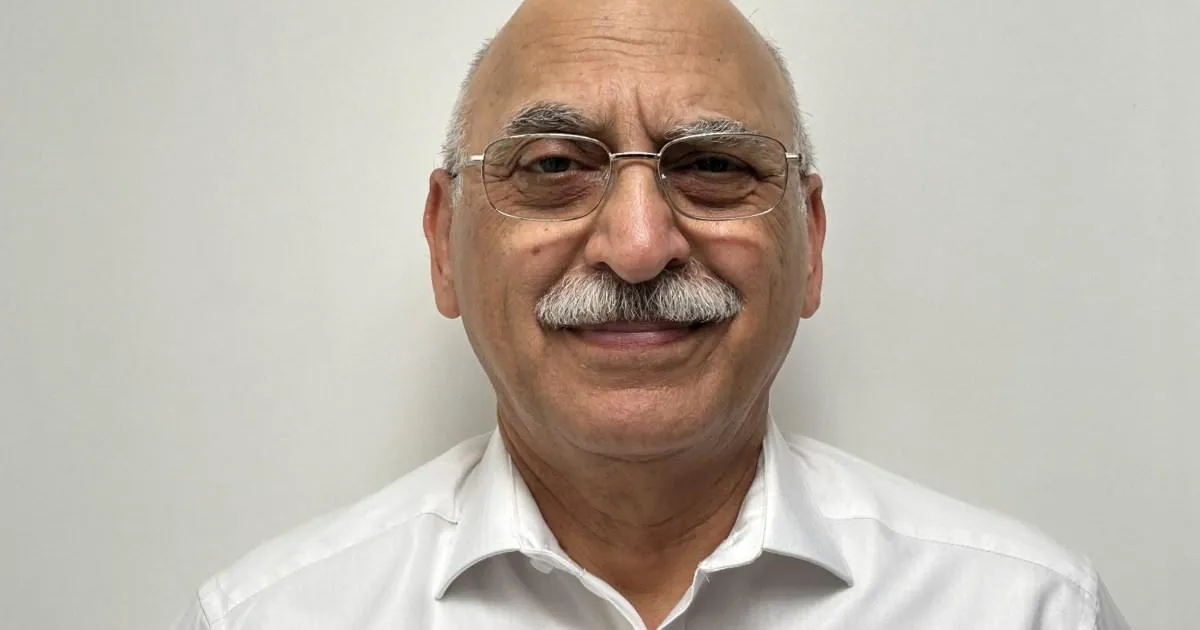
The story of Anoosheh Ashoori is not just one of imprisonment; it is a harrowing journey through the dark corridors of international geopolitics, where human lives are used as bargaining chips. In August 2017, Anoosheh, a British-Iranian civil engineer, traveled to his homeland to visit his elderly mother, expecting a brief family reunion. Instead, he was swept up by the Islamic Revolutionary Guard Corps (IRGC), the ideological arm of the Iranian military, and cast into the notorious Evin Prison. For five agonizing years, he remained a captive in a space synonymous with suffering, his fate tied to the complex and often cold diplomatic maneuvering between nations. His eventual release in March 2022, alongside fellow British-Iranian prisoner Nazanin Zaghari-Ratcliffe, marked the end of a grueling struggle, but it highlighted a persistent, haunting question: why did it take so long for the British government to take a harder stance against his captors?
For his daughter, Elika Ashoori, the trauma of those five years has been compounded by a deep sense of betrayal by the very government she expected to protect her father. She has become a vocal critic of the diplomatic delays that allowed the IRGC to operate with relative impunity for years. Elika maintains that the IRGC is not merely a foreign military entity, but the structural engine behind the rampant intimidation of citizens residing within the United Kingdom. She candidly told the press that by hesitating to proscribe the group sooner—a move that designates them as a terrorist organization—the British government inadvertently allowed the status quo to persist, essentially becoming a passive participant in the suffering of its own citizens. To her, the policy of caution was, in reality, a policy of negligence that endangered countless families.
The gravity of this situation was underscored recently when two men, George Stana and Nandito Bandea, were sentenced for the brutal stabbing of journalist Pouria Zeraati outside his Wimbledon home. The attack was not a random act of street violence; it was identified as a cynical, state-sponsored proxy operation linked directly to the Iranian regime. Zeraati, who works for the news outlet Iran International, had been a vocal critic of the Iranian government, and this assault served as a sobering reminder that the regime’s reach can extend far beyond its borders. The incident brought into sharp focus the reality that the Iranian state’s repressive tactics are no longer contained within Middle Eastern territory, but have effectively breached the safety of British streets.
Beyond the targeting of journalists, there is evidence that the IRGC’s reach is multifaceted and deeply malignant. Security experts and government officials have noted that the organization has directed groups—such as The Islamic Movement of the Companions of the Right—to orchestrate a campaign of antisemitism within the UK. This campaign has included the disturbing arson of volunteer ambulances and targeted attacks on synagogues, acts clearly designed to sow discord, fear, and division among British communities. By weaponizing hate and utilizing criminal proxies, the IRGC has managed to export its internal volatility to the West, creating an environment where the security of ordinary citizens, particularly Jewish communities, is increasingly compromised.
Prime Minister Keir Starmer’s recent announcement that the UK will finally proscribe the IRGC marks a significant, albeit long-delayed, shift in government policy. In his strong condemnation, Starmer declared that Britain would no longer serve as a “playground” for foreign states intent on spreading violence and intimidating those seeking refuge on British soil. This declaration is a promise of accountability, signaling that the era of state-sponsored harassment—whether it manifests as taking hostages like Anoosheh or violent attacks on the press—will be met with the full force of national security laws. It is a necessary hardening of heart, born from the recognition that diplomatic niceties have failed to curb the aggressive ambitions of the Iranian regime.
Ultimately, this saga is a testament to the resilience of families like the Ashooris, who have had to educate the public and the political establishment on the true nature of the threats they faced. While the proscription of the IRGC comes far too late for the years lost in Evin Prison, it serves as a belated acknowledgement of the suffering endured by so many. It signifies a move toward putting the security and dignity of citizens above the comfort of diplomatic ambiguity. As Britain adopts this new, uncompromising stance, it stands as a shield for those who have lived in the shadows of international threats, ensuring that no more families are torn apart by the callous policies of a regime that views human lives as nothing more than strategic pawns.