

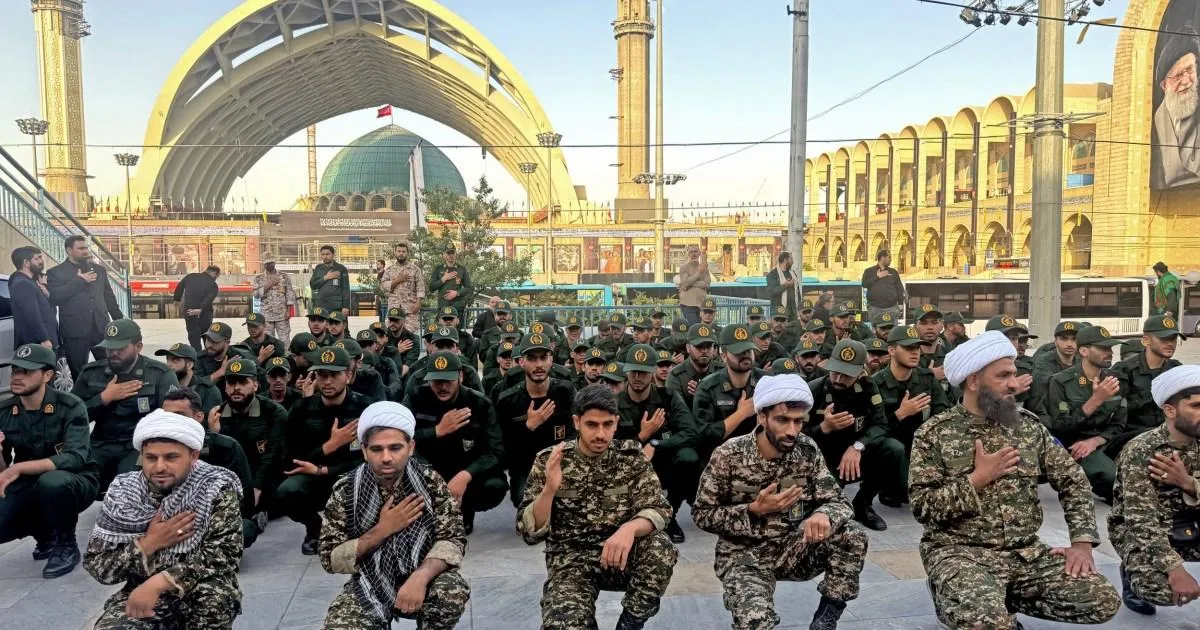
The United Kingdom has entered a new phase of national security policy, formally clamping down on the shadow influence of foreign adversaries. In a significant shift, the government has utilized expanded, proscription-style powers to outlaw three specific entities: the Islamic Revolutionary Guard Corps (IRGC) of Iran, the Islamic Movement of Companions of the Right (IMCR), and Russia’s GRU Volunteer Corps. By classifying these groups as direct state threats, the UK is drawing a bright red line: anyone caught supporting or assisting these organizations now faces up to 14 years in prison, while those who commit acts of sabotage on their behalf risk a life sentence. This move signals a departure from traditional diplomatic sensitivities, signaling that the British government is no longer willing to tolerate the presence of foreign-directed volatility on its streets.
The urgency of this legislation is rooted in the unsettling reality of recent attacks on British soil. The IMCR, ostensibly an Iranian-backed group, has been linked to a string of terrifying incidents, including an antisemitic arson attack on Hatzola ambulances in Golders Green and the targeting of the Finchley Reform synagogue. Furthermore, the group has claimed responsibility for threatening the offices of a Persian-language media outlet in Park Royal. Foreign Secretary Yvette Cooper has publicly stated that the IRGC is “sitting behind” these operations, suggesting the IMCR serves as a proxy. These aren’t just isolated crimes; they represent a coordinated effort by state-linked actors to sow discord and fear within British communities, a trend the government is now determined to dismantle.
Beyond Iran, the spotlight has turned toward Moscow, specifically targeting the GRU Volunteer Corps. This organization operates as a mercenary extension of the GRU, the Russian military intelligence agency that succeeded the infamous KGB. Government intelligence assessments have identified this group as a primary orchestrator of sabotage and foreign interference against the UK. By formally designating them as a threat, the Home Office is addressing the historical shadow that still hangs over the nation—notably the 2018 Salisbury Novichok poisoning, an attack that remains a grim reminder of the lengths foreign intelligence services will go to destabilize Western targets. This new legal framework is designed to preempt such violence before it manifests.
The rhetoric from the highest levels of government has been uncompromising. Prime Minister Sir Keir Starmer has made it clear that Britain will not be treated as a “playground” for regimes intent on stirring up violence and division. His message to those operating within these networks is stark: state actors and their proxies will be hunted down and prosecuted to the full extent of the law. This is a bold pivot from the previous status quo, reflecting a realization that the nature of modern conflict has migrated from distant battlefields into the heart of suburban life. By stripping these groups of their gray-zone status, the UK is attempting to remove the ambiguity that has previously allowed these operatives to function with relative impunity.
The road to this legislation has been long and fraught with political friction. Secretary Yvette Cooper had spent months laying the groundwork, citing the alarming rise in operations tied to foreign interests and the repeated warnings issued by intelligence agencies. Despite this, the rollout has not been without its critics. Shadow Foreign Secretary Priti Patel, while welcoming the prohibition as a necessary step, has argued that the government was far too slow to act. Patel emphasized that while the Conservative Party had pushed for urgent emergency legislation earlier in the process, the Labour government “dithered and delayed,” leaving the public exposed to risks that could have been mitigated sooner.
Ultimately, this move represents a profound shift in how the United Kingdom navigates its role in an increasingly agitated geopolitical climate. The transition from monitoring foreign threats to actively outlawing the organizations behind them demonstrates a newfound resolve to protect domestic stability. As the government transitions into this more aggressive posture, the focus will now shift to enforcement: how effectively can the Home Office track these disparate actors, and will these new, heavy sentences prove to be a sufficient deterrent? For now, the message remains clear: the UK is closing its doors to state-sponsored shadow warfare, demanding that foreign entities respect the sanctity of British law or face the severe consequences of their interference.