

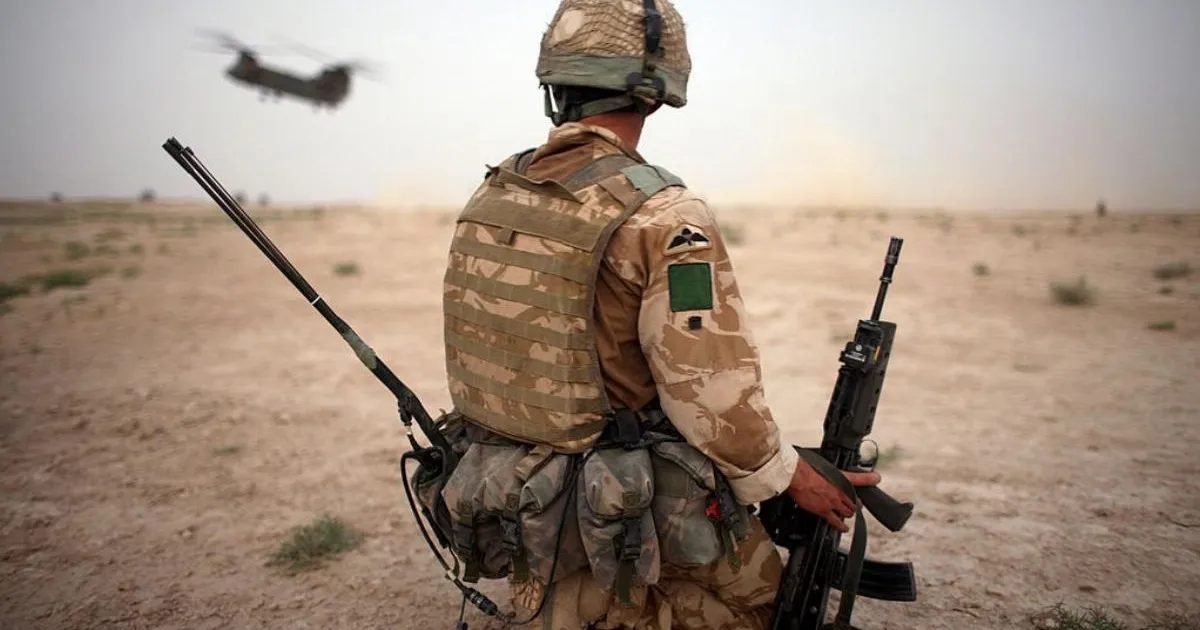
The ongoing Independent Inquiry into alleged unlawful killings by British Special Forces in Afghanistan has recently surfaced deeply disturbing testimony, painting a harrowing picture of moral collapse within certain military ranks. Monica Grenfell, who served as a support staff member within the UK Special Forces between 2015 and 2018, provided eyewitness accounts of a culture gone toxic. She recounted unsettling conversations with a colleague—referred to as “Name3″—who reportedly spoke casually, and even humorously, about abusing detainees. According to Grenfell, this individual described a sadistic practice of placing prisoners onto the tines of a forklift, raising them, and driving at high speeds before slamming on the brakes, sending the detained men flying off the vehicle. This revelation has sent shockwaves through the proceedings, highlighting a horrifying disregard for human life and dignity that allegedly permeated the operational environment during and after the conflict.
The atmosphere within these installations, as described by Grenfell, was far from the disciplined, professional standard expected of elite military units. She characterized the base as “feral” and “coarse,” noting a complete breakdown of oversight and conduct. She described a setting where soldiers felt “off the leash,” wearing civilian clothing rather than uniforms, and engaging in unceasing, aggressive sexualized banter. The environment was so unchecked that staff felt as though they were living through a real-life Lord of the Flies scenario—a lawless society where the moral compass had been discarded. Grenfell’s testimony echoes the sentiments of other colleagues who found the culture genuinely disturbing, suggesting that the detachment from conventional military discipline allowed a wild, dehumanizing mindset to flourish unchecked.
Compounding these moral grievances is the specific focus of the inquiry: the alleged unlawful killings of Afghan civilians between 2010 and 2013 and the subsequent attempts to bury the truth. Christopher Green, an Army Reserve veteran who served in the region in 2012, provided a chilling account of how such incidents were handled on the ground. Green testified that local village elders had raised direct complaints regarding the killings of civilians in the village of Rahim, but those concerns were often met with hostility by his own peers, with one officer going so far as to label him a “Taliban-loving apologist.” This systemic defensiveness, he argued, created a culture of silence where questioning the integrity of operations was treated as an act of betrayal against the unit.
A critical, perhaps damning, piece of evidence brought forward by Green involves the financial compensation paid to the families of the victims. He pointed to a payment of approximately £3,600 made to the mother of two deceased brothers, categorized by the government as an “assistance payment.” Green argued that such a transaction was highly irregular, noting that the British government typically does not offer recompense for, or acknowledge, the accidental deaths of civilians if the individuals killed were legitimate Taliban targets. To him, this payout was a tacit admission of guilt—an unspoken signal that the military had killed the wrong people and was attempting to mitigate local outrage with cash rather than accountability.
The weight of this testimony is not lost on the Inquiry Chair, Lord Justice Haddon-Cave, nor on the public, as the investigation digs deeper into allegations of a potential cover-up at the highest levels. The narrative emerging is one of profound institutional failure, wherein the elite status of the military units involved seemingly fostered a sense of immunity from the laws and ethical standards that govern the rest of the armed forces. By moving beyond the sterile language of official reports and into the raw, messy accounts of those who witnessed the day-to-day reality of these deployments, the inquiry is peeling back a layer of military history that many would prefer to leave obscured.
For its part, the Ministry of Defence has maintained a posture of formal cooperation, asserting its commitment to transparency while urging the public to wait for the final outcome of the inquiry. While they express gratitude to those coming forward, their statements remain measured, reflecting the high stakes of an investigation that could fundamentally alter the reputation of the British Special Forces. As the proceedings continue, the central challenge remains clear: reconciling the heroic image of the “elite soldier” with the gritty, uncomfortable truths of human cruelty and institutional negligence. The final report will not only determine whether crimes were committed but will likely force a necessary, painful reckoning with the human cost of a war that, for some, turned into a playground for the worst elements of human nature.