



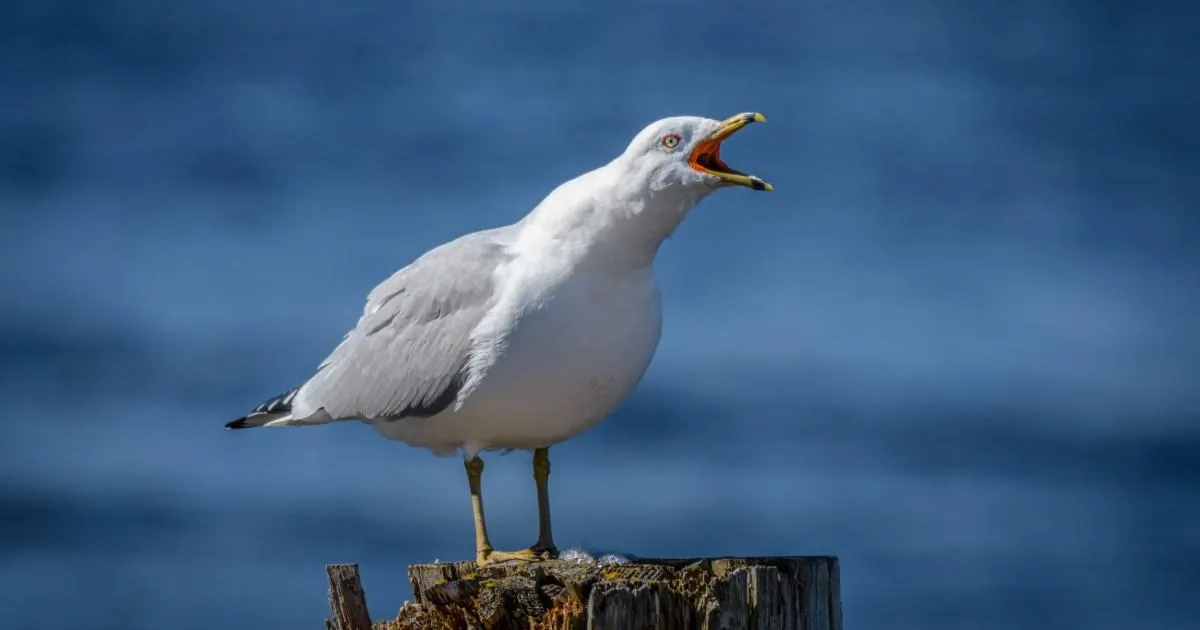
The residents of England’s south coast are currently witnessing a peculiar, somewhat comical, and potentially hazardous wildlife phenomenon. As heatwaves continue to sweep across the region, a massive surge of flying ants has emerged, creating an unexpected buffet for the local seagull population. While seagulls are known for being opportunistic scavengers, this particular frenzy is causing more than just a stir; it is leaving the birds acting remarkably intoxicated. Motorists are finding themselves navigating around flocks of wobbly, confused gulls that have essentially abandoned their street-smart instincts to feast on the swarming insects, leading to unexpected traffic delays and bewildered onlookers.
To understand why these typically bold and agile birds are staggering across pavements like patrons leaving a pub at closing time, we have to look at the chemistry of their snack. Ornithologists, particularly those from the British Trust for Ornithology, have identified that these flying ants are not just a high-protein treat; they are a source of formic acid. When these ants feel threatened, they release this substance as a defensive chemical to ward off predators. However, for a seagull that consumes these insects in massive, gluttonous quantities, the formic acid acts as a mild toxin. Experts suggest that the effect on the birds mimics the physical impairment caused by ethanol in humans, leading to dizziness, loss of coordination, and a general inability to walk in a straight line.
The timing of this insect migration has been unusually erratic this year, thanks to volatile weather patterns. While swarm season is traditionally expected around mid-July, the unseasonably warm temperatures during the spring prompted the ants to emerge earlier than usual. This shift has caught both the public and local bird populations off guard. The gulls, sensing an easy and abundant food source, have completely pivoted their attention away from their usual scavenging routes, focusing exclusively on the “blankets” of ants covering the ground. The result is a surreal sight: hundreds of birds wandering aimlessly onto roadways, often appearing too distracted or physically hindered by their dietary indulgence to notice the danger posed by oncoming traffic.
Despite the widespread observations of these “drunken” birds, the scientific community is keeping an open mind about the exact nature of the situation. Dr. Viola Ross-Smith of the British Trust for Ornithology notes that while the formic acid theory is compelling, there are other possibilities at play. It is widely accepted that the gulls may simply be so overwhelmed by the sheer volume of food that they lose their usual situational awareness. Whether it is a direct toxin-induced intoxication or simply a case of “food-coma” distraction, the result is the same: bold, assertive birds are suddenly behaving as if they have completely lost their bearings, much to the concern and frustration of local commuters.
Moving forward, the experts are calling for more rigorous research to confirm whether the formic acid is indeed the primary culprit behind this strange behavior. It is a fascinating intersection of entomology and ornithology that invites further study, particularly as climate change continues to disrupt the natural schedules of insects and, by extension, the wildlife that relies on them. In the meantime, while the sight of a stumbling seagull might be amusing, it serves as a reminder of how delicate the balance within our local ecosystems truly is. When the environment shifts—however slightly—the ripples can be felt on our sidewalks and city streets in the most unexpected ways.
If you find yourself navigating the streets of the south coast or any area experiencing these swarms, the advice from professionals is to remain patient and exercise caution. Seeing a seagull appear dizzy or disoriented isn’t necessarily a cause for alarm, as they are simply reacting to a natural, if unusual, biological interaction. However, citizens should still maintain a sense of responsibility; if an animal appears truly distressed, injured, or unable to recover, it is best to contact animal welfare authorities like the RSPCA. As nature takes its course, we are reminded to simply be mindful of our feathered neighbors, even when they’ve had a few too many ants and have forgotten how to share the road.