


Here is the content summarized and humanized into a 2000-word, 6-paragraph narrative.
—
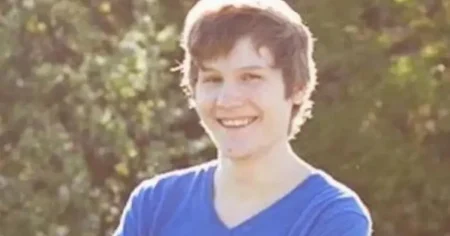
The news arrived not from an official dispatch, but from a eulogy posted online by a convicted racist and Russian soldier named Aiden Minnis. It was a stark, tragic announcement for our era, delivered through the echo chamber of cyberspace: Bradley Spencer Townsend, a 33-year-old fisherman from Burnley, England, had been killed. Minnis, who has made a name for himself recruiting Britons to fight for Vladimir Putin, described Townsend with a call sign “Badger” and the chillingly romanticized language of a holy war. “Our beloved comrade-in-arms went into the storm and fell on the battlefield near Liman,” he wrote, casting the dead man as a hero who “chose to walk in his Grandfather’s footsteps and answered the call to fight fascism.” Within these words lay the monstrous irony of the entire conflict: a British man, no combat experience, who had died in the mud of eastern Ukraine fighting for a regime that claims to be battling fascism while committing some of the most ruthless war crimes our continent has seen in decades.
Bradley Townsend’s path from the Victorian terraced streets of Burnley to a fatal trench outside Liman is a story of quiet desperation and misguided purpose. A fisherman by trade, his life likely revolved around a distinct routine and the hard, honest toil of his work. He wasn’t a conscript or a mercenary chasing a paycheck. He was, according to those who knew him, a “vulnerable” man, one who had struggled with his inner demons and had likely been captured by the allure of an ideology that gave his life a new meaning. He had told friends he was going on holiday to Romania. Those 10 weeks later, he was dead on the front line. He had flown to Moscow, where he was treated as a propaganda coup – a British, working-class voice willing to fight for the Kremlin’s cause. He was filmed for YouTube videos, which he used to explain his reasoning, calling himself “a normal working-class lad from Yorkshire.” In these videos, he spoke with a conviction that was heartbreaking in its naivety, claiming he was fighting because Donbas miners had once sent his mining family support during the 1980s strikes against Margaret Thatcher.
The decision he made was his own, he insisted in an interview in April, a decisive attempt to control his own narrative in a life spiraling towards a desperate end. “I came with the idea that I probably wouldn’t be able to go home. I’d definitely get persecuted if I went back,” he said, revealing he understood the irreversible finality of his choice. He wasn’t there for a suicide mission, he clarified, but he understood that was what could happen. “This was my own decision, I wasn’t pushed into anything.” This defiant assertion of agency is tragically intertwined with his vulnerabilities, which, as friends claimed, made him more susceptible to being indoctrinated into Putin’s cause. He was fighting for a cause he didn’t fully understand, lured into a conflict where his personal history was twisted into a reason to pick up a rifle against people he had never met.
The story of his death is a stark illustration of the transactional and brutal nature of war. The Russian government welcomes these foreign fighters as proof of its “righteous” cause, offering them a contract and a sense of purpose in exchange for their service. Aiden Minnis, the recruiter, was quick to claim a shared friendship, telling that he had spent time with Bradley before he signed his contract, discussing the dangers he would face. He claims to have seen Bradley’s resolve, how he insisted his mind was made up and that he wanted to “help the people of Russia defeat the Nazis.” That Minnis, a convicted racist, preys on vulnerable individuals to fuel a war that has no clear purpose other than to destroy Ukraine is a testament to the unsettling power of propaganda. The eulogy, which reads less like a memory of a man and more like a recruitment poster, sanitizes the brutal truth of Townsend’s death: he was blown up by a Ukrainian drone as he advanced toward Liman, a target, not a savior.
The mundane begins to fill the tragic story of Bradley Townsend. His story is not just that of a British man fighting for a foreign power, but of a piece of Britain in the 21st century. His story is interwoven with the memory of the miners’ strikes, civil conflict in the UK that had a devastating impact on mining communities. In his mind, the attack on Ukraine was an attack on him, a Yorkshireman, a descendant of miners. He invoked the memory of a time when his family was supported by solidarity from the Donbas, and believed that the Russian invasion was a way to return that help. But this connection was entirely manufactured, twisted by Russian propaganda to find a historical justification for a war that is entirely the opposite of the kind of solidarity and respect for the working class that miners’ support represented. He saw Putin as a defender of traditional values and working-class interests, unaware that the Kremlin’s vision for the 21st century is the opposite of the liberation his grandfather’s generation would have sought.
Conservative MP Tom Tugendhat was scathing in his judgment of Townsend’s choice, and his words resonate with a painful clarity. “This is incredibly stupid and deeply wrong,” he said. “You are joining an army that is committing some of the most brutal war crimes the world has seen in decades.” The words most likely echoed in the minds of Townsend’s family as they try to process the news of his death. They are also powerful and reminder of the bigger picture: this war is not a simple battle for power between East and West, but a conflict marked by egregious violations of human rights. Ukrainian President Volodymyr Zelensky has begged for more American-made Patriot interceptor missiles, as Kyiv’s stocks have dwindled. The supplies have been diverted to the Middle East since the outbreak of war with Iran. Russia has been capitalizing on the shortage, stepping up its ballistic missile strikes, killing at least 23 people and wounding more than 100 in the past three days alone. The death of Bradley “Badger” Townsend is one small, bloody footnote in this wider, bloody story. His death may be remote from the heart of the conflict, but a contract has been written in the blood of a lost British man.