



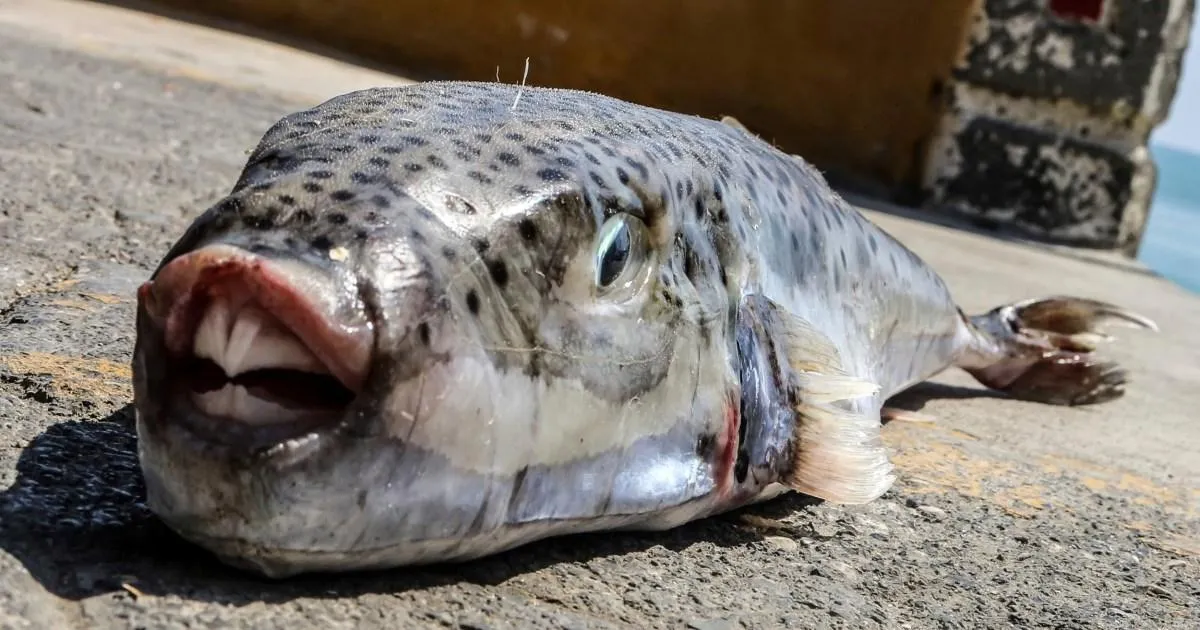
As the summer sun begins to beat down on the sparkling waters of Greece, a peculiar and concerning underwater invader is making headlines that have caught both locals and tourists off guard. The silver-cheeked toadfish, a species easily recognized by its torpedo-shaped body and a set of eerily human-like teeth, has begun migrating in significant numbers toward the Greek coastline. While these fish are native to the vast expanses of the Indian Ocean, the warming temperatures of our changing climate have acted as a siren song, luring them through the Suez Canal and into the heart of the Mediterranean. This arrival is not merely a scientific curiosity; it represents a significant ecological shift that is tangibly affecting the fishing communities of Crete and beyond.
For the local fishermen who have relied on these waters for generations, the arrival of the toadfish is nothing short of a professional nightmare. These creatures are not only aggressive but possess an incredibly powerful bite—strong enough to snap through heavy-duty fishing nets as if they were made of paper. Giorgos Kyriakakis, a voice for the Cretan fishermen’s association, has painted a grueling picture of the daily struggle: many men spend their entire earnings for the day on repairs after a single excursion. Because the toadfish also prey on the fisherman’s standard catch, they represent a double blow to the local economy. It has reached a tipping point where, for every day spent at sea, the crew must dedicate three days back on land painstakingly mending their shredded equipment.
Recognizing the gravity of the economic strain and the potential threat to the public, the Greek government has taken unprecedented action. For the first time in the nation’s history, the Ministry of Agriculture has introduced a bounty program, offering €5.33 per kilogram for every silver-cheeked toadfish caught. The objective is clear: to incentivize local crews to clear these pests from the ecosystem. Once gathered, these toxic members of the pufferfish family are carefully collected, frozen, and sent to incinerators. As the program launches, officials are already eyeing an expansion, hoping that direct intervention will prevent the fish from establishing a permanent and overwhelming presence across all Greek islands.
Beyond the logistical headache for the fishing industry, there is an undeniable undercurrent of public anxiety regarding safety. The fear is rooted in the fish’s anatomy; not only is its bite vicious, but its organs contain tetrodotoxin, a potent neurotoxin capable of causing heart and lung failure if ingested. Viral videos circulating on social media haven’t helped matters, showing the toadfish easily crushing metal soda cans and wood with their razor-sharp teeth. Adding to the unease, a recent, unprovoked attack on an elderly woman off the coast of Varkiza, which left her requiring stitches, has prompted the Greek Red Cross to issue formal health warnings, advising swimmers to keep their distance and avoid any physical contact with marine life that appears suspicious.
Despite the frightening imagery and the very real danger of a bite, marine experts are pleading for a sense of calm. Nota Peristeraki, an expert from the Hellenic Centre for Marine Research, notes that while the frequency of these encounters is rising, the likelihood of a major incident remains statistically quite low. He points out that you are still far more likely to encounter a shark than to be targeted by a rogue toadfish, provided that humans do not attempt to feed or provoke them. Attacks are almost exclusively recorded when swimmers or anglers get too close or attempt to handle the fish. It is a classic case of nature being misunderstood—a creature simply reacting to its environment, finding itself in unfamiliar, highly populated waters.
Ultimately, the consensus among local authorities and tourism boards is that the “toadfish invasion” should not be a cause for panic among those planning their Mediterranean holidays. In a joint statement, sixteen medical and tourism associations on Crete emphasized that the fish is an offshore phenomenon and poses no “invisible” or imminent danger to the average beachgoer. They have cautioned against the dramatic exaggeration that often dominates public debate, reminding everyone that these fish have been present in the Mediterranean for years without ruining the quintessential Greek summer experience. By balancing necessary government intervention with a grounded, scientific perspective, the islands are working hard to ensure that their beaches remain a safe and serene haven for everyone.