


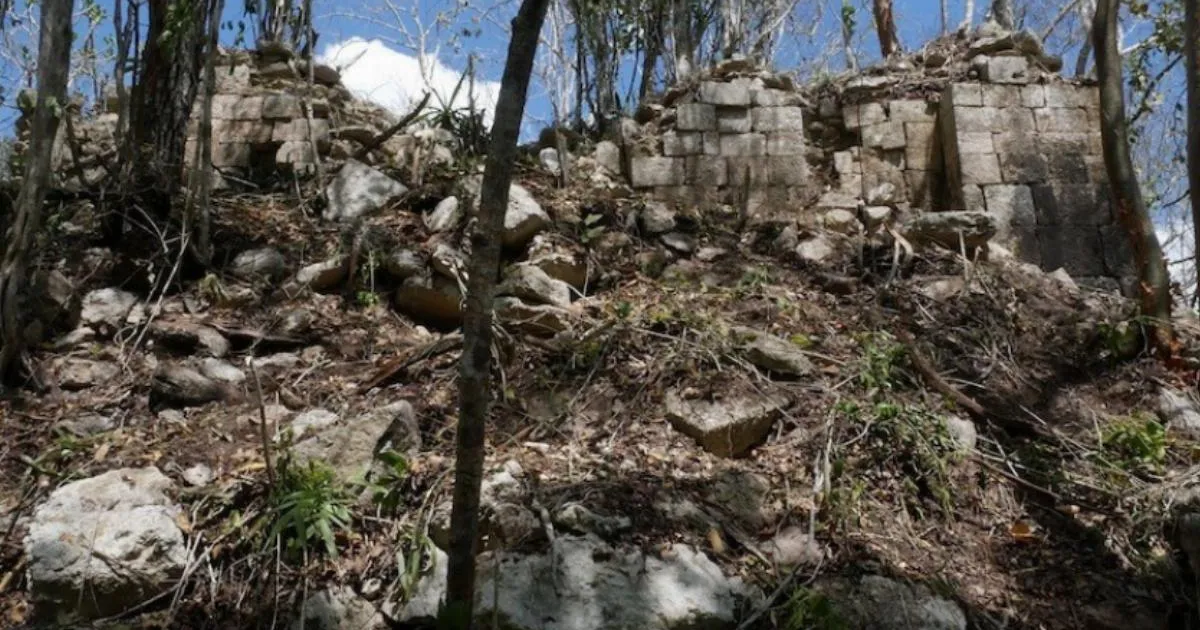
Deep within the dense, emerald embrace of Mexico’s Calakmul Biosphere Reserve, a team of researchers has unveiled a profound secret that had been guarded by the jungle for over a thousand years. Led by Dr. Ivan Šprajc, a seasoned archaeologist with three decades of experience in the region, the international group discovered a sprawling ancient Mayan city now known as “Minanbé.” The name, translating to “there is no path” in Yucatec Maya, reflects the daunting reality of their quest; the site was so isolated and overgrown that the team had to literally hack a five-kilometer route through thick, unforgiving forest just to reach its heart. This arduous journey into the unknown was fueled by data from LiDAR, which had hinted at a massive 15-hectare urban center hiding beneath the canopy, a site that had miraculously escaped the reach of looters throughout the centuries.
The rediscovery of Minanbé is a testament to the endurance of human history and the relentless curiosity of those who seek it. Unlike so many other archaeological sites that have been picked over or damaged by time and human interference, Minanbé emerged as an untouched time capsule. For the archaeologists, led by Dr. Šprajc and supported by experts like Atasta Flores Esquivel and Vitan Vujanović, the sheer condition of the site was a shock. It offered a rare, pristine glimpse into the lives of the people who inhabited the Central Maya Lowlands during the Late Classic period, a time when this region teemed with a population of up to 11 million people. The site revealed a sophisticated urban landscape complete with grand plazas, elegant palaces, and complex hydraulic systems—water channels and terraces designed to sustain large-scale agriculture in a rugged environment.
Standing as a silent sentinel over the ruins is a magnificent pyramidal temple, rising more than 13 meters above the forest floor. Built in the distinct “Río Bec” style, the structure features masterfully crafted masonry and smooth facades, showcasing an architectural sophistication that has remained strikingly well-preserved. It is a hauntingly beautiful sight to see such precise engineering peeking through the vines; for Vitan Vujanović, who carefully documented the findings, encountering a temple still bearing readable glyphs was a career-defining moment. This structure, along with a series of connected causeways and plazas, paints a picture of a vibrant, organized society that commanded the landscape long before the modern world ever knew of its existence.
The true stories of Minanbé, however, are etched into the stone stelae and altars scattered throughout the site. The team identified 14 of these monuments, which serve as historical records of a civilization in its final, tumultuous chapters. Using advanced digital imaging and 3D modeling born from over 500 photographs, the project’s epigraphist, Octavio Esparza Olguín, began to piece together the messages left behind. One particularly gripping artifact, Stela 1, depicts a scene of decapitation and bears an inscription corresponding to AD 849. This date provides a crucial anchor for researchers, suggesting that this city was still a center of power during the Terminal Classic period, mere decades before the mysterious abandonment of the region in the 10th century.
These monuments don’t just tell stories of conflict; they offer a window into the pageantry and rule of the Mayan people. Among the stones, researchers found images of rulers adorned in elaborate feathered headdresses and ceremonial regalia, frozen in time. One rectangular altar, known as Monument 6, appears to date back to the late seventh century, potentially serving as the oldest historical marker in the area. Such discoveries are invaluable because they show that the site was not merely a brief settlement, but a place of long-standing cultural and political significance. The arrangement of these monuments, some of which appear to have been intentionally altered or broken in antiquity, suggests a complex society that navigated intense transformations as it neared its eventual decline.
In the end, the discovery of Minanbé does far more than add a new dot on a map; it deepens our collective understanding of how humans adapted to some of the most challenging environments on Earth. Dr. Šprajc’s research confirms that the Mayan people weren’t just living in the jungle—they were actively shaping it, terrace by terrace and channel by channel, to support millions of lives. As we look at these ancient stone altars emerging from the Mexican wilderness, we are reminded of the fragility and the resilience of human civilization. Minanbé “had no path” for so long because it was a place meant to be slowly reclaimed by the earth itself, but through the efforts of these persistent archaeologists, its story has finally been brought back into the light for the modern world to admire.