

The geopolitical landscape has become significantly more volatile following Moscow’s sharp condemnation of Britain’s role in supplying long-range drones to Ukraine. The Russian government, through its top diplomat, has issued a stark warning that this action effectively makes the United Kingdom a direct participant in the conflict, a charge that carries heavy implications for international relations. This escalation in rhetoric comes at a time when the war in Ukraine has entered a particularly dangerous phase, with both sides seeking to gain strategic advantages through new technologies and long-range capabilities. The Kremlin’s response signals a growing frustration with the West’s continued military support for Ukraine, and its language suggests that it is prepared to view such support as an act of war rather than mere assistance to a beleaguered nation. This development has sent ripples through diplomatic circles, as the possibility of a direct confrontation between a nuclear power and a NATO member state, however remote, becomes a topic of serious discussion.
The heart of the matter lies in the statements made by Russia’s Foreign Minister, Sergei Lavrov, who has a long history of issuing pointed threats against Western nations. In a televised address, Lavrov articulated the Kremlin’s position with characteristic bluntness, stating that the provision of British missiles for strikes inside Russia would be viewed as a direct act of participation in the war. He referenced prior warnings from President Vladimir Putin about Russia’s right to respond to what it perceives as encroachments on its interests, extending this logic to the current situation. Lavrov’s comments were not merely diplomatic posturing; they were a calculated attempt to draw a red line, warning that the UK’s involvement would have “all the ensuing consequences.” This language is deliberately ambiguous, leaving room for interpretation while simultaneously creating a climate of fear and uncertainty. The threat is clear: by enabling Ukraine to strike deep within Russian territory, Britain is crossing a threshold that Moscow has long declared it would not tolerate, and the response could be unpredictable and severe.
In stark contrast to the Kremlin’s aggressive stance, the British position, as articulated by Prime Minister Andy Burnham, remains one of unwavering support for Ukraine. Burnham was emphatic in his endorsement of Ukraine’s right to defend itself against what he termed “this illegal war led by Vladimir Putin.” He stressed that Britain’s support is not conditional or fleeting, describing the nation as “not fairweather friends.” This statement is a direct rebuttal to any suggestion that the UK might waver in its commitment, especially in the face of Russian threats. Burnham’s comments also serve to frame the UK’s actions as defensive in nature, arguing that by providing Ukraine with the means to strike back, Britain is helping a sovereign nation protect its territory and its people. This narrative is crucial for domestic consumption, as it justifies the significant financial and military investment in the conflict as a moral imperative rather than an act of aggression. The prime minister’s words are designed to project strength and resolve, both to the British public and to international observers, signaling that the UK will not be intimidated by Russian saber-rattling.
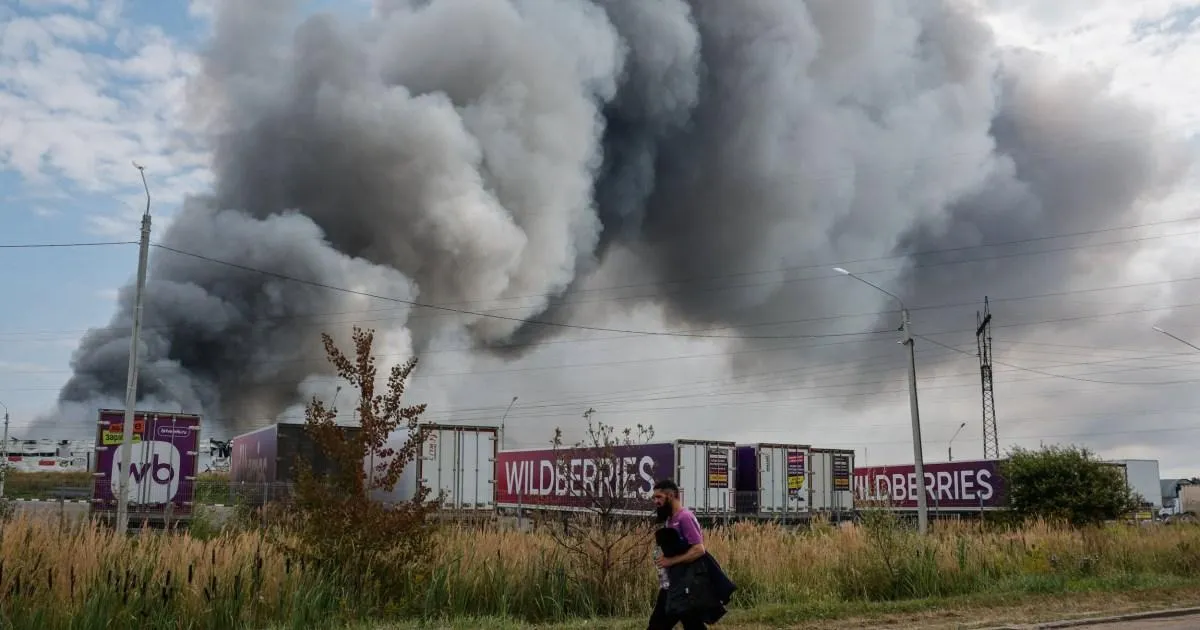
The immediate context for this diplomatic firestorm is the reported use of these new British long-range drones in a series of strikes deep inside Russian territory. The most significant of these reportedly targeted the Sverdlov Explosives Plant in Dzerzhinsk, a major industrial facility located approximately 230 miles east of Moscow. This plant is a critical component of Russia’s military supply chain, and its destruction would represent a significant blow to Putin’s war machine. The attack, which was reportedly captured in images showing a large plume of smoke rising from the facility, demonstrates the new reach and capability that these Western-supplied weapons provide to Ukraine. This is a strategic shift, moving the conflict from the front lines in eastern Ukraine to the heart of Russia’s industrial and economic infrastructure. The choice of targets is deliberate, aiming to disrupt the logistical and manufacturing capabilities that sustain the Russian military effort, forcing the Kremlin to contend with a new and dangerous vulnerability within its own borders.
The impact of these strikes is being felt not only in military terms but also in the daily lives of Russian citizens, who are growing increasingly concerned about the reach of Ukrainian drones and missiles. The attacks have not been limited to a single location; reports indicate that buildings in other Russian cities, including Tula, a hub for defense plants, and Ufa, a major oil capital, have also been hit. An oil refinery in Ufa was struck, sparking yet another fire and exacerbating the critical fuel shortages and long queues that Russians are already experiencing. This is a significant development, as it brings the reality of the war home to the Russian population in a way that previous conflicts on Ukrainian soil did not. The psychological impact of these attacks cannot be overstated; they shatter the illusion of a distant conflict and create a sense of vulnerability and unease. The disruption to essential services like fuel supply is a tangible consequence that affects ordinary people, potentially eroding public support for the war and increasing pressure on the Kremlin to find a way out of the conflict.
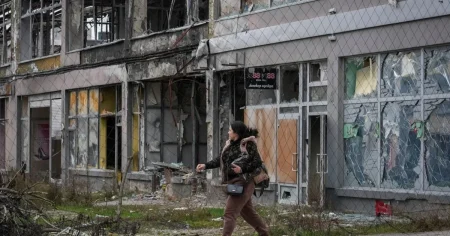
Amidst this high-stakes geopolitical and military maneuvering, the human cost of the war continues to mount. In Ukraine’s Zaporizhzhia region, a Russian guided aerial bomb attack on a residential area resulted in the deaths of two people and left ten others injured. This tragic incident serves as a grim reminder that while the world’s attention is often focused on the strategic implications of long-range strikes and diplomatic threats, the immediate and brutal reality of the conflict is borne by civilians on the ground. The war has become a cycle of violence, with each side’s actions leading to retaliation and further suffering. The use of new, more powerful weapons by Ukraine is a direct response to Russia’s own relentless bombardment of Ukrainian cities and infrastructure. This escalation, while strategically significant, risks a dangerous spiral that could lead to even greater devastation. The international community is left to watch as the conflict expands in both geographic scope and destructive power, with the hope that diplomatic channels can eventually prevail over the logic of the battlefield.