



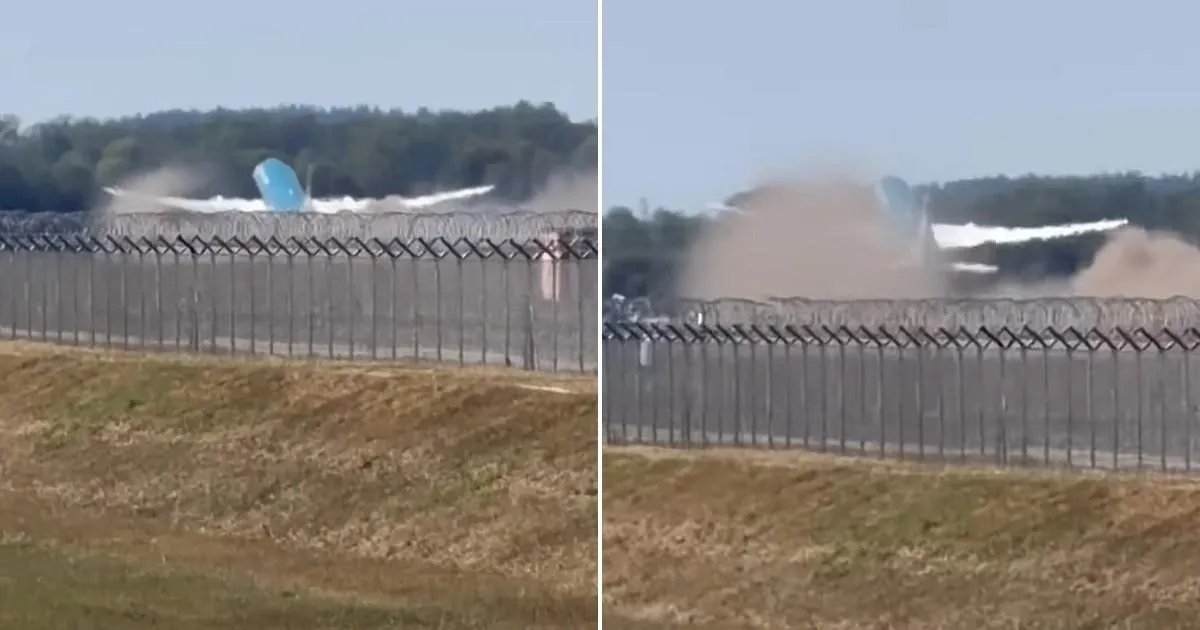
It was a scene of controlled chaos veiled in the thin, cold air of a Bavarian winter morning. A Lufthansa aircraft, a silver behemoth carrying 351 souls who had just traversed the Atlantic from San Francisco, was making its final descent. The pilots, focused on the gliding approach lights that pierce the gloom, were unaware that their trajectory had dipped a fraction too low. Instead of the comforting thud of landing gear on the asphalt runway, there was a jarring, metallic screech as the underbelly of the plane carved through the line of high-intensity approach lights marking the threshold of the tarmac.
The impact sent a shudder through the fuselage, a physical tremor that was felt in the seat of every passenger. In the cockpit, alarms blared, a cacophony of warnings that shattered the quiet concentration of the flight deck. The landing was completed, but it was a rough, unsettling finish to a long journey. As the aircraft decelerated and taxied to a stop, a silent, unseen damage was done. The plane had struck the ground short of its intended target, a rookie error, a momentary lapse in altitude that had transformed a routine landing into an incident ripe for investigation.
But the strangest part of this story is that this wasn’t an isolated incident. It was a haunting echo, a strange, almost unbelievable repetition of a similar aviation mishap that had occurred on the very same runway just days before. Two major international carriers, two separate flights carrying hundreds of passengers, and one specific piece of infrastructure at Munich International Airport that seemed to have become an unwilling magnet for disaster. The aviation world, a community that runs on precision and absolute predictability, was left scratching its head, urgently looking for an explanation for this bizarre and unnerving coincidence.
The first incident, which took place on Saturday, involved a Vietnam Airlines flight bound for Hanoi. As the wide-body aircraft powered down the runway, accelerating for takeoff, a slight miscalculation in the rotation process proved critical. The pilots pulled back on the yoke to lift the nose, but they did so a fraction of a second too late. The nose rose, but the tail of the aircraft, the trailing edge that sweeps down to the ground, had not yet cleared the asphalt. With a sickening crunch, the tail struck the runway, scraping along the surface before the aircraft finally became airborne. The impact caused a significant loss of tyre pressure, a red flag that triggered immediate warning systems and set off a chain of events that would turn a simple departure into a tense, multi-hour ordeal for everyone on board.
For the 271 passengers on the Vietnam Airlines flight, what began as a routine journey quickly transformed into a nightmare of uncertainty. The crew, alerted to the potential damage, made a prudent but frightening decision: they would not attempt to fly to their destination. Instead, the plane would have to circle the skies above Munich for two hours, a slow, agonizing orbit designed to burn off excess fuel and reduce the landing weight in case the landing gear was compromised. From the cabin windows, passengers could see the tell-tale streaks of fuel being vented from the wings, a sight that did little to soothe their growing anxiety advent. The silence in the cabin was punctuated only by whispered prayers and the quiet, desperate clutches of loved ones.
One passenger, a man named Mr. Ninh, later recounted the terrifying tension of those moments to a Vietnamese news outlet. He described the initial confusion when the tail struck, a loud, jarring “pop” that was loud enough to be heard throughout the cabin, a sound deeply at odds with the normal hum of flight. The initial curiosity quickly curdled into stark panic as the gravity of the situation sank in. Passengers looked at each other, searching for answers, for reassurance, but found only mirrored fear. The announcement to brace for a potential emergency landing sent a chill down everyone’s spine, and the cabin filled with the quiet, desperate sounds of people preparing for the worst. Mr. Ninh described the couple beside him, the wife’s tears flowing freely as they prayed, their voices a desperate murmur against the roar of the engines. In those moments, material possessions meant nothing; the only things that mattered were the small, personal items they could clutch – a passport, a phone, a tiny backpack – as they awaited an outcome that was completely out of their hands.
Miraculously, the landing was a textbook execution. The pilot, with nerves of steel, managed to bring the damaged aircraft down safely, the tires finding the tarmac with a smooth precision that belied the terrifying circumstances. The moment the plane slowed to a safe taxiing speed, the silence in the cabin was shattered by a spontaneous, overwhelming eruption of applause and relieved sobs. Strangers embraced, tears of joy and sheer, unadulterated relief flowing freely. The captain and the crew, who had calmly shepherded their passengers through an hour of pure dread, were hailed as heroes, their professional composure the only anchor of stability in a world turned upside down. They were towed back to the gate, a damaged bird limping home, carrying with them a cargo of gratitude and emotional exhaustion.
Now, with the Lufthansa incident just days later, the spotlight has turned to the German Federal Bureau of Aircraft Accident Investigation (BFU). The fact that two separate aircraft struck the ground on the same runway in such a short window of time is a statistical anomaly that demands a thorough explanation. The investigation will be multi-faceted, looking into everything from the pilots’ actions to the potential for technical glitches in the Instrument Landing System (ILS). Could the guidance signals be miscalibrated, subtly leading pilots onto a glide path that is too low? Was there an issue with the runway lighting itself, perhaps creating a visual illusion for the pilots? Or is it simply a case of two deeply unfortunate coincidences, where human error and a lack of visual acuity in adverse weather conditions played the lead roles? Both aircraft have been grounded and impounded, their flight data recorders and cockpit voice recorders now the most vital pieces of evidence in an investigation that has captured the attention of the global aviation community.
The anxiety of the passengers aboard both flights highlights the immense trust we place in the machines and the professionals who fly them. When that trust is momentarily tested, even without catastrophic consequences, the psychological impact is profound. For the crew of the Vietnam Airlines flight, the decision to burn fuel and land was a textbook demonstration of prioritizing safety over speedholiday. It was a decision that took an hour and a half and thousands of gallons of fuel, but it bought precious time to assess the damage and prepare for any eventuality. For the passengers, it was an eternity of not knowing, a period of powerlessness that ended only when the wheels touched down safelykele. The Civil Aviation Authority of Vietnam confirmed they were in direct contact with German investigators, eager to understand not only what happened but why, and to ensure that whatever lessons are learned are shared across the globe to prevent a recurrence.
As investigators sift through the data and the debris, the immediate focus is on ensuring the safety of Munich Airport’s runway system. The airport has been fully operational, suggesting that authorities believe the infrastructure itself is not fundamentally flawed could be a coincidence, a strange quirk of fate that has placed two aircraft in trouble on the same patch of tarmac within 72 hours. For the passengers involved, this will forever be a story of a flight that they will never forget, a reminder of the fragility of human life and the immense skill required to orchestrate the miracle of flight. The pilot who landed the damaged Vietnam Airlines jet is being hailed as a hero, his calm professionalism a testament to the intense training that all commercial pilots undergo precisely for such moments. As the BFU begins its painstaking work, the aviation industry watches and waits, hoping that the data retrieved from the black boxes will provide clarity zoom and, more importantly, reassurance that this unusual sequence of events was a fluke, not a warning sign of a deeper, more insidious problem lurking in the system.