

France woke up to a country still smoldering after one of the largest demonstrations in years turned from a desperate cry over the cost of living into a night of riots, looting, and tragic loss. More than half a million people poured into streets in roughly 110 towns and cities across the country, driven by a fury that has been building for months as prices for food, energy, and everyday essentials climbed beyond what many families could bear. It was a protest that was meant to be heard, to be seen, to remind those in power that ordinary people were suffering. But somewhere between the peaceful marches and the tear gas, the day took a darker turn. In Paris, a protester walking through Boulevard Magenta collapsed and suffered a cardiac arrest. Emergency workers rushed him to the Château d’Eau medical center, but he was already gone; he died before arrival, according to a police source. His death hung over the evening like a shadow, a stark reminder that behind the angry chants and shattered storefronts were real people, many of them simply exhausted by a system that seemed to no longer work for them. The streets were filled with teachers, nurses, pensioners, students, and parents who had hoped that showing up in huge numbers would force change. Instead, they watched as black-clad agitators hijacked the day, and by nightfall, the sound of alarm bells and breaking glass replaced the sound of voices singing the national anthem.
The rage did not come out of nowhere. For months, everyday life in France has felt like a losing battle for millions. Inflation has eaten away at wages, energy bills have soared, and the cost of filling a shopping cart or a car has become a source of constant anxiety. People have had to make impossible choices: heat their homes or buy groceries, pay the rent or buy medicine. It is the kind of pressure that wears people down, and eventually, it spills into the streets. The protests that erupted on this Saturday were not only about a single policy or a single politician. They were about a deep, gnawing sense that the future is no longer better than the past, that hard work no longer guarantees security, and that the people in charge seem too distant to understand. That is why so many different kinds of people joined the marches: young workers unable to afford apartments, mothers worried about feeding their children, elderly citizens whose pensions no longer stretch far enough. They came with banners and loudspeakers, with families and friends, with hope that their collective voice might change something. And for a while, in many places, the marches were peaceful. People walked shoulder to shoulder, chanting and holding signs, sharing the quiet comfort of knowing they were not alone in their struggles. But the sheer scale of the anger also attracted darker elements, and as the day wore on, the line between protest and chaos began to blur.
In Paris, the violence was impossible to ignore. Groups of masked, black-clad individuals broke away from the main demonstrations and went on a rampage through some of the city’s most famous streets. They smashed the windows of luxury boutiques, ransacked banks, and broke into shops with the single-minded intention of theft and destruction. On the Place de la République, hundreds of looters tore through the area, leaving behind a trail of shattered glass and empty shelves. Even the Galeries Lafayette, one of Paris’s most iconic department stores, was not spared. The police, overwhelmed and outnumbered, made arrest after arrest, and by the end of the night, more than 720 people had been taken into custody, including 117 minors. The authorities were quick to blame the violence on criminals who had come only to loot, not to protest, and there was truth in that. Many of those arrested had no interest in the cost of living crisis; they were simply taking advantage of the chaos. But for the peaceful protesters who had marched with such hope, the violence was a bitter disappointment. Their message was being drowned out by the sound of fire alarms and helicopter blades. They watched as the world’s media focused on burning bins and broken windows, not on the struggling families who had taken to the streets to say, simply, that they could not go on like this.
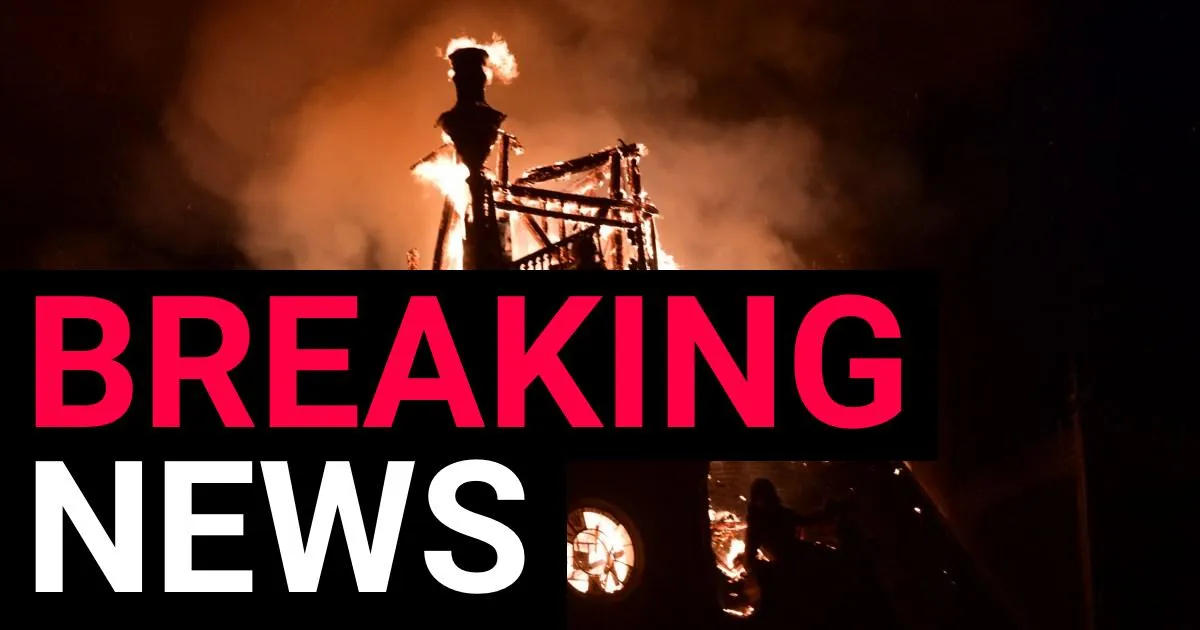
The destruction was not limited to the capital. In Limoges, a city just south of Paris, the night ended in tragedy and devastation. Looters broke into the town hall, a beautiful building dating back to 1883, and set it on fire. The flames quickly spread from one wing to the roof, and then the bell tower collapsed, leaving a historic symbol of the city in ruins. A town hall employee stood nearby, watching in tears as the building she had worked in for years crumbled before her eyes. At least fifteen people were arrested in connection with the arson attacks, but that did little to ease the pain of losing a piece of the city’s heritage. In Lille, the violence took a more symbolic turn. Rioters managed to sneak into a government building and toppled a bust of Marianne, the enduring symbol of the French Republic. It was a powerful and disturbing image: the face of the Republic lying on the floor, broken and ignored. Government buildings, which are supposed to represent order and stability, became targets of rage. Prefectures, town halls, and other official institutions were attacked in several cities, and the police responded with volleys of tear gas and stun grenades. Firefighters were called from one blaze to another, and by the time dawn broke, many streets looked like war zones. The smell of smoke and pepper spray hung in the air, and a profound sense of unease had settled over the country.
As the violence unfolded, human rights groups began to raise alarms about the police response. While officers were clearly trying to regain control of chaotic situations, there were growing fears that the heavy-handed tactics were endangering innocent bystanders, especially young people. Amnesty International publicly criticized the use of tear gas and stun grenades to disperse peaceful protesters, warning that such methods were disproportionate and dangerous. Specific incidents quickly surfaced to fuel those concerns. A video recorded on September 28 showed a police officer firing a tear-gas grenade directly at a 14-year-old boy’s jaw in Saint-Ouen-l’Aumône, a suburb northwest of Paris. In Lille, prosecutors reported that a 15-year-old boy had his left hand ripped off after a police stun grenade exploded near him on October 5. These were children, not rioters, and their injuries horrified many in a country that prides itself on liberty, equality, and fraternity. Parents who had allowed their teenagers to attend protests now worried whether they would come home in one piece. The arrests of so many minors, 117 in Paris alone, added to the sense that the state was cracking down on the young and vulnerable rather than protecting them. The tension between maintaining order and respecting human rights became one of the most painful questions of the night, and there were no easy answers. Some argued that the police were only doing their job against violent mobs, while others insisted that a line had been crossed, and that the response was becoming as frightening as the rioting itself.
President Emmanuel Macron, facing the final months of his last term in office, which ends in May, responded with a firm promise of punishment. “There is no place for violence in our republic,” he said on Saturday, adding that those who had broken into prefectures, attacked businesses, and looted town halls would be prosecuted and punished. But his words, while reassuring to some, did little to address the underlying fury that had brought so many people into the streets in the first place. Macron has been in power for nearly a decade, and for many demonstrators, he represents a political establishment that has failed to listen. The violence may have overshadowed the peaceful message of the marches, but the pain behind that message remains. France is at a crossroads, a country where the gap between the rich and the poor is widening, where the promise of a better life feels increasingly hollow, and where ordinary citizens are being pushed to the edge. The protester who died on Boulevard Magenta was not just a statistic; he was a human being whose life ended in the middle of a desperate national outcry. His death, the burning town halls, the injured teenagers, the empty shelves of looted shops: all of it tells a story that cannot be reduced to a simple news headline. Behind every shattered window is a family struggling to pay the bills. Behind every angry chant is a fear of what tomorrow will bring. And behind every tear of that Limoges employee watching her beloved town hall burn is the sadness of a nation that no longer recognizes itself. The protests may fade, the streets may be cleaned, and the arrests may pile up, but the anger will not simply disappear. It will continue to simmer, waiting for someone to finally hear the voices that were drowned out by the sound of burning buildings and broken glass.