


The Heartbreaking Search for Lily Hooper: A Tragic Mistake in the Australian Bush
The dense, unforgiving wilderness of Nattai National Park, a rugged expanse of eucalyptus forests, towering sandstone cliffs, and treacherous ravines, became the stage for a devastating tragedy that would capture the hearts of Australians and expose the fragility of hope in the face of heartbreaking news. Eighteen-year-old Lily Hooper, a young woman described by those who knew her as experienced in the bush and full of life, set out on what should have been a routine hike on a Wednesday morning, embarking on a journey from which she would never return. Her disappearance triggered an extensive search operation that mobilized police, dedicated volunteers, and around one hundred soldiers, all united in the desperate hope of finding the teenager alive. But it was the sequence of events that followed—a premature announcement of her rescue followed by the crushing revelation of her death—that would transform this already tragic story into one of profound emotional complexity, leaving a family shattered and a community grappling with the cruelest twist of fate.
Lily had left her home in the quiet suburb of Oakdale, near Sydney, at eight in the morning on August 12, with plans that seemed ordinary and unremarkable. She maintained contact with her family throughout the day, sending messages that provided comfort and reassurance that all was well in her world. But when those communications ceased and she failed to return home at her expected time, concern quickly escalated into alarm. Her family, gripped by worry, reported her missing, and it was not long before her car was discovered at eleven that same night in a picnic ground at the base of Bonnum Pic, a walking trail known to be demanding and suitable only for experienced hikers. The discovery of her vehicle in that location transformed a missing person case into an immediate search and rescue operation, with emergency services descending upon the national park in the dead of night, their flashlights cutting through the darkness of the dense bushland in search of any sign of the young woman. The terrain they were navigating was described by rescuers as incredibly rough, an area where the natural beauty of the Australian landscape coexists with very real dangers, where one wrong step could lead to disaster, and where the elements can be unforgiving to even the most prepared adventurer.
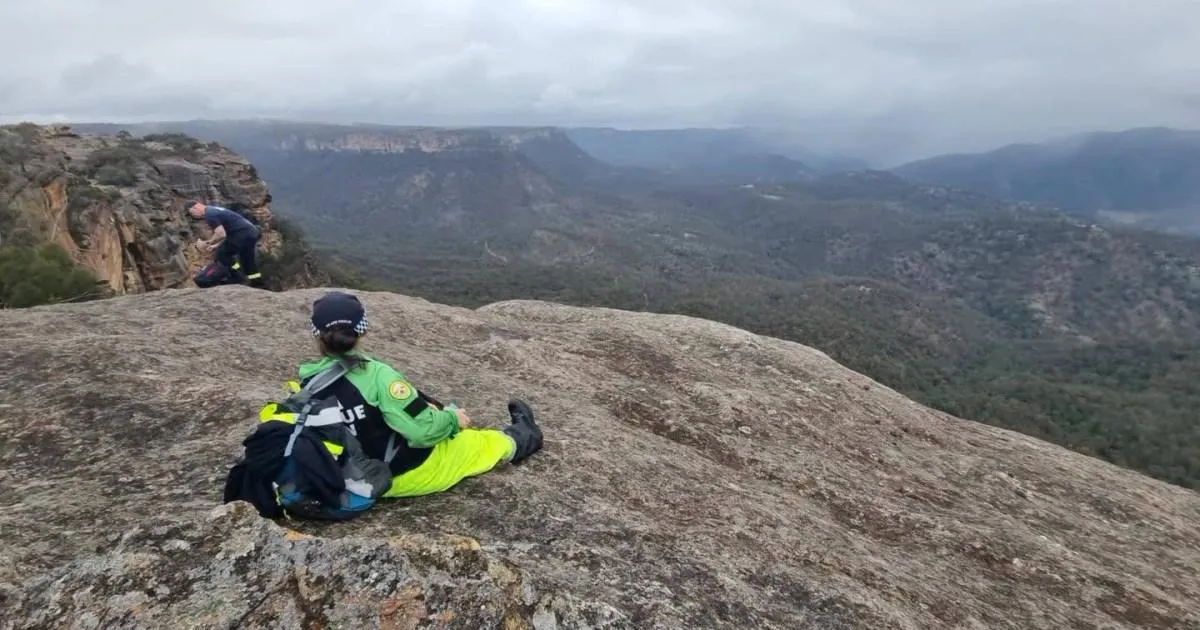
As the days stretched into what would become an eight-day ordeal, hope remained a constant companion for those involved in the search. Lily’s family, demonstrating remarkable strength and courage, joined the rescue efforts themselves, walking the difficult trails, calling out her name, and refusing to surrender to despair. They held onto the belief that her experience in the bush would serve her well, that the skills she had developed through her love of the outdoors would somehow help her survive the harsh conditions of the national park. The search operation grew in scale and intensity, with the New South Wales police coordinating efforts alongside the State Emergency Service, the Rural Fire Service, and a contingent of military personnel who brought additional resources and manpower to the mission. Every day brought new hope and new frustration, as search teams combed through the thick undergrowth, swept across the rugged terrain, and followed every possible lead, all while battling the communication difficulties that would later prove so consequential. The national park, with its dense eucalyptus forests and deep ravines, was not just physically demanding but also technically challenging for the search effort, with areas that were almost impenetrable and where visibility was severely limited by the thick vegetation. Rescue teams worked in shifts, their determination unwavering, driven by the knowledge that somewhere out there, a young woman was depending on them.
Then came what seemed to be the miracle that everyone had been praying for. On Thursday, during a parliamentary hearing, New South Wales Premier Chris Minns was handed a note that would temporarily transform the mood of the entire nation. The message contained what appeared to be the news everyone had been waiting to hear: Lily Hooper had been found alive. The premier, visibly moved and no doubt relieved, interrupted the proceedings to share the news with the room, announcing that there was fantastic news and that Lily had been found alive in the bush with half a bottle of water, having apparently survived her ordeal in the wilderness. The announcement was met with celebration and relief, and media outlets across Australia quickly picked up the story, spreading the message of hope to a public that had been following the search with bated breath. The image of Lily, clinging to life with minimal supplies, resonated deeply with the Australian public, who saw in her story a testament to the resilience of the human spirit. Her parents, who had been living through every parent’s worst nightmare, were told that their daughter had been found, that she was alive, and that the ordeal was finally over. The relief they must have felt in that moment, the overwhelming flood of emotion, the gratitude for what they believed was answered prayers, is something that defies description.
But that joy was cruelly dashed just moments later. The initial report from the search teams had been optimistic, but an updated report arrived approximately eight to ten minutes after the first, and it brought news that would shatter the hope of all who had been following the story. The person found in the bushland was not a survivor but rather the body of the young woman they had been searching for. Premier Minns, his voice heavy with emotion, returned to the room to deliver the news that no one wanted to hear, acknowledging that his earlier announcement had been incorrect and that he had terrible news to share. Lily’s body had been found, and the earlier advice had been wrong. The premier expressed his profound sadness for the family and all those concerned, but his words could do little to soften the blow of such a devastating reversal. The Australian public, which had briefly celebrated what they believed was a successful rescue, was now confronted with the harsh reality of loss, made all the more painful by the brief moment of elation that had preceded it. For Lily’s family, the experience of being told their daughter was alive, only to learn minutes later that she had died, represented a cruelty that seems almost incomprehensible, a rollercoaster of emotion that no human being should ever have to endure.
The question of how this terrible mistake occurred would become the focus of intense scrutiny and investigation. New South Wales Police assistant commissioner Joseph Cassar, tasked with explaining the sequence of events, acknowledged the communication difficulties that had plagued the search effort in the dense terrain. He explained that volunteers searching through the thick vegetation had experienced problems with their communications and had contacted the command post after locating Lily, but the initial report was incomplete and lacked the crucial detail of her condition. It was only when a subsequent update was transmitted, some eight to ten minutes later, that the full picture emerged, and the devastating truth was confirmed. Cassar expressed his deep regret, stating that if they had been able to provide more detailed information in that first report, they would have done so, and that if he could turn the clock back, he certainly would. Police and government officials launched an investigation into how the incorrect information had been passed on, seeking to understand not just what went wrong but also to ensure that such a painful mistake never happened again. For Lily’s family, however, such investigations offer little comfort, as they must now grieve the loss of their daughter while also processing the trauma of having been told she was alive just moments before learning of her death. The New South Wales Police confirmed that the body found in the search area had yet to be formally identified, though it was believed to be that of Lily, and a report would be prepared for the coroner.
In the aftermath of this tragedy, the focus has shifted to remembrance and the search for meaning. Lily Hooper, at just eighteen years old, was on the cusp of adulthood, with her whole life ahead of her. She was a young woman who loved the outdoors, who had enough experience and confidence in the bush that her family believed she could survive the ordeal of being lost in the wilderness. Her death in Nattai National Park, a place of stunning natural beauty that she had presumably gone to enjoy, stands as a stark reminder of the unpredictable and sometimes unforgiving nature of the Australian landscape. The rescuers who spent days searching for her, the volunteers who gave their time and energy, the soldiers who joined the effort, and the community that held vigils and offered prayers, all share in the collective grief of this loss. There will be questions that remain unanswered, a coroner’s report that may provide some clarity but cannot bring her back, and a family that must find a way to move forward without their beloved daughter. The mistake that gave them false hope will forever be part of this story, a painful chapter in an already tragic narrative. Yet even in this darkest of moments, there is the knowledge that so many people cared, that so many tried, and that the search for Lily Hooper brought out the best in humanity even as it ended in the worst possible outcome. The memory of this bright young woman, taken far too soon, will live on in the hearts of those who loved her, and her story will serve as a poignant reminder of the preciousness of life and the devastating impact of its loss.