


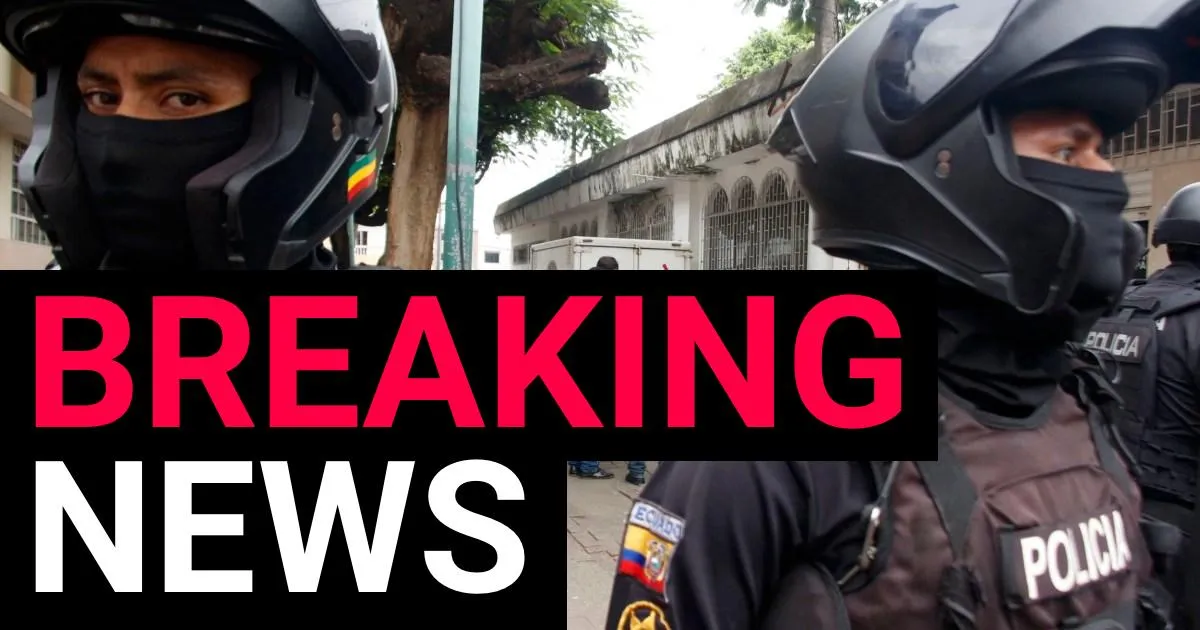
The world is a vast, often overwhelming place, and few things strike at the heart of our collective conscience more than the story of a child lost in a foreign land. Recently, a profound sense of relief rippled through international communities when a young British girl, who had vanished from her home, was finally located thousands of miles away in the mountainous terrain of South America. Her discovery in Ecuador wasn’t merely a stroke of luck; it was the culmination of an intense, multi-layered investigation that spanned continents, pulling in expertise from local Ecuadorian police, Interpol, and the dedicated specialists at the non-profit organization Our Rescue.
The search led authorities to Imbabura, a province in northern Ecuador defined by its breathtaking lagoons, the imposing presence of the Imbabura Volcano, and a rich, deeply rooted indigenous Kichwa culture. Nestled about 70 miles north-east of the capital, Quito, this region is often celebrated for its majestic landscapes, but for those searching for the missing teenager, it became the focal point of a mission to ensure a child’s safe return. In collaboration with local law enforcement, investigators were able to track the girl to this remote area, where she was found in the company of an American man who was already under the scrutiny of an active Interpol notice.
The circumstances surrounding the girl’s presence in such a distant country are as chilling as they are complex. Ecuadorian authorities have confirmed that as soon as the teenager was located, they immediately triggered high-level protection protocols. The concern, quite understandably, shifted from a search for a missing person to a critical intervention based on suspected human trafficking. Recognizing that she was in a position of extreme vulnerability, officials worked swiftly to transition the teenager to a specialized support facility in Quito. This aftercare process is crucial; it’s an attempt to restore—in whatever small way possible—a sense of safety and dignity to a young person whose life has been upended.
While the story is currently framed by the language of bureaucracy and investigative updates, we must remember that behind the official statements lies a human soul. The exact age of the girl remains private, a protective barrier meant to shield her identity as she begins the grueling process of recovery. Authorities are still piecing together the timeline: how she traveled thousands of miles from the UK to the high altitudes of the Andes, who facilitated her journey, and exactly when the initial alarm was raised back home. Every detail discovered by the police adds a new layer to a map of a journey that should never have happened.
There is a stark contrast between the beauty of the “Province of the Lakes”—with its vibrant traditions and serene, mirror-like waters—and the dark reality of a child being exploited thousands of miles from her home. It is a reminder that even in the most picturesque corners of the globe, the reach of trafficking and exploitation is a tangible threat that requires constant vigilance. The cross-agency cooperation—linking the British authorities, Interpol, and specialized NGOs—highlights how the global community is increasingly learning to bridge borders to find those who have been stolen or led astray.
As the investigation continues, the focus now remains on the girl’s long-term well-being and the accountability of those involved. For now, the most significant point is that a life was saved from a cycle that, all too often, ends without such a hopeful redirection. The international team’s success serves as a testament to the power of coordinated surveillance and human compassion. While the girl’s journey from Ibarra back to her home will undoubtedly be shrouded in silence for her own protection, we can find a measure of solace in the fact that, for this one child, the world grew smaller and more protective, finally bringing her out of the shadows and back toward the promise of home.