



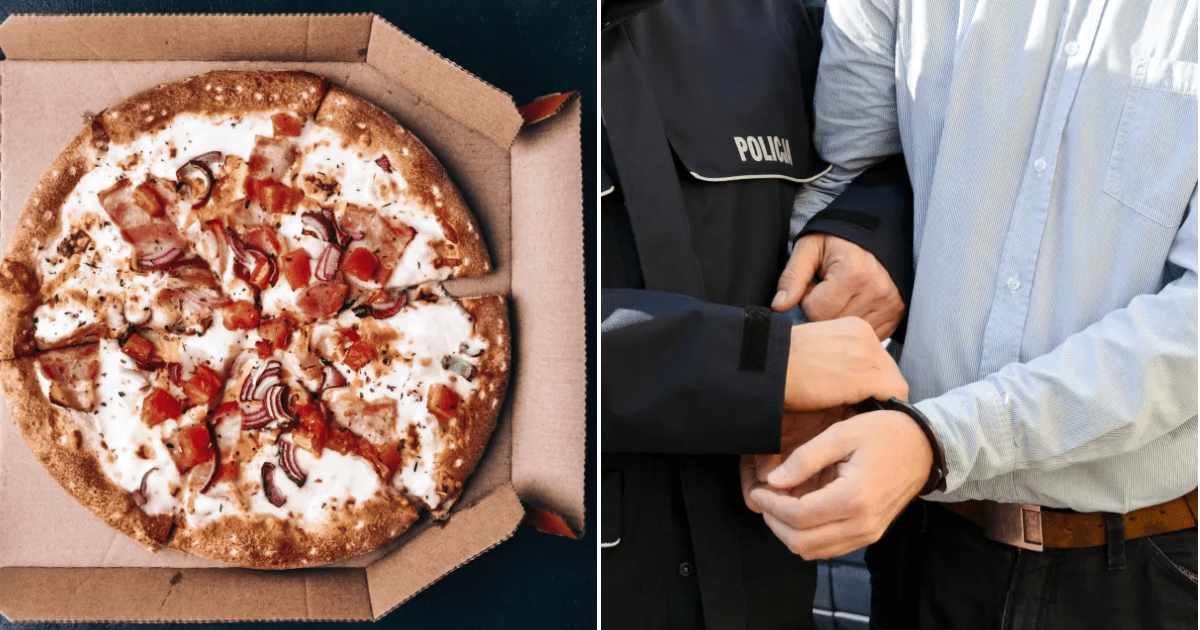
Here is the content summarized and humanized into a 6-paragraph narrative.
—
In the quiet, historic streets of Szczecin, a city in northwestern Poland, an extraordinary and deeply unsettling crime was unfolding, one that would leave local restaurants baffled and families terrified. A 23-year-old man was arrested, suspected of orchestrating a cruel and elaborate campaign of harassment that turned the simple act of ordering a meal into a nightmare for his unsuspecting victims. Over a period of time, he allegedly placed hundreds of fraudulent food orders across the country, using the names and addresses of innocent people who had no idea that a fleet of delivery drivers was about to arrive at their doors with pizzas, burgers, and other meals they never requested, and certainly never intended to pay for.
While the prank might have seemed like a juvenile joke at first glance, the sheer scale and malicious intent transformed it into a case of serious criminal harassment. The investigation, led by Poland’s Central Bureau for Combating Cybercrime in collaboration with local police, revealed a pattern of behavior that went far beyond simple mischief. The alleged motive appears to be a desire to cause maximum distress and disruption, turning the everyday lives of complete strangers into a chaotic ordeal. For the victims, the constant, uninvited knock on the door by a confused delivery person became a source of immense anxiety and fear, as they were forced to repeatedly explain that they had not placed any order, often while feeling vulnerable and targeted in their own homes.
The financial toll on the small businesses that were unwittingly caught in the crossfire was substantial. Restaurants, particularly pizzerias that are often small, family-run operations, were left to absorb the cost of the wasted ingredients and lost time. The sheer volume of the orders was staggering; one single fraudulent request was for 300 pizzas, a logistical and financial disaster for any kitchen. As the payments for these unwanted meals were refused upon delivery, the losses began to mount, with one invoice alone reportedly exceeding 37,000 zloty (roughly £7,350). For many, the phrase “dinner for one” took on a deeply ironic and financially damaging meaning, as what should have been a profitable evening turned into a significant loss.
As the investigation deepened, the sinister nature of the scheme became even more apparent. It wasn’t just about wasting food. The authorities discovered that some of the fraudulent orders included highly specific and disturbing delivery notes. These notes contained threats of violence, referencing the abduction of children, arson attacks on property, and deliberately causing car accidents. This shocking revelation meant that the victims were not just dealing with a nuisance; they were being subjected to a campaign of psychological terror, receiving written threats that made them feel their personal safety was in grave danger. The invasion of their privacy was complete, and the fact that the perpetrator knew details about their lives made the threats feel all the more real and menacing.
The investigation culminated in a raid on the suspect’s home, where electronic devices and data carriers were seized as evidence. He was subsequently detained and remanded in custody for two months while the inquiry continued. The case was building against him, with investigators linking him to the online activity and tracing the fake orders back to his digital footprint. If found guilty of the charges, which include stalking, identity theft, and causing substantial financial losses, he faces a potential prison sentence of up to eight years. For a prank that may have started as a misguided attempt at amusement, the legal consequences are undeniably severe, reflecting the serious and traumatic impact his actions had on so many people. The courts will now have to weigh the full extent of the harm caused, both financial and psychological, against the actions of a young man whose idea of a joke wreaked havoc across several Polish cities.
This bizarre and frightening case serves as a stark reminder of the dark side of the digital age, where anonymity and technology can be weaponized to cause real-world harm. What began as a series of phantom food orders in Szczecin spread to cities like Warsaw, Kraków, and Wrocław, leaving a trail of angry restaurant owners, confused delivery drivers, and frightened residents. It highlights the vulnerability of both individuals and small businesses to acts of online-enabled harassment that can feel both impersonal and deeply personal at the same time. As the suspect awaits his day in court, the story stands as a cautionary tale about the consequences of cyber-enabled cruelty, proving that a few clicks can have life-altering repercussions that are far more serious than any pizza delivery.