

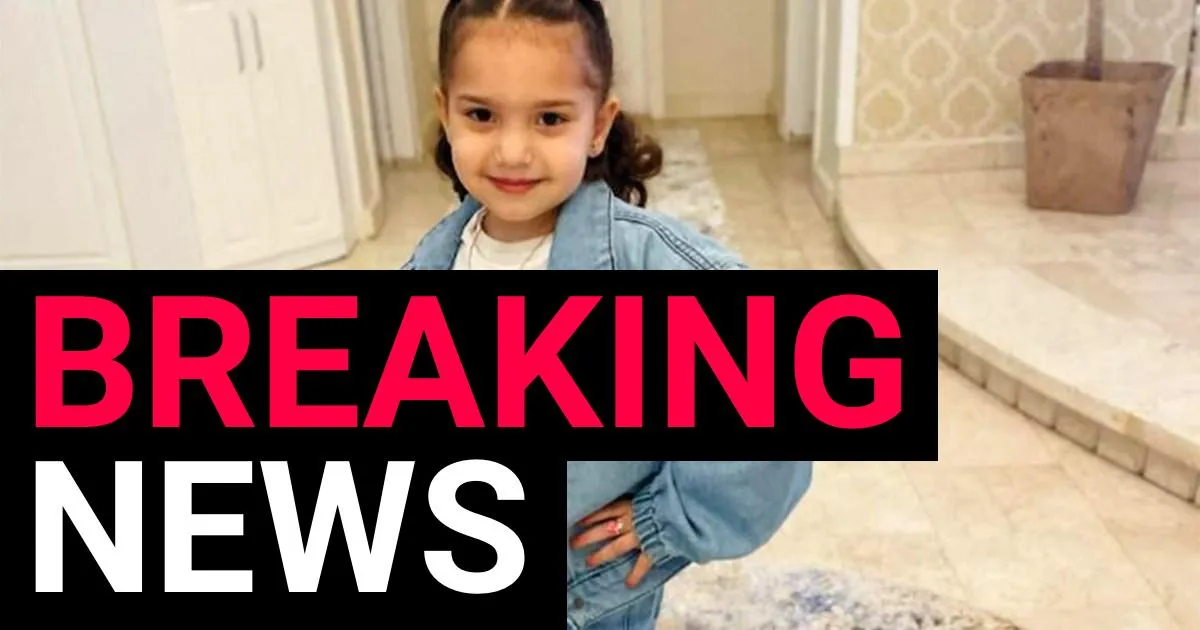
In the heart of a conflict-torn region, where violence has become a grim reality, a single story can pierce through the overwhelming statistics and remind the world of the true cost of war. This is the story of five-year-old Hind Rajab, a child whose final, terrifying hours were spent hiding among the bodies of her slain family, pleading for her life over a phone call with strangers who were desperate to save her. Her death, which sparked global outrage, serves as a devastating testament to the human suffering that often gets lost in the fog of war. This narrative seeks to humanize the headlines, to look beyond the numbers, and to remember the little girl who simply wanted to live. It is a story about innocence lost, a family’s final moments together, and the haunting echo of a plea that went unanswered for far too long.
Hind’s world collapsed on what should have been an ordinary day. The Israeli army had issued evacuation orders for the Tel al-Hawa neighborhood in Gaza City, telling residents to head west for their own safety. Trusting in these orders, Hind’s family made the impossible decision to leave their home and their entire life behind. They packed into a single car, a symbol of their desperate hope for escape. Along with her four cousins, her aunt, and her uncle, Hind joined the exodus of families fleeing the bombs, believing they were driving toward safety. Their destination was a relative’s home in the north, but their journey was tragically cut short. They never made it, and their final moments became a symbol of the terrible choices forced upon civilians caught in the crossfire.
The nightmare began when the family car was suddenly met with a hail of gunfire. The attack was sudden and merciless, instantly transforming a routine car ride into a horrific scene of death and destruction. When the shooting finally stopped, the car was silent save for the whimpering of a young child. Through the sheer desperation of the moment, an emergency dispatcher for the Palestinian Red Crescent, Omar al-Qam, received a frantic call. It was from Layan, Hind’s teenage cousin. She was hysterical, her voice laced with pure terror as she described the situation: a tank was positioned right in front of them, and they were petrified. The call, which would become the subject of international grief, captured the family’s terrifying last moments before the gunfire abruptly cut it short. The world would soon learn that Layan and the others were dead.
Miraculously, another call was made, and it was picked up. A small voice filled the line. It was Hind. She had survived the initial attack, but was trapped in a car with the corpses of her relatives, utterly terrified. The Palestinian Red Crescent was able to stay on the line with her, their operators becoming a lifeline to the outside world. They were not just her rescuers; they were her only witnesses. Hind could see the tank that had been shooting at her family, and in a moment of heartbreaking clarity, she described it as moving closer. For hours, the world held its breath. A rescue mission was launched. Paramedics Yousef Zeino and Ahmed al-Madhoun were dispatched in an ambulance, following the coordinates provided by COGAT, the Israeli coordination office, who had assured their safe passage. Their mission was simple: find the little girl and bring her home. They never returned, lost to the same violence that had created Hind’s tragedy.
Days turned into weeks. The memory of those desperate phone calls with Hind and the disappearance of the paramedics created a painful limbo for the world. Finally, after twelve agonizing days, the scene was reached. The grim discovery was made. Hind, along with the paramedics who had come to save her, had been killed. The initial report was a devastating blow. The Israeli military (IDF), which had previously claimed its forces were not present in the area, was forced to admit fault. After months of denial and obfuscation, the IDF admitted that its troops had indeed fired at the vehicle, an action that directly contradicted their previous statements and sparked international condemnation. The news shattered the already fragile hope that she might have survived, turning a tragedy into a full-blown crisis of conscience.
In the end, Hind’s story is not just about the tragedy of one family; it is a reflection of the profound human cost of war. The paramedics who died trying to save her, the family members in the car, and the countless others who are being killed in this conflict, are more than just statistics. They are human beings with names, dreams, and families who loved them. Hind’s final moments, hiding in the back of a car surrounded by the dead, are a harrowing reminder that the decisions of war are never made in a vacuum. They are felt most profoundly in the lives they cut short. The investigation may be closed, but the scar left on the world’s conscience remains open, a stark and painful question that a grieving world is still waiting to have answered.