
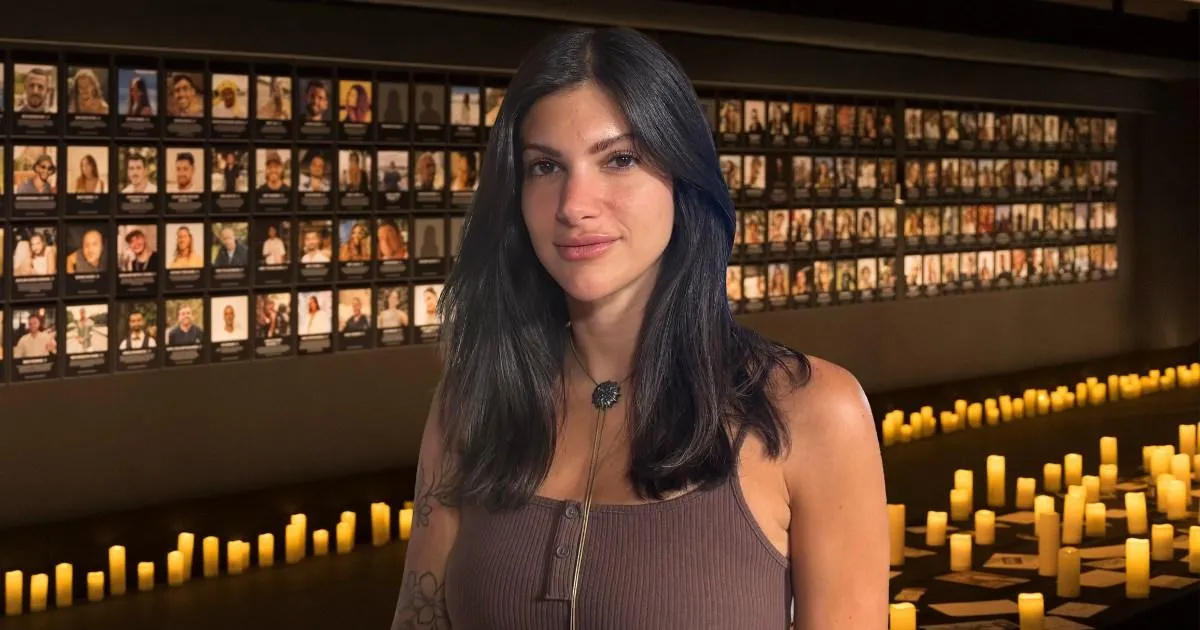
The morning of October 7, 2023, began as a celebration of life for May Hayat and her best friend. As a bartender, May had been looking forward to the Nova Music Festival, a desert gathering meant to be a sanctuary of music, dance, and collective joy under the Israeli sun. But in an instant, that sanctuary was transformed into a landscape of unimaginable dread. What started as a rhythmic beat beneath an open sky turned into a frantic, dissonant sprint for survival as the sirens wailed and the realization hit: the festival grounds had been infiltrated. The air, once filled with the promise of unity, was suddenly thick with the metallic scent of conflict and the desperate screams of thousands trying to flee a nightmare that had descended without warning.
In the ensuing chaos, May found herself fleeing through the desert scrub, her heart hammering against her ribs like a trapped bird. Her instinct for survival led her to a shallow pit, a desperate hiding place where she hoped to disappear from the violence unfolding around her. In a stroke of harrowing luck, she managed to scramble into an ambulance, hoping it would be her vessel to safety. But the vehicle was far from a refuge; it was a ticking time bomb. With seconds to spare, a chilling realization hit her, and she managed to escape its confines just before the ambulance—now described as a “death trap”—was decimated by an explosion. She had cheated immediate death, but the ordeal was far from over.
The aftermath of that escape was a descent into an even darker abyss. Moments after exiting the wreckage, May was intercepted by a group of eight men in civilian attire, their faces etched with a malice that defied human empathy. Armed with hammers, heavy wooden bats, and serrated knives, they surrounded her, their presence cutting off any remaining path to safety. For May, the world narrowed down to the glint of steel and the sound of weapons being readied. To be standing in such visceral proximity to individuals who had abandoned every vestige of humanity is a trauma that leaves an indelible mark on the soul, one that no amount of time can fully erase.
Miraculously, after enduring a period of intense intimidation and psychological terror, May was released by her captors. The circumstances of her release remain a surreal fragment of her memory, a rare flick of mercy in a day defined by absolute cruelty. She walked away from the encounter physically alive, but the version of her that had stepped onto those festival grounds that morning had been fundamentally altered. Back in the safety of her regular life, she found herself grappling with the “survivor’s guilt” that so often haunts those who make it out of such cataclysmic events while so many of their friends and peers were left in the dust of the desert.
Now, months removed from the silence of that desert, May has brought her story to London. She is part of an immersive exhibition dedicated to the Nova Festival, a project that seeks to bridge the gap between abstract news headlines and the raw, unvarnished human experience. Walking through the installation, visitors are confronted with the remnants of that day—the shoes left behind, the personal belongings, and the harrowing sensory accounts of those who were there. For May, speaking out is not just a form of public testimony; it is a way of ensuring that the world does not look away from the atrocities that stripped away the safety of a music festival and replaced it with a massacre.
By sharing these experiences, May and other survivors are engaging in a necessary, painful act of reclamation. They are transforming the trauma of October 7 into a narrative that demands acknowledgment and empathy. As she speaks to audiences in London, she isn’t just providing a timeline of events; she is humanizing the staggering statistics, forcing us to look at the girl who hid in a pit, the woman who jumped from a burning vehicle, and the bartender who simply wanted to dance. Her story serves as a stark reminder that behind every historic conflict is a collection of individual lives—shattered, brave, and forever seeking a way to come to terms with the day the music stopped.