


The Unshakable Spirit of Japan: Moving a Castle by Hand
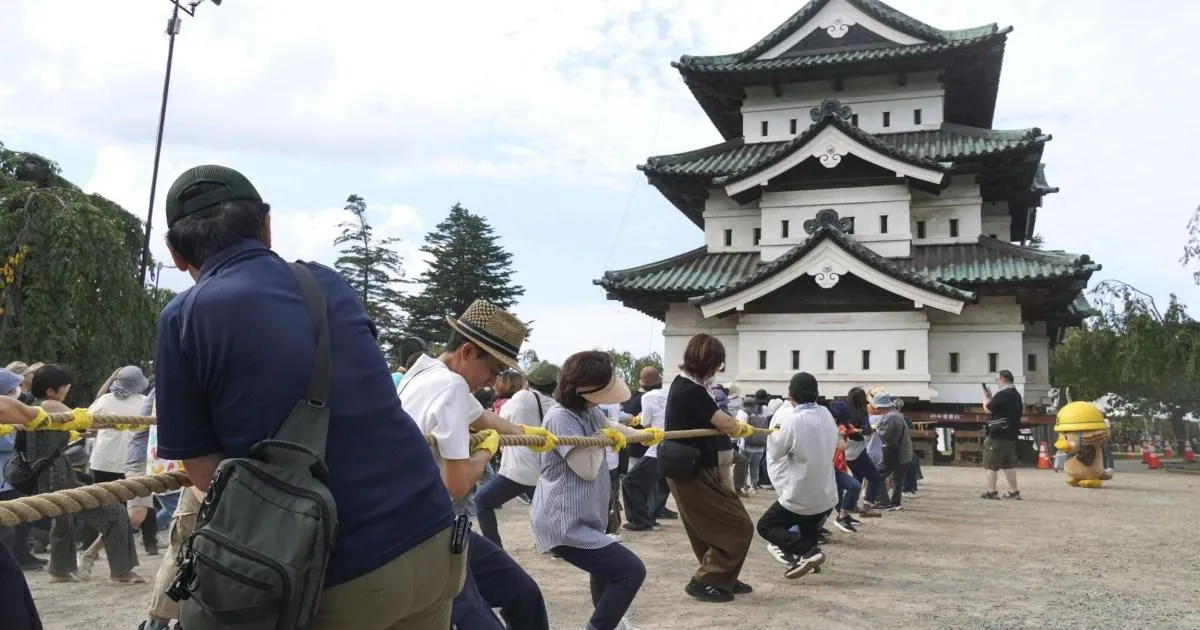
Picture this: a scene so remarkable it sounds like the premise of an epic fantasy film, yet it unfolded in a very real, very tangible corner of Japan. Nearly two thousand determined volunteers, armed with thick gloves and boundless spirit, lined up along thick ropes to achieve what seems impossible—dragging a 360-tonne castle across a small stretch of ground. This wasn’t a high-tech engineering feat executed with heavy machinery or massive cranes; this was a profound display of raw human muscle and collective willpower, a modern demonstration that when people come together, they can move mountains, or in this case, a fortress of significant historical and cultural weight. The event took place in the beautiful Aomori prefecture of Northern Japan, where the iconic Hirosaki Castle, famed for its breathtaking cherry blossom vistas, was being shifted back to its original resting place as part of an extensive and much-needed renovation. The sight was not just a display of logistics but a thrilling testament to what a community can achieve when it pulls, quite literally, in the same direction.
The reason behind this colossal undertaking is rooted in a recent, unwelcome catastrophe. In 2015, a devastating earthquake rattled the region, inflicting damage upon the ancient castle that required a complex and delicate restoration effort. As experts came together to formulate a plan, they were faced with a critical decision: how do they fix a historical building without damaging its integrity? The options were to dismantle it piece by piece, an arduous and risky task, or to employ an ancient, reliable technique that has been passed down through centuries in Japan. This technique, approach known as hikiya, is a traditional method for relocating entire buildings. It involves placing the structure on wooden rollers and using simple physics—not motors, but manpower—literally dragging the building across its path using a network of ropes. The choice of this historical method was deliberate and deeply symbolic, connecting the restoration project not just to the castle’s physical preservation but to the continuity of Japanese cultural customs. In a decision that inspired the nation, they determined that citizens would be the ones to perform this arduous task, the first time in a century that such a citizen-powered castle relocation would take place.
Humanity was at the heart of this grand undertaking, beginning with the sheer scale of interest it generated. When the city council put out a call for volunteers to participate in the event, the response was both unexpected and humbling. The massive, requiring 1,800 hands to manage the ropes, produced an overwhelming wave of public enthusiasm; almost 8,000 people applied to take part, creating a heart-warming 8,000 applicants, resulting in a queue that was roughly four times oversubscribed. The lucky participants who were chosen for a spot over the two days of the move represented different corners of Japanese society—men and women, young and old, all united by a common purpose. Perhaps, the strongest motivation is company pride and sheer curiosity. Many locals saw it as a patriotic city, others saw it as a rare, unique opportunity to physically touch and connect with a structure they had only ever admired. “It’s very moving to be able to participate again,” one eager participant, a sixty-one-year-old veteran who had pulled the castle a decade prior, was quoted as saying, summing up the shared sentiment of pure joy and privilege. This incredible collective participation wasn’t just about the resulting logistics; it was a celebration of community and a symbolic act of a collective embracing its past with their own hands.
The technical performance and the social experience of the event made it a core memory for all involved. As the participants, organized into teams of eighty, were roped in teams across multiple ropes, they exerted their weight and muscle, coordinating their breathing and effort with synchronized shouts of encouragement that pierced the crisp air. “So-re, so-re,” they chanted, a phrase translating colloquially to “Go on, Go on,” which set a rhythm for the effort, keeping the immense force aligned and constant. The sheer, physically demanding nature of the task was both invigorating and humbling; it gave participants a tangible feel for the scale of the castle, turning an abstract monument into something almost sentient contract. Though they shifted a foundation in measured distances—of just over three feet and then forty-two inches more—the sense of accomplishment was monumental. As the colossal structure began to shift, howls of delight and round of applause erupted from the wet onlookers, showing a moment of triumph where ordinary citizens proved that even in the age of machines, hard work and collective effort could yield the same result. This physical act became a ceremony, a community event that revived a link between the people and their heritage, breeding in them an unwavering sense of pride and duty.
The technique of moving a building by human power (hikiya) isn’t just an old relic; it’s a living practice that has been employed in Japan for over four centuries, mostly during road-widening projects where structures needed to be shifted to make way. However, in an era dominated by modern technology, its use demonstrates a commitment to minimizing damage to historical structures and following traditional engineering wisdom. For the Hirosaki Castle project, this method proved to be the least invasive, allowing the original structural elements of the building to remain intact rather than risking separation and reconstruction that could compromise historical authenticity. The task is still far from over; this first stage was just the beginning. The city expects over 4,000 participants in total to contribute to the move until the building is drawn fully to its final spot, some sixteen feet away from its earthquake-vulnerable base. The mammoth project will not be fully complete until the slow and steady have all aspects of the redesign finished, a timeline that underscores the immense challenge: the entire structural relocation and repair process will take longer than a decade, with the castle not expected to reopen to visitors until 2033. The project is an immense responsibility for the city and a long-delayed love affair with history as it winnows managing the delicate balance of the Kyoto-texture castle’s authenticity being met by modern standards of stability and reservation.
This relocation is much more than a feat of architectural paperwork; it’s a profound expression of cultural identity, set amidst a landscape of unforgettable beauty. The events drew a diverse, sometimes far-traveled crowd, eager to be a part of history and experience the rush of the conquest of human nature over man-made structures. It was a showcase of the resilience and spirit of the people of Hirosaki and the Japanese nation at large, echoing the message that we are tied to our root, our history, strength through our collective service. Set in the shadows of Mount Iwaki, one of Japan’s national landmarks, the memorial location comes to life in unexpected ways. The event demonstrates that even modern, modern change can honor ancient known customs. The final completion of the relocation will ensure that the Hirosaki Castle will stand as a symbol of endurance, not just against the elements and time, but as a bulwark against the erasure of history. For the people who pulled the ropes, the experience was a privilege, a memory tied not to a mechanical outcome, but to the physical sensation of being, for a moment, less weight of a castle’s destiny squarely on their own hands. The story in direct validation of the i believe tenderness of community spirit demonstrates that , ancient tradition and human repair, dedication’s survival continues to inspire and connect generations in the famous, serene corners of Japan.